



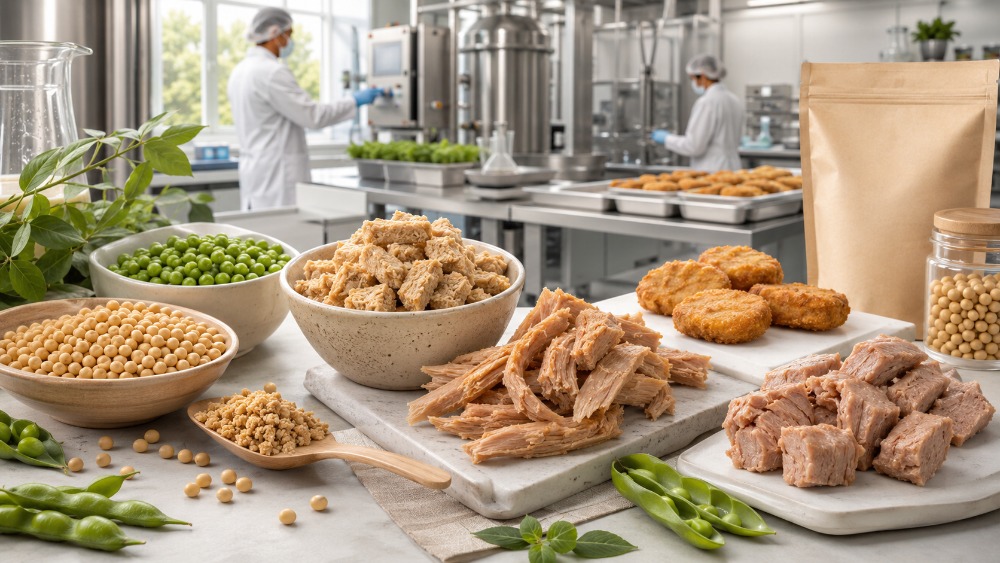
Vegetarian protein has shifted from a specialized diet component to a useful foundation for current meat alternatives. This adjustment does not stem from just one trend. Food producers face buyers who seek enhanced nutrition, common plant origins, better consistency, and items that fit into everyday dishes instead of just special vegan sections.
This change is important for B2B food manufacturing since plant based protein gets evaluated beyond mere protein levels. An effective item needs to keep its form, take in flavors, avoid breaking apart while cooking, and offer a chew that seems rewarding. For this reason, structured plant proteins, high-moisture formats, soy and pea ingredients, and linked processing options now form key subjects for food companies creating the upcoming range of meat-free options.
Why Plant Protein Is Becoming a Mainstream Food Innovation
The plant-based category has become more selective. Early market growth created interest, but current buyers are more careful. Price, taste, texture, ingredient lists, and cooking performance now shape repeat purchases. Good Food Institute retail analysis estimated the U.S. plant-based meat and seafood retail market at $1.0 billion in 2025, with a stronger category share in formats such as plant-based patties than in the overall packaged meat market.
Consumers Want Protein With Better Everyday Value
This protein category fits several product needs at once. It can support protein-focused claims, reduce dependence on animal raw materials, and help brands create products for flexitarian, vegetarian, and health-aware consumers. Yet the product must still feel useful in normal cooking. A meat-free nugget, strip, sausage, filling, or ready meal cannot rely on a sustainability message alone. It needs a stable structure and a familiar eating experience.
Meat Alternatives Need More Than Imitation
The future of meat alternative foods is not only about copying beef or chicken. Many brands are moving toward products that combine plant nutrition, practical cooking behavior, and clean label plant protein concepts. This creates room for formats such as shredded vegetarian chicken, plant-based fillings, meat alternative foods, frozen prepared foods, and protein-rich meal components. Texture, not appearance alone, is often the deciding factor.
Main Sources Used in Plant Protein Foods
Various plant proteins act in varied ways during processing. Some develop elasticity. Others enhance water binding. And a few offer benefits in nutrition or labeling. For food manufacturers, the optimal recipe often results from weighing nutrition, flavor, allergen issues, cost, and processing stability. This approach works better than selecting a single ingredient alone.
Soy Protein and Pea Protein Remain Core Options
Soy and pea proteins stay popular since they form a solid foundation for meat-like items. Soy protein frequently aids in creating a denser fibrous texture. In contrast, pea protein suits brands that aim for soy-free options or a unique flavor and allergen setup. Makers can apply these proteins as concentrates or isolates. The choice depends on protein content, flavor management, and end use.
New Protein Sources Are Expanding Future Applications
Emerging protein sources like fungi, yeast, microalgae, and other microbial proteins could broaden the material options for vegetarian food manufacturing. These elements do not serve as straight substitutes for soy or pea in all products. However, they might assist brands in refining flavor, sustainability claims, or nutrition. Their market adoption still hinges on availability, expense, regulatory status, and compatibility with processes.
How Plant Proteins Become Meat-Like Texture
Protein source is only the starting point. The main challenge is turning powder or flour into a structured food with fiber direction, bite, and cooking stability. This is where plant protein texture becomes a technical issue as much as a recipe issue. ARROW’s solution center covers extrusion-based food applications, but the basic idea can be explained without turning the topic into equipment promotion.
Structure Defines Product Quality
Without structure, plant protein mixtures may become soft, pasty, or crumbly. With the right structure, they can form chunks, mince, flakes, strips, nuggets, or layered pieces. Textured vegetable protein helps bridge this gap by giving plant proteins a more useful physical form. The finished product can then absorb flavors, hold sauces, or pass through further shaping and cooking.
Heat, Moisture, and Shear Build Fibrous Bite
During extrusion, protein-rich blends are exposed to heat, pressure, moisture, and mechanical shear. These forces unfold and reorganize proteins, helping create a meat-like fiber structure. High-moisture extrusion is widely studied for fibrous plant-based meat analogues and is recognized as a leading route for products aiming to mimic fibrous texture, juiciness, and mouthfeel.
Cooling and Forming Shape the Final Experience
After the protein structure forms, cutting, drying, Cooling determines the final bite. A product intended for dry storage needs a different finish from a chilled or frozen whole-cut style product. This is why the same plant based protein concept can lead to very different products, from shelf-stable textured pieces to wet strips or layered vegetarian pieces.
Dry TVP and High-Moisture Products Serve Different Needs
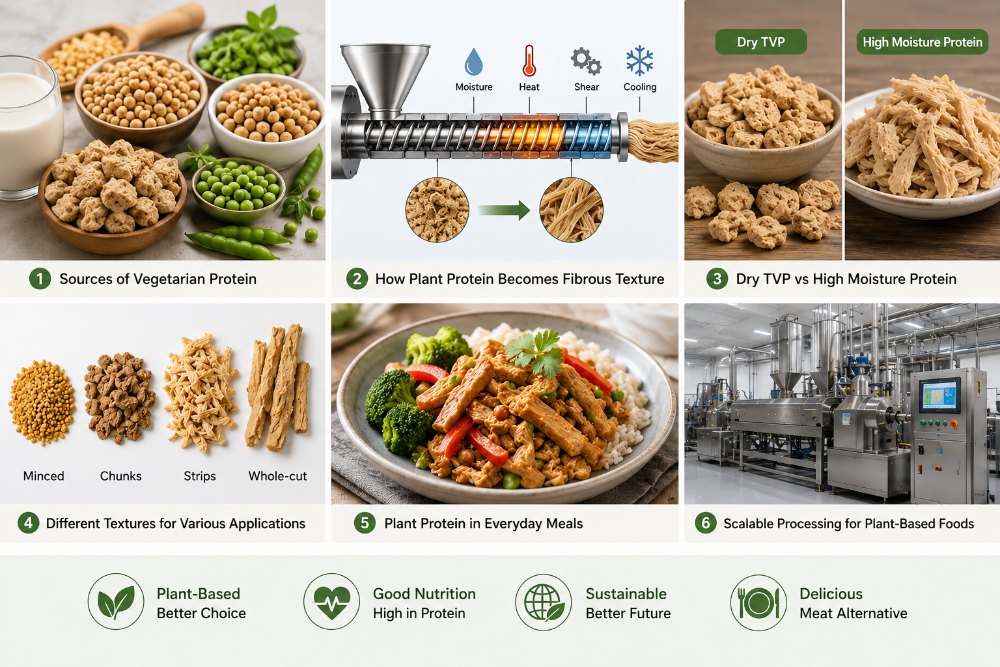
Dry and wet texturizing routes should not be treated as interchangeable. They answer different production, logistics, and consumer use cases. Choosing between them depends on the target product, shelf life plan, cooking method, and desired texture.
Dry Textured Protein Supports Flexible Manufacturing
Dry TVP is useful when manufacturers need low moisture, easier storage, and flexible rehydration. It can be applied in vegetarian mince, fillings, snacks, instant foods, sauces, and ready-to-cook meal bases. Because it is dried after forming, it can be transported and stored more easily than high-moisture products. After hydration, seasoning, and further shaping, it can be adapted to different regional tastes.
High Moisture Plant Protein Creates Juicier Products
High moisture plant protein is designed for products that need a softer, juicier, and more layered texture. Wet textured products often contain about 50%-70% moisture and do not need rehydration before use. They are more suitable for frozen vegetarian chicken, plant-based fish pieces, beef-like chunks, and other applications where a meat-like bite and moisture release are important. This makes the format valuable for brands working on premium meat alternatives.
Product Positioning Should Guide the Choice
A stable pantry product, a frozen ready meal, and a restaurant-style meat-free strip do not need the same process. Dry structured protein works well when storage, transport, and post-seasoning flexibility matter. Wet tvp and high moisture meat analog formats fit products where fresh bite, visible fibers, and cooking realism are more important. The right choice begins with the eating occasion, not the machine.
What Food Manufacturers Should Consider Before Development
A strong plant protein concept must survive scale production. Lab texture may look promising, but commercial success depends on repeatable batching, stable moisture control, suitable drying or cooling, and predictable product shape. These concerns are especially important for manufacturers moving from small trials to continuous production.
Raw Material Selection Shapes Flavor and Texture
Raw material behavior should be tested early. Protein isolate, protein concentrate, gluten, starch, oil, fiber, and seasoning all influence expansion, bite, water absorption, and flavor release. Soy protein and pea protein may both support plant based meat processing, but they do not behave the same under heat and shear. Formula design should leave room for adjustment.
Process Stability Protects Product Consistency
Meat-free products require a consistent texture across batches. Uneven mixing, unstable feeding, poor temperature control, or inconsistent cutting can quickly affect appearance and mouthfeel. Food manufacturers should check whether the process can maintain the same fiber direction, moisture level, and piece size during long production runs.
Scale-Up Needs Practical Support
At ARROW, we focus on food extrusion engineering for applications such as plant protein foods, snacks, cereals, instant rice, pet food, and aquatic feed. For this topic, the practical value is not a long company story. It is the ability to connect raw material behavior, trial production, and scalable plant protein production. The Textured Vegetable Protein Production System can be introduced when manufacturers are ready to move from product idea to structured production planning.
The Future of Plant Protein in Food Manufacturing
The category will keep changing as brands look for better taste, more reliable nutrition, and broader product formats. The next stage will likely be less about generic “vegan meat” and more about specific foods that solve clear consumer needs: better cooking, cleaner labels, higher protein, and improved bite.
This future also requires realistic manufacturing thinking. Some products will succeed through dried structured protein and flexible seasoning. Others will depend on high-moisture protein for a layered, juicy structure. Many will use blended proteins rather than a single raw material. Manufacturers can review existing project directions through our case center when comparing possible formats and production routes.
For teams planning a new plant-protein product, the best starting point is a clear target: what texture, moisture level, format, shelf life, and cooking behavior should the final food deliver? Once those decisions are clear, formula testing and process planning become much more efficient. To discuss plant protein texture development, dry textured protein production, wet TVP applications, or scalable meat alternative processing, contact us.
FAQ
Q: What is the main advantage of this protein category in meat alternatives?
A: It gives manufacturers a flexible base for creating protein-rich foods with different textures, shapes, and cooking uses. Its value depends on both nutrition and processing performance.
Q: Is TVP the same as high-moisture protein?
A: No. TVP is often dried and rehydrated before further use, while wet structured protein is produced with higher water content and is more suitable for juicier, meat-like formats.
Q: Which protein source is better for plant-based meat products?
A: There is no single best source. Soy protein, pea protein, wheat gluten, legume protein, and other sources each bring different textures, flavors, costs, and labeling advantages. The final choice should match the target product.


