



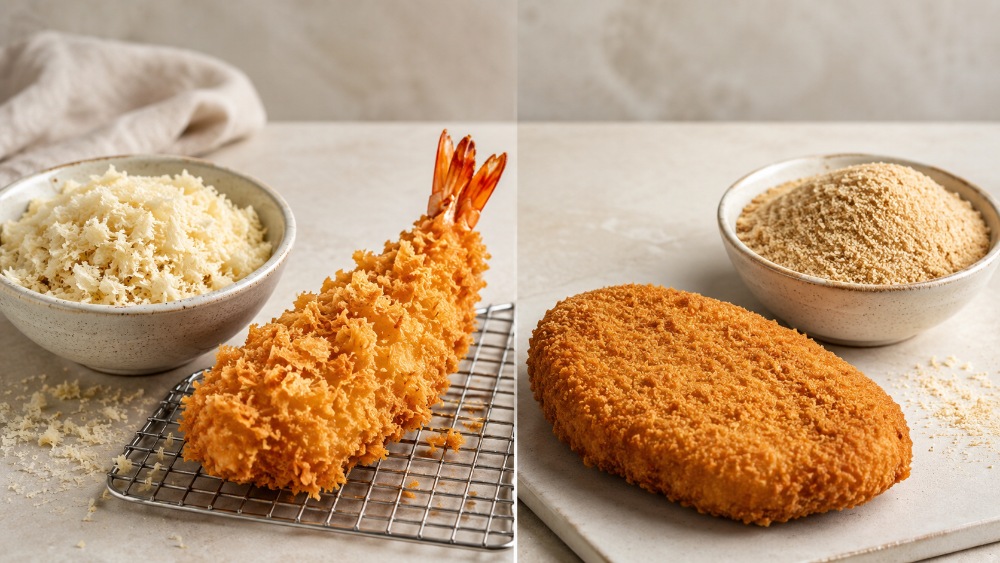
Panko bread crumbs and regular bread crumbs may appear alike initially. However, they address various issues in food processing. Panko bread crumbs are typically bigger, lighter, and more flaky. This feature aids fried foods in developing a crunchy, open, crisp coating. Regular bread crumbs are typically smaller and more solid. As a result, they serve well for binding, filling, even breading, and standard coverings.
For food manufacturers, the selection goes beyond mere taste. Texture impacts oil absorption, coating thickness, mouthfeel, shade, item look, and batch consistency. A fried chicken coating crumbs formula, a frozen seafood coating, and a hamburger patty binder might each demand distinct crumb forms. This is why panko vs regular bread crumbs continues as a vital subject for product developers, frozen food brands, and industrial coating suppliers.
What Makes Panko Bread Crumbs Different
Panko bread crumbs are prized for their light, airy structure. Rather than turning into a tight powder, panko generally shows as uneven flakes with clear edges. This form produces greater surface detail during frying or baking. It assists the covering in seeming crunchy without getting overly weighty.
A useful method to consider panko bread crumb texture is to liken it to a bumpy, open area. The flakes form tiny spaces around the coated product. While frying, these spaces assist in forming a less dense crust and a stronger crunch. Food sources frequently note panko as more flaky and airy than typical breadcrumbs. This accounts for its frequent use in katsu, fried shrimp, croquettes, fish fillets, and oven-baked toppings. For a broad cooking contrast, Food & Wine explains how panko differs from regular breadcrumbs through its pale, airy, varied flake structure.
Why Flake Shape Matters
The flake shape alters how the covering contacts the food surface. Bigger flakes produce a coarser outer layer. Meanwhile, smaller crumbs yield a sleeker layer. For items that require evident crunch, such as coated chicken, shrimp, fish, or vegetable snacks, flaky bread crumbs frequently generate better display appeal after frying.
Why Panko Often Feels Lighter
Panko does not typically form a thick shell. Its open structure assists the covering in feeling less packed. Therefore, the initial bite seems crunchy instead of tough. This aspect is significant for high-end fried foods where the covering must shield the interior yet not overshadow the primary component.
What Regular Bread Crumbs Do Better
Regular bread crumbs retain solid worth in food processing. They are typically finer, more consistent, and more packed than panko bread crumbs. This quality makes them simpler to apply in recipes where the crumb needs to merge into the item rather than protrude on the surface.
Regular bread crumbs are frequently employed in meatballs, meatloaf, stuffing, casseroles, cutlets, and shaped items. In these situations, the aim is not always a striking crunch. A manufacturer might require moisture management, holding power, uniform spread, or a classic bread-like mouthfeel.
Fine Texture Supports Binding
Fine bread crumbs can take in moisture and assist in keeping a mixture intact. In shaped meat, plant-based patties, or filled items, a finer crumb can enhance framework and lessen splitting. This role differs from the crispy coating for fried foods provided by panko.
Smooth Coverage Supports Classic Coatings
Certain items require a neat, uniform covering instead of a bumpy, flaky crust. Regular bread crumbs are simpler to distribute evenly over a surface. This is particularly true when an item must fulfil strict size, weight, and covering absorption goals.
Panko vs Regular Bread Crumbs in Food Performance
The main distinction between panko and regular bread crumbs lies in performance. Texture influences how the covering acts prior to frying, during frying, after cooling, and after packing. For industrial food production, these phases are as crucial as the initial bite.
| Factor | Panko Bread Crumbs | Regular Bread Crumbs |
| Particle shape | Larger, flaky, irregular | Finer, denser, more even |
| Best use | Fried foods and crispy toppings | Binding, stuffing, classic coating |
| Visual effect | Rough, golden, textured crust | Even, fine surface |
| Key control point | Flake size and drying | Fineness and uniformity |
Studies on battered and breaded coverings also link covering structure with texture, taste, moisture management, and oil intake. This is why crumb design ought to be viewed as a technical choice rather than a basic ingredient selection. A study on deep-fried batter and breaded coatings highlights how physical coating characteristics affect finished product performance.
Coating Texture Changes Consumer Perception
A crunchy, open covering frequently indicates freshness and higher perceived quality. A solid or irregular covering can cause a fried item to seem heavy, even if the mixture is suitable. For frozen and ready-to-cook foods, the crumb must also endure handling, transport, and reheating.
Product Type Should Guide Crumb Choice
No single crumb fits every product perfectly. Panko performs well when the final food requires a noticeable, crunchy covering. Regular bread crumbs perform better when the item needs holding, a gentle mouthfeel, or complete surface spread.
Why Industrial Processing Shapes Breadcrumb Texture
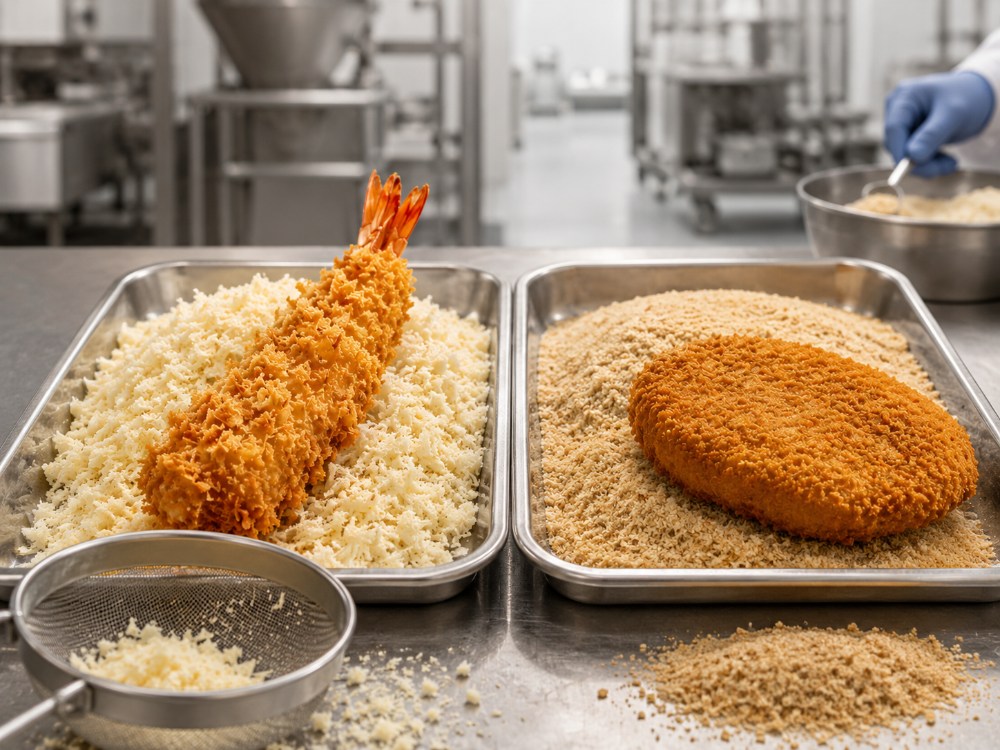
In food factories, texture relies on more than the ingredient label. The identical wheat flour base can turn into flaky panko, granular crumbs, strip crumbs, or fine bread crumbs based on mixing, extrusion, cutting, crushing, drying, cooling, and screening.
This is where industrial breadcrumb processing gains importance. A reliable bread crumbs production line must manage each step. In this way, the finished crumb satisfies the needed size, moisture, shape, and covering behaviour.
Mixing and Extrusion Build the Base
Mixing establishes a steady raw material base. Extrusion then cooks and forms the material under regulated heat, pressure, and screw action. For extruded bread crumbs, this phase impacts internal structure, expansion, and the crumb’s strength before crushing.
ARROW’s Bread Crumb Production Line is built around twin-screw extrusion, with process steps that aid industrial breadcrumb production from raw material preparation to screening. It fits for creating crumb structures used on fried chicken, steak, chicken wings, seafood, onion rings, and other coated foods.
Cutting and Crushing Define Size
Cutting and crushing determine if the crumb becomes needle-like, flaky, granular, or finer. This represents one of the key stages for food coating texture. If the particles are overly large, the covering might detach. If they are overly small, the covering might lack evident crispness.
Drying Cooling and Screening Stabilize Quality
Drying manages moisture. Cooling assists in steadying the crumb before packing or additional handling. Screening divides oversized and undersized particles. Thus, it helps the final item achieve a steady specification. For food manufacturers, this steadiness lowers differences across lots.
How a Bread Crumb Grinder Affects Coating Quality
A bread crumb grinder serves as more than a crushing tool. It acts as a texture management point. The grinder, blade setup, screen layout, and particle release all influence bread crumb size and shape. In commercial production, this step can determine if the final item feels crunchy, soft, weighty, or irregular.
Coarse Crumbs Create Visible Crunch
Coarse crumbs prove helpful when the covering must appear and feel textured. They match fried chicken, shrimp, fish, pork cutlets, and vegetable items. The task involves managing breakage so the flakes stay appealing yet adhere properly.
Fine Crumbs Improve Coverage
Fine bread crumbs assist in forming a smoother spread and firmer holding. They suit meatballs, patties, shaped plant-based foods, stuffing, and items where the crumb needs to blend into the mixture rather than remain on the surface.
Screen Design Supports Product Variety
Various screen openings and forms enable one bread crumb grinder to handle multiple product styles. This adaptability aids manufacturers in creating several crumb types without altering the entire production setup. It also aids market testing when a brand seeks to contrast flaky bread crumbs with fine bread crumbs for a new covering.
Choosing the Right Crumb for Manufacturing Needs
Food manufacturers should pick ingredients according to the final item objectives, not solely ingredient expense. The proper crumb structure can enhance covering appearance, texture reliability, and consumption quality. The improper structure can raise waste, diminish crispness, or lead to irregular covering absorption.
Match Crumb Texture to the Finished Food
Fried foods typically require crunchy texture, managed oil absorption, and appealing shade. Frozen coated foods also demand reheating reliability. Shaped foods might need holding strength and moisture equilibrium. Each item group requires a distinct breadcrumb texture.
Consider Batch Consistency
A commercial bread crumb machine must enable repeatable results. If crumb size varies between lots, the covering ratio, frying outcome, and final look might also vary. Steady mixing, extrusion, grinding, drying, cooling, and screening assist in minimising these issues.
Keep Flexibility for New Products
Consumer needs shift rapidly. A food factory might require panko bread crumbs for high-end fried items, regular bread crumbs for standard recipes, and unique crumb shapes for private-label or local items. Adaptable processing permits quicker product development without reconstructing the complete line.
Practical Takeaways for Food Manufacturers
Panko bread crumbs and regular bread crumbs should not be seen as replaceable substances. Panko generally suits better for light, crunchy, noticeable coverings. Regular bread crumbs are better suited for holding, smooth covering, and standard food textures. In both instances, the end outcome depends on process management.
For manufacturers, the main query is not just “Which crumb is superior?” A more suitable query is: what texture should the finished item provide after frying, baking, cooling, packing, and reheating? Once that goal is defined, the bread crumbs production line can be structured around particle size, drying level, screen choice, and process reliability.
ARROW supports food producers that require dependable breadcrumb texture, adaptable crumb shapes, and thorough process planning. To talk about covering objectives, production capacity, or line setup, connect with our technical service team for a practical production review.
FAQ
Q: Are panko bread crumbs always better than regular bread crumbs?
A: No. Panko bread crumbs are better for light and crispy coatings, while regular bread crumbs are often better for binding, stuffing, smooth breading, and classic food textures.
Q: What affects panko bread crumb texture in industrial production?
A: Mixing, extrusion, cutting, crushing, drying, cooling, and screening all affect panko bread crumb texture. Grinder screen design and drying control are especially important for crumb size and crispness.
Q: Why should food manufacturers compare panko vs regular bread crumbs before choosing equipment?
A: Different crumb types need different particle sizes, moisture control, and coating behaviour. Comparing panko vs regular bread crumbs helps manufacturers choose a process that matches the final product, not just the ingredient name.


