



Pushing machinery to its absolute theoretical limits rarely translates to maximum output in a high-capacity cereal plant. What actually drives yield? Systematically tearing down the hidden bottlenecks that silently drain your profits. We are talking about inconsistent product quality, rigid ingredient processing, and disjointed factory layouts.
Dominating the market with continuous, profitable operations requires a sharp shift in focus. Forget basic machine RPMs for a moment. You need to directly address high scrap rates, unexpected equipment downtime, and critical gaps in food manufacturing automation. Below is an engineering-driven roadmap designed to eliminate these production roadblocks and secure top-tier yield for your facility.
Eradicating High Scrap Rates and Inconsistent Product Quality
High scrap rates caused by manual machinery remain one of the most overlooked drains on overall output. Look at traditional cornflakes manufacturing. Flaking machines in these setups frequently rely on manual gap adjustments. When operators must guess these precise settings, and you pair that with the uneven heat distribution typical of older toasters, the outcome is predictable: severely varying flake thicknesses and textures within a single batch. Such inconsistency wrecks brand reputation. Worse, it wastes expensive raw materials and heavily inflates your cost per kilogram.
Eliminating this problem requires removing human guesswork entirely from the equation. The technical solution involves upgrading to a hydraulic oil-driven roller gap-adjusting system. This specific technology guarantees absolute, micron-level uniform thickness across every single flake, completely independent of the operator on shift. Pair this precision flaking with an independent high-efficiency toaster featuring optimized hot air circulation, and the end product achieves a consistent, premium crispiness that satisfies stringent global retail standards.
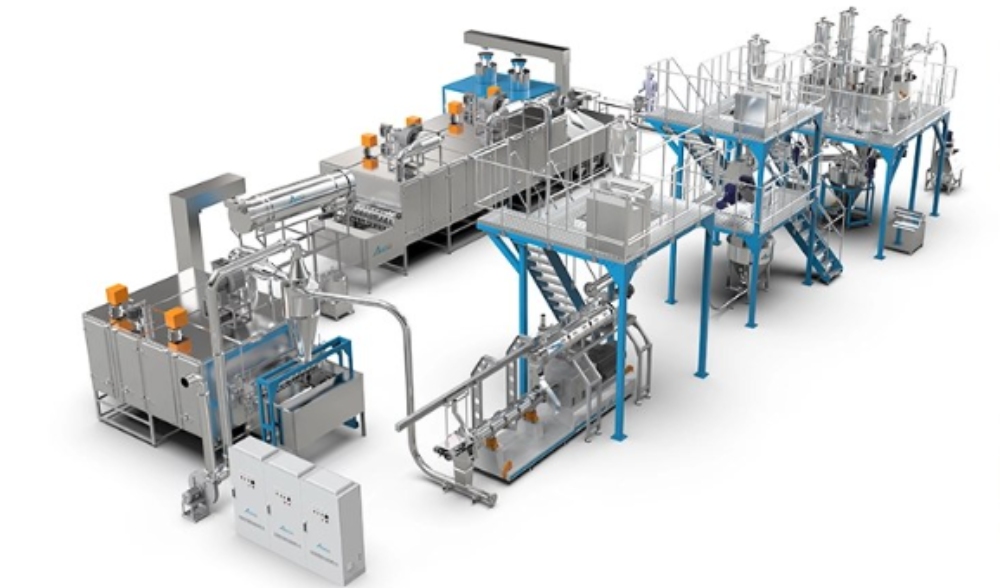
When engineering a modern Breakfast Cereals Production Line, integrating this level of automated PLC control and intuitive HMI interfacing means every batch is monitored and corrected in real-time. No manual intervention required.
This marks the exact point where a fully automated extrusion and flaking setup outpaces standard mechanical equipment, transforming potential scrap into highly sellable, high-margin inventory.
Breaking the Single-Recipe Limitation for Market Agility
Consumer demand does not stand still. The global pivot toward health-focused cereals, sustainable cereal production, and multi-grain alternatives actively renders legacy equipment obsolete. Traditional single-function extruders often choke or fail completely when processing complex, dense formulas containing oats, buckwheat, quinoa, or high-fiber vegetable proteins. If your current equipment rejects these raw materials, your business is missing out on the industry’s most lucrative market segments.
Capturing these high-value trends demands a departure from rigid systems. Manufacturers must adopt advanced twin-screw extruder technology. European-standard extruders, designed with unique barrel configurations and modular screws, deliver unprecedented raw material compatibility alongside precise thermodynamic control. Such engineering flexibility enables a single production line to seamlessly transition between traditional corn flakes, fruit loops, Cheerios, and high-margin core-filled cereals. The switch only requires adjusting digital parameters and swapping molds.
Locating these adaptable systems becomes much easier when consulting a specialized solution center that evaluates processing equipment based on material flexibility and process innovation, rather than focusing exclusively on raw volume.
If your facility endures days of exhaustive downtime and mechanical teardowns just to switch from a corn-based recipe to a multi-grain formula, your core extrusion system urgently requires a modular upgrade.
Overcoming Factory Space Constraints and Integration Failures
Executing procurement without precise spatial planning is a major, yet highly common, pitfall when launching a new cereal production line. Buyers frequently secure funding for top-tier standalone machines, only to discover during installation that the equipment dimensions violently clash with their existing factory layout. These mismatched machines force awkward integrations between upstream mixers and downstream packaging conveyors. The result? Severe material flow bottlenecks, elevated hygiene risks, and wasted capital.
Precise, early-stage engineering stands as the only reliable defense against this operational disaster. Before cutting a single piece of steel or finalizing any purchase order, the project demands a comprehensive AutoCAD layout design. This must be tailored strictly to the exact dimensions and utility access points of your specific workshop.
Partnering with an experienced top breakfast cereal processing equipment manufacturer means you stop treating the production line as a disorganized collection of isolated machines. Instead, you approach it as a complete, unified engineering system. This holistic strategy guarantees flawless material flow, proper hygienic zoning, and the absolute maximum utilization of your available floor space.
Mitigating Cross-Border Procurement Risks and Operational Downtime
Sourcing industrial equipment internationally carries a severe, often unspoken risk: the “stranded project.” Machines might arrive at the facility perfectly on time. However, without localized installation support or expert engineers to commission the line, that expensive equipment sits idle, actively burning through your projected ROI. Furthermore, if a critical machine fails during peak production and after-sales support remains disconnected, the financial impact of the resulting downtime is devastating.
Securing your investment requires demanding a true turn-key project solution that extends far beyond the initial point of sale. A reliable standard must dictate a clear, contractual delivery timeline—typically 40 to 45 days. Immediately following delivery, a dedicated factory engineering team should arrive on-site for 2 to 3 weeks. Their mandate is to handle the mechanical installation, execute electrical commissioning, and conduct comprehensive hands-on operator training.
By confirming your provider guarantees complete service and support—which should include a robust 12-month warranty and lifetime free online technical troubleshooting—you completely eradicate the fear of post-purchase abandonment. This fundamentally secures your long-term operational stability.
Ready to Maximize Your Cereal Production Yield?
Scaling your breakfast cereal manufacturing should never involve fighting with layout constraints, battling unacceptable scrap rates, or enduring unresponsive after-sales support. Whether you are testing a new regional market with healthy formulations or constructing an industrial powerhouse to dominate international retail, you require a system explicitly engineered for stability and verified capacity.
Stop allowing outdated mechanical equipment and poor system integration to dictate your market share. Contact us today via email or our website. Receive a customized AutoCAD layout and a precise technical proposal for a high-efficiency cereal production line, flawlessly tailored to your exact factory dimensions and long-term business objectives.
FAQ
Q: How do I know which production capacity is right for my current factory space?
A:Guessing your capacity needs leads to either wasted capital on underutilized machines or immediate production bottlenecks. Moreover, forcing a massive, high-output machine into a confined workshop guarantees integration failure. You must match your market output goals with verified capacity tiers. These range from the AYE65 (150-500 KG/H) designed for expanding regional brands, to the mid-tier AYE78 (300-800 KG/H), and scale up to the heavy-duty AYE98 (800-1200 KG/H) for industrial production. To guarantee the line actually fits your facility, we engineer a customized AutoCAD layout based on your exact workshop dimensions before manufacturing ever begins.
Q: Can one production line manufacture both traditional corn flakes and trendy health-focused cereals?
A:Yes, provided you utilize the right technology. Traditional, single-function extrusion machines trap you into a single recipe, causing you to forfeit emerging market opportunities. Conversely, our advanced twin-screw extruders leverage a highly adaptable combination block cavity design alongside modular screws. This sophisticated engineering empowers you to easily switch between corn, oats, buckwheat, and quinoa simply by adjusting processing parameters and changing molds. Consequently, your investment remains protected and highly agile against rapidly changing consumer health trends.
Q: What exactly is included in your Turn-Key Project Solution for overseas buyers?
A:The most significant risk in cross-border equipment procurement is the absence of installation and after-sales support, which can leave a multimillion-dollar project completely stranded. Our turn-key solution eradicates this risk. Beyond standard equipment manufacturing and enforcing a strict 40-45 day delivery timeline, we dispatch expert engineers directly to your site. Over 2-3 weeks, they manage full mechanical installation, system commissioning, and hands-on operator training. Furthermore, this is backed by a 12-month warranty and lifetime online technical support, ensuring your line runs continuously and profitably. If you require a hassle-free, fully integrated factory setup, reach out to our project management team today to outline your specific launch timeline.


