



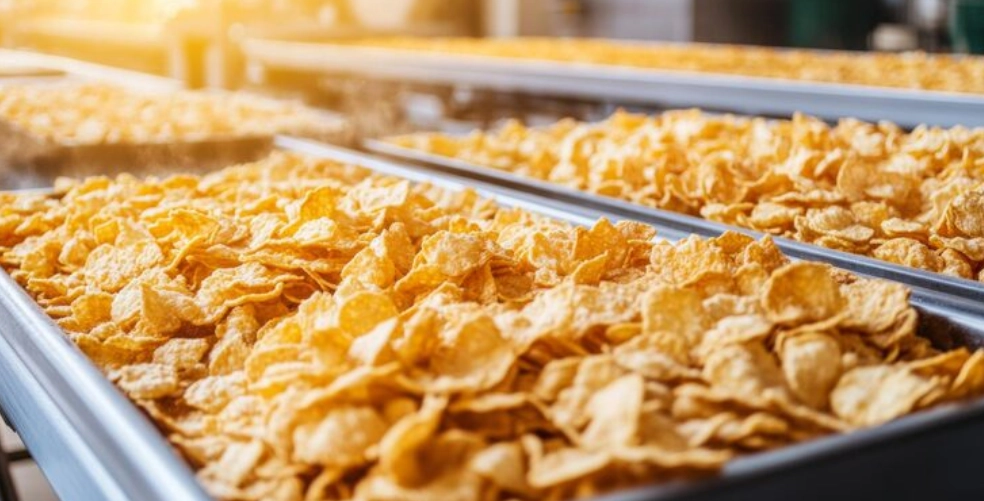
The expanding market for healthy and convenient breakfast products worldwide is growing at a rapid pace; hence, advanced cereal technology is required by producers to capture larger market shares. The mechanical details of the entire manufacturing process help optimize the operations and minimize utility costs while providing better products to the market. With increasing competition and stringent regulations regarding food safety, knowing how to make a cereal manufacturing line is vital to avoid delays and extra costs.
Functioning as an engineering-focused enterprise rather than a standard trading firm, ARROW MACHINERY specializes in designing and manufacturing extrusion-based food production systems. With a technical team holding over 30 years of applied industry experience, we prioritize in-house production, precise engineering integration, and long-term technical reliability. Operating a modern manufacturing base covering 50,000 square meters, we have delivered tailored equipment solutions to facilities across 118 countries and regions, serving more than 5,000 clients worldwide. By conceptualizing a food production facility as a highly integrated engineering system rather than a mere collection of isolated machines, we ensure that every stage of the cornflakes manufacturing process functions with consistency. This guide will illuminate the complete industrial journey required to transform raw maize into a perfectly crispy breakfast bowl.
What Constitutes an Industrial Corn Flakes Making Machine?
Corn flakes manufacturing equipment refers to a complex machine that can transform raw materials directly into a ready-to-eat meal. The transition from traditional cooking to a continuous process requires a commercial breakfast cereal equipment line. The equipment begins with the use of grist materials, followed by a series of processes such as mixing, extruding, pre-drying, flaking, toasting, coating, drying, and cooling to achieve desired shapes. The equipment can carry out all the processes from raw material preparation to packaging. A good machine can save labor and increase efficiency, a vital factor for large-scale profitability. The use of twin-screw extrusion technology allows for easy reformulation of products to suit regional grain humidity and production capacity.
Step-by-Step Corn Flakes Manufacturing Process
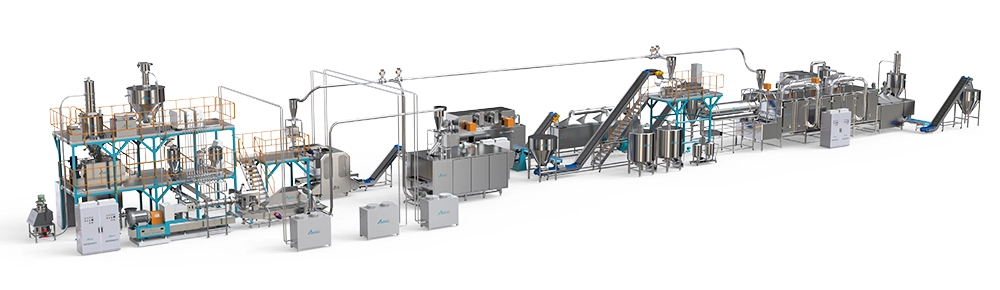
The complete corn flakes production sequence encompasses a meticulously coordinated series of industrial operations, specifically designed to tightly control the texture, moisture content, and final flavor profile of the cereal. The process logically flows through several distinct stages, establishing a reliable pathway from raw materials to the packaged product.
1. Raw Material Selection and Precision Mixing
The journey to creating the perfect breakfast cereal commences with the careful preparation of raw materials, where corn flour, wheat, or oat grains serve as the primary foundational ingredients. To guarantee absolute formulation accuracy across massive production batches, our raw material distribution system employs high-precision weighing sensor control and is equipped with a variable-speed feeding method to ensure the accuracy requirements of weighing. Maintaining this strict measurement precision prevents the slightest formulation errors, which could otherwise drastically alter the expansion rate and physical texture during the subsequent complex extrusion phase. Integrating an automated vacuum feeder and a High Efficiency Mixer—featuring optional coulter cutting designed to avoid caking—significantly improves the overall homogeneity of the dry powder mixture before it enters the conditioning phase.
2. Extruding and Gelatinization: The Core Technology
Following the initial mixing phase, the blended raw materials enter the heart of the production line, which is powered by an advanced twin-screw extruder for cereals. Through the continuous rotation and forceful extrusion generated by the heavy-duty screws, the raw materials are subjected to intense mechanical shearing, thorough mixing, and essential maturation processes operating under meticulously controlled high temperature and pressure conditions. Our AHE series equipment exemplifies this critical processing stage, featuring a cavity that uses a combination block design, which is flexible and convenient to add or reduce the cavity. The barrel incorporates a built-in wear-resistant alloy sleeve, and the heating or cooling medium of each cavity runs independently so the temperature is controlled precisely. Operators manage the system via an HMI man-machine interface based on the WYSIWYG design principle, modifying all parameters by touching the screen to complete various tasks. Additionally, the side push type precision positioning design of the rotary cutting device allows the operator to replace the blade without stopping the machine during the production process, increasing the timeliness.
3. Pre-Drying and Delicate Flaking
Once the starches are fully gelatinized and extruded into tiny, dense pellets, the product must be carefully pre-dried to remove a specific amount of internal moisture, effectively preparing it for the main processing steps and helping to safely preserve its structural integrity. The slightly dried pellets are then continuously fed into a specialized roller flaking machine to achieve their iconic flat, broad shape. Our newly engineered high-efficiency flaking machine strategically adopts a new hydraulic oil-driven roller gap-adjusting system, ensuring the flakes get tableted and flaked at the best distance. The mechanical gap is adjustable to be 0.1mm to 0.15mm, and the heavy-duty machinery features highly strengthened alloy rollers with a powerful drive and a bidirectional drive for discharging both good and non-conforming flakes. Furthermore, a unique water cooling system design actively prevents the delicate cereal dough from adhering to the metallic roller surfaces, thereby minimizing waste and operational downtime.
4. High-Efficiency Toasting for the Perfect Crunch
The flakes, although perfectly flattened, have not yet developed their distinctive golden-brown color or the desired level of crispness, attributes that can only be achieved by a carefully regulated high-temperature baking process. We make use of special toasting equipment that is carefully designed to lift and tumble the products in a bed of fluidized materials, thereby ensuring uniform and consistent results with minimal damage. Our highly efficient cross-flow ovens are equipped with a heavy-duty vibratory conveyor system that carefully controls the residence time of the flakes in the intense heat zone. The addition of hundreds of small air ducts ensures the direct exposure of the materials to hot air, thereby unequivocally ensuring the optimal development of the materials while at the same time eliminating the possibility of catastrophic burning.
5. Syrup Coating and Flavoring Operations
Many popular consumer varieties require an additional layer of sweetness or specific flavor profiles, making the coating phase an essential component of the modern corn flakes manufacturing process. Our advanced syrup coating system is suitable for large-volume, stable, and continuous spraying, meeting large-volume production needs while ensuring smooth operation. The critical coating volume is perfectly stabilized by utilizing high-precision weighing sensors and liquid flow meters. Furthermore, the internal spray pipe is intelligently designed with multiple parallel nozzles that deliver a radial range of more than 800mm, seamlessly achieving a larger coverage range according to customized requirements. To protect the facility, the front and rear ends of the drum are both designed to prevent oil mist and reduce its diffusion, preventing oil mist gas from harming production personnel and ensuring the cleanliness of the production workshop.
6. Final Drying, Cooling, and Automated Packing
Because the liquid syrup coating process inevitably introduces additional moisture back into the cereal, the freshly coated flakes must undergo a final rigorous drying phase to ensure extended shelf stability. We deploy a high-efficiency plate dryer equipped with an independent hot-air circulation chamber, built-in circular air, and high drying efficiency. The system strategically features a top-positioned heating box to avoid causing fire from the accumulation of dust. The modular design incorporates cooling and dispersing structures, ensuring that materials are not easily sticky and preserving the aesthetic quality of the final coated flakes. Following this thorough drying process, the fully stabilized cereal is efficiently directed into automated combination weighing and packaging machines, ensuring rapid and hermetic sealing for extended global market distribution.
Elevating Production with a Complete Cereal Plant Turnkey Solution
Developing a highly profitable industrial facility requires far more than just acquiring standalone machinery; it inherently demands the implementation of a fully cohesive and intelligent manufacturing ecosystem. Our Automatic Corn Flakes Production Line provides investors with an exceptionally scalable and extraordinarily versatile complete set of engineering solutions. Having one supplier handle design, equipment, installation, and training avoids miscommunication. Projects run faster, troubleshooting is clearer, and responsibility is well defined. Operating this fully integrated complete line allows forward-thinking food manufacturers to utilize diverse grains to seamlessly transition between producing traditional corn flakes, whole grain flakes, multi-grain high fiber chips, and brightly colored breakfast loops with minimal mechanical downtime.
Comprehensive Global Services and Professional Support
Our complex global manufacturing deployment needs a strong support system for success. We provide a one-stop service from pre-sales through dedicated after-sales technical support. Our engineering team will work alongside you in the planning stages to ensure that you get the most out of your investment. A well-designed layout ensures efficiency, minimizes labor requirements, and reduces the risk of contamination. Poor layouts cause inefficiencies, resulting in downtime and increased costs. To ensure that your staff is able to operate the equipment confidently, our team of engineers will provide training for your operations staff so that you can confidently switch the equipment on and off. Along with extensive training, we provide an extensive warranty for the equipment and spares.Contact us today!
FAQ
Q: What are the raw materials that are eligible for processing using the provided corn flakes production line?
A: The provided corn flakes production line is seen to have considerable versatility, considering that the line can efficiently process various starchy food materials. Although the line is mainly designed for the processing of corn flour and corn grits, the sophisticated technology allows for the processing of wheat, oats, and other grains, thus facilitating the production of a wide variety of breakfast cereals.
Q: What role does the twin screw extruder play in the overall quality of the cereal produced?
A: The twin screw extruder acts as the mechanical heart of the entire operation. It utilizes strong mechanical forces of rotation and extrusion to expose the raw materials to high-temperature and high-pressure shearing, mixing, and maturation effects. The equipment allows for the use of heating and cooling media for each section of the cavity, thus allowing for temperature control that is vital for the final texture, density, and expansion of the finished product.
Q: Can the overall production line be customized for significantly different factory sizes and layouts?
A: Yes, we provide highly adaptable turnkey solutions that are specifically customized to meet the unique individual needs of our customers. Our expert engineering team can confidently supply detailed factory layout designs and specific equipment configurations based entirely on your actual available workshop space and your specific target production capacity, helping reduce project risks and enhance long-term efficiency.


