



A dry TVP production line can look similar in two quotations while the project cost changes substantially. The difference usually starts before the equipment list: the intended product form, protein base, degree of formula validation, operating boundary, and site conditions decide what the line must actually include. A main extruder price alone cannot answer that question because the complete project also includes connected process, utility, control, installation, and handover requirements.
For a buyer comparing TVP production line costs, the task is to give every supplier the same product brief and cost boundary. The brief should separate confirmed requirements from later possibilities. Once the route is defined, differences in forming, drying, cooling, packing, automation, installation, and training become easier to compare. This is not a universal price guide. It is a way to compare scope without turning omissions into a later factory expense.
Start with the Dry TVP Product Boundary
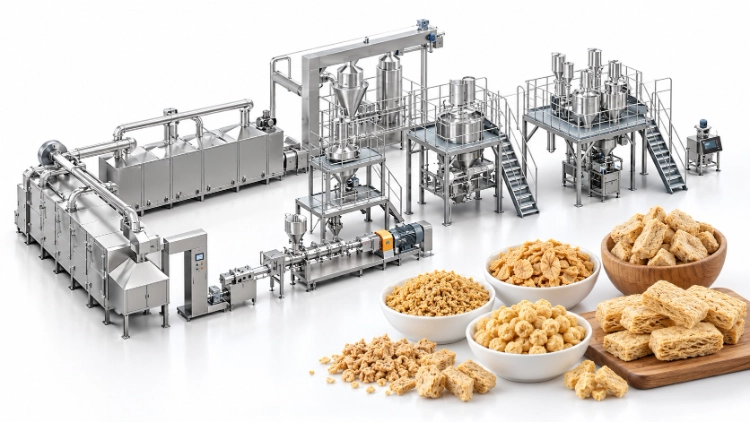
A dry TVP line is priced around the product it is expected to make, not around a generic plant-protein label. The production brief can define the protein source or blend, target form, particle or chunk range, required texture, planned pack format, and the product variations expected during the first operating period. A buyer may also separate the product ready for launch from future ideas that still need development. That avoids paying for an assumed flexibility that has not been defined.
Raw Materials and Formula Validation
Protein ingredients can differ in flow behavior, moisture condition, particle size, and how they respond during conditioning and extrusion. Those differences affect feeding, mixing, screw arrangement, die selection, cutting, drying, and the trial work needed before a project is released. A quotation can state whether it is based on a representative material and formula range, or on an untested starting assumption. The latter may still support preliminary planning, but it should not be mistaken for proof of the final process.
Finished Form and Pack Requirement
A smaller dry granule, a chunk, a strip, or another formed texture can change the forming, cutting, handling, and screening choices. The finished product also affects the downstream boundary: cooling time, dust control, product transfer, packing interface, and the space needed for intermediate storage. If the product must be hydrated or further processed by the buyer’s customer, that commercial path belongs in the specification, not in an unsupported assumption about the line itself.
Map the Full Process Before Comparing Cost
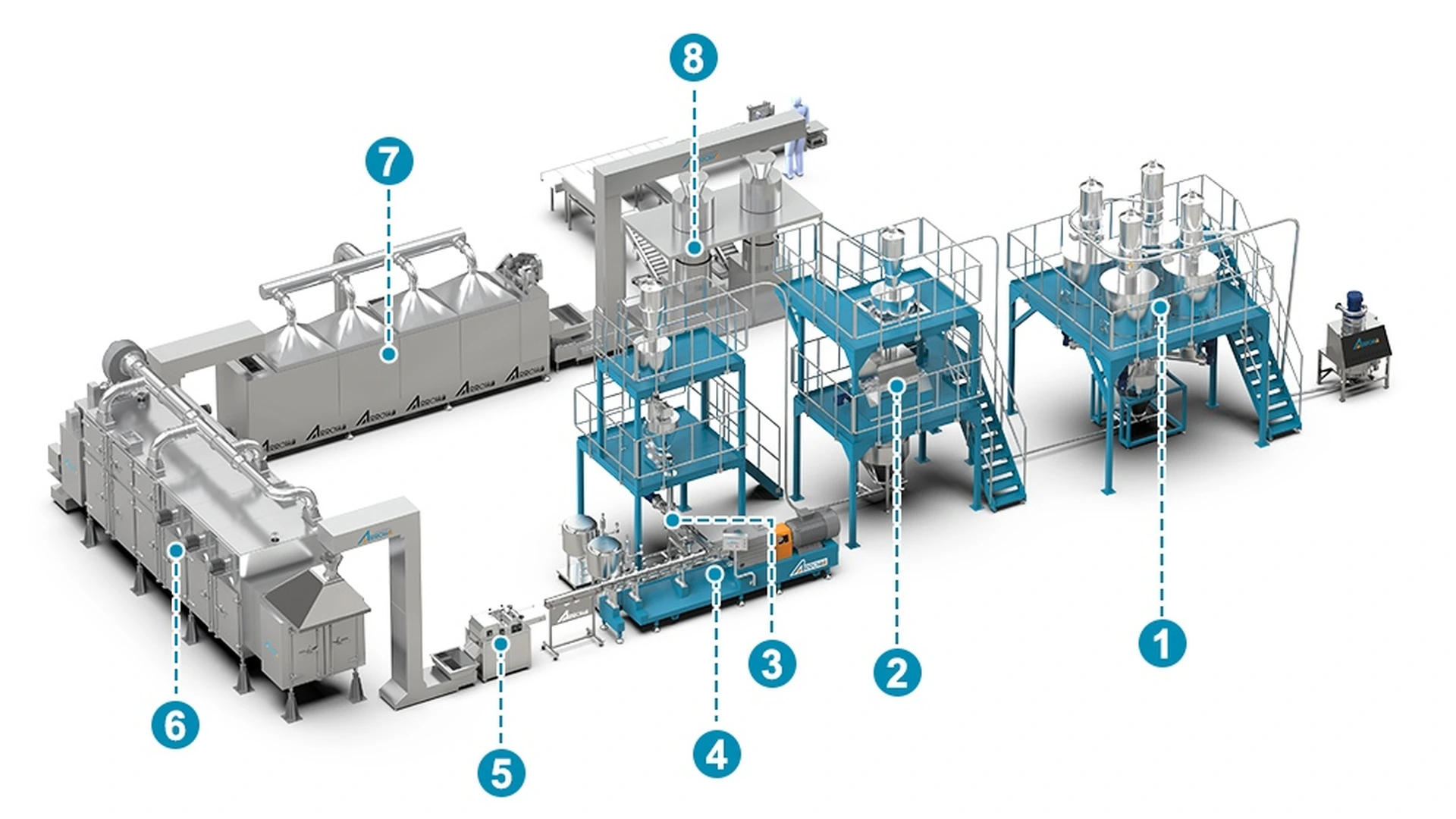
A plant protein extrusion line is more than its cooking section. A dry TVP route can include batching, mixing, conditioning, extruding, forming, drying, cooling, and packaging, while the selected line only includes the modules named in the agreed scope. The comparison therefore needs a line-by-line process map, including the material handoff between each stage and the items supplied by another party.
Extrusion, Forming, and Cutting
The extrusion section is central, yet it is not a complete project total. Feed control, conditioning, the extruder, dies, cutters, controls, and product transfer must be considered as one operating group. Changes to the intended shape or raw-material range can carry into screw, die, cutter, handling, and cleaning requirements. That is why a dry TVP production line quote must state the product basis behind the selected configuration rather than presenting a machine model as a complete cost answer.
Drying, Cooling, Screening, and Packing
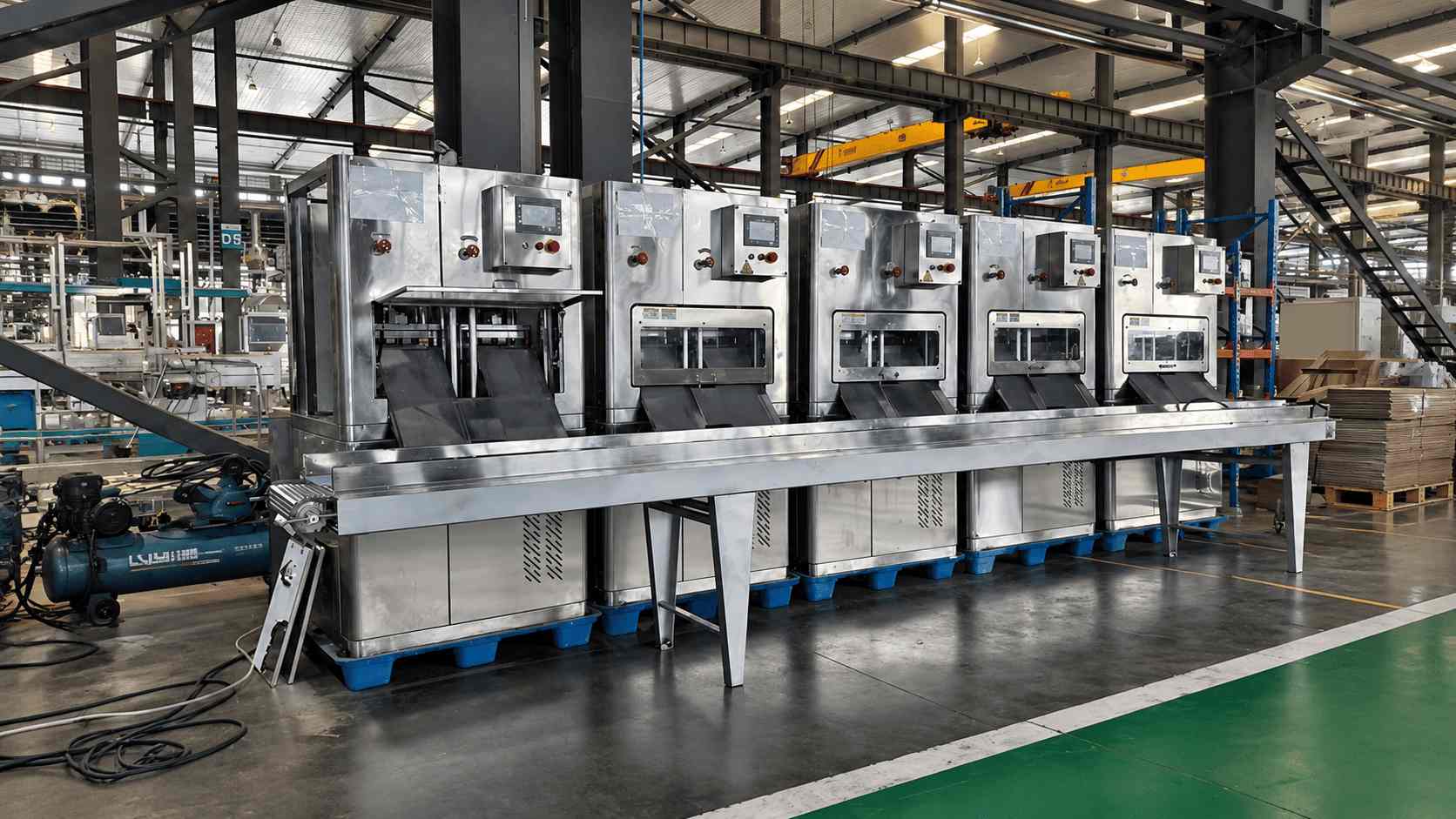
Downstream scope is a major source of variation. A dry route may require drying, cooling, screening or sizing, conveying, and packing interfaces. The selected dryer can bring its own hot-air circulation, exhaust, heating, and room-layout needs; it should not be treated as a standard addition without confirming the design. Packing may be supplied by the equipment provider, a specialist, or the factory. Each option changes the equipment boundary, the utility schedule, the integration work, and the acceptance record.
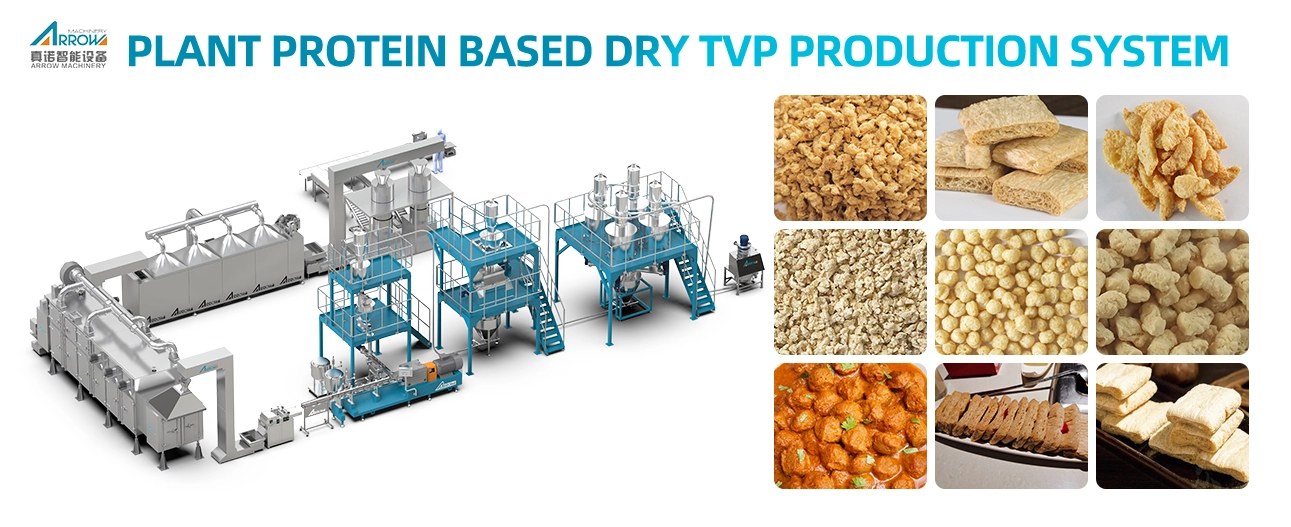
Once the dry route is defined, buyers can review ARROW MACHINERY’s dry TVP production line as a product-specific reference for the modules required by the planned process. The final equipment scope should still follow the buyer’s product brief, operating conditions, and agreed responsibility boundary.
Capacity, Utilities, and Automation Change the Project Boundary
Capacity is not only an extruder-size question. The project team needs an operating definition: shifts, planned running time, changeovers, packaging demand, storage pattern, and the limits imposed by drying, cooling, or packing. A higher hourly target may require different material handling, utility capacity, downstream equipment, controls, and workshop flow. Without an operating boundary, capacity language can make two different equipment packages appear comparable.
Utilities and Site Interfaces
Electrical supply, heating fuel, steam where applicable, compressed air where required by selected conveying, control, or packaging modules, ventilation, drainage, and dust handling belong in the project review. The supplier can provide connection information for the selected equipment, while local contractors may carry out building, electrical, ventilation, drainage, and utility work. Lifting access, maintenance space, raw-material storage, and finished-goods movement also change the workshop work that sits beside the equipment package.
For U.S. facilities, the selected equipment and utensils can be checked against 21 CFR 117.40 requirements for suitable design, construction, and maintenance. The regulation does not make the supplier responsible for the factory’s food-safety program, but it is a relevant boundary for equipment and site planning.
Automation and Information Needs
Automation can range from local equipment controls to broader material, production, and traceability links. The right scope depends on the buyer’s existing plant systems, staffing pattern, product range, and records required at the site. A request for an automated line should be broken into practical functions: batching control, recipe permissions, alarms, data capture, remote support boundary, and interfaces with upstream or packaging equipment. This keeps the automation discussion tied to operating needs instead of a general label.
Installation, Commissioning, Training, and Spares Are Cost Variables
The project cost does not end when equipment leaves the supplier. The quotation should identify unloading, installation support, utility connection responsibility, startup materials, commissioning activities, operator training, documentation, recommended wear parts, and the route for handling open items. These elements are not interchangeable. A factory may choose local installation, supplier-led support, or a mixed arrangement, but each option needs an owner and a clear handover point.
The previous handover stage matters here. Training may cover the delivered controls and operating sequence, while the factory remains responsible for staffing, approved procedures, food-safety controls, and product release. A spare-parts plan can separate commissioning items, normal wear items, and longer-term contingency stock. This makes the requirement visible without claiming a fixed service level or inserting an unverified after-sales cost.
ARROW MACHINERY can discuss installation, testing, operating training, spare parts, and troubleshooting through its project service scope. The selected responsibilities still need to be written into the actual project agreement.
Where TVP Equipment Scope Commonly Becomes Incomplete
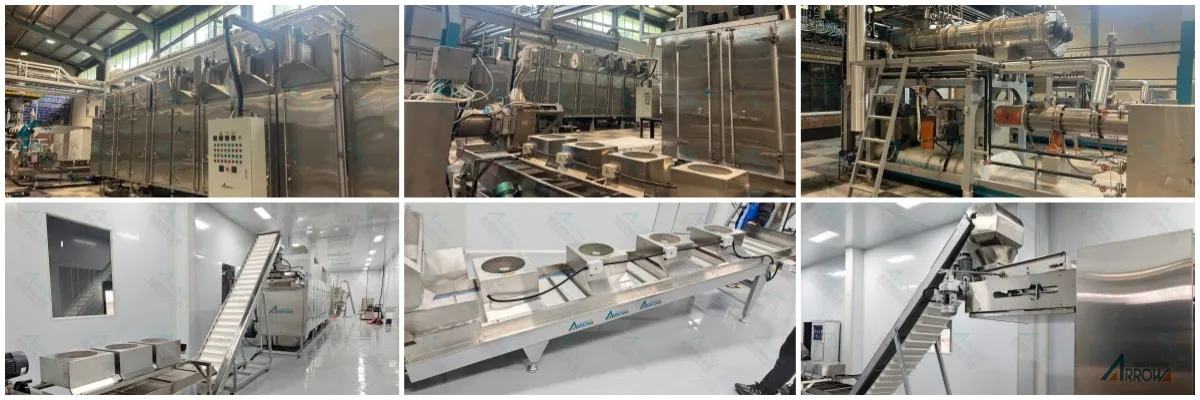
Incomplete scope often appears at the process interfaces. A supplier may quote the extrusion and forming section while the buyer expects drying, cooling, transfer, screening, or packing. Another proposal may include the equipment but leave civil work, utilities, onsite connection, controls integration, or training to the factory. None of those arrangements is automatically wrong. The problem begins when the ownership of each interface is unclear.
A project checklist can therefore carry three columns: supplied equipment, required site work, and open confirmation. It can include raw-material receipt, batching, the core dry TVP route, product transfer, downstream treatment, packing, utilities, safety access, controls, commissioning, documents, and spare parts. That format reveals whether the question is about tvp equipment cost, local construction, a third-party package, or a future expansion. It also keeps this page focused on whole-line scope instead of moving into a separate single-extruder cost analysis.
Use One Quote Basis for Every TVP Production Line Manufacturer
A fair comparison begins when each tvp production line manufacturer receives the same product brief, site information, operating boundary, and request for inclusions and exclusions. The buyer can ask each party to mark the supplied process modules, third-party interfaces, utility points, drawings, control scope, documents, trial assumptions, acceptance checks, installation boundary, training, and spare-parts recommendation. A lower equipment figure is difficult to evaluate until those items are aligned.
The review should also separate an engineering proposal from a commercial assumption. If a formula, local utility, packaging format, construction detail, or performance condition is not available, the quote can show it as an open item. That makes risk visible early. It is more useful than treating a broad production claim as a confirmed project fact.
Conclusion
Dry TVP production line cost changes because the project being priced changes. Product form, raw-material validation, operating boundary, extrusion and downstream configuration, utilities, automation, site work, installation, training, spares, and commercial exclusions all affect the final scope. A more reliable comparison uses one detailed product brief and one responsibility map for every supplier. This approach does not create a universal cost figure, but it makes it easier to identify where a lower quotation may exclude work the factory still needs to fund, coordinate, or validate.
If the project route is still undecided, the Dry TVP Production Line vs High Moisture Meat Analog Line comparison can help clarify the process, downstream, storage, and operating differences between the two routes before equipment costing begins.
FAQ
Q: Why does dry TVP production line cost vary between quotations?
A: Quotations can cover different product assumptions, process modules, downstream equipment, utilities, automation, installation, training, spares, and site-work boundaries. The totals become comparable only when every supplier works from the same project brief.
Q: Does a dry TVP line quote always include drying and packing?
A: No. Drying, cooling, screening, packing, and related conveying may be included, optional, locally supplied, or outside the stated scope. The buyer should request an explicit module list and identify each interface owner.
Q: What information helps a TVP production line manufacturer prepare a comparable proposal?
A: Useful inputs include the intended product form, protein raw-material range, formula status, operating pattern, expected variations, site utilities, workshop limits, packaging plan, desired automation functions, and the services expected during installation and handover.


