



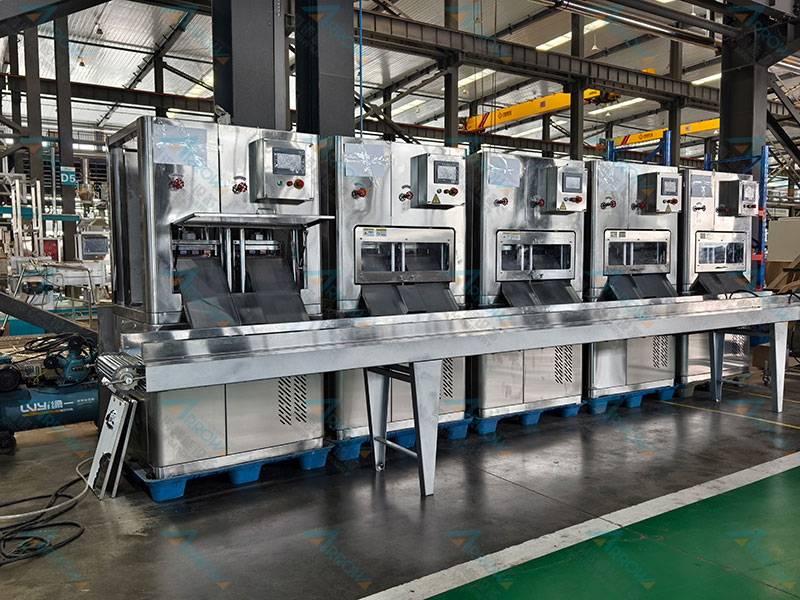


Starting a puff snack factory is less about buying one food extruder and more about defining the complete route from raw materials to sealed packs. A project can look affordable at quotation stage and become expensive later when drying, seasoning, packing, utilities, installation, or change parts were treated as assumptions. A practical budget begins with the product format, the process route, and the equipment interfaces that affect the building and operating plan.
For a buyer comparing puffs production lines, the useful question is not simply which machine has the lowest price. It is which scope can produce the intended snack, at the planned operating pattern, with site work and future changes visible before the order. Direct-cut puffs, filled snacks, coated products, and fried pellets each shift the equipment list and the cost risks.
Define the Snack Route Before Asking for a Total Price
A factory budget becomes more reliable when the first product family is fixed before equipment is priced. The brief should state the raw-material group, target shape, seasoning method, moisture target, pack format, and whether the first launch includes one product or several. A broad request for a puff snack production line leaves too many choices open, so two quotations may describe different scopes while appearing to compete on the same project.
Direct-Cut, Filled, and Fried-Pellet Paths
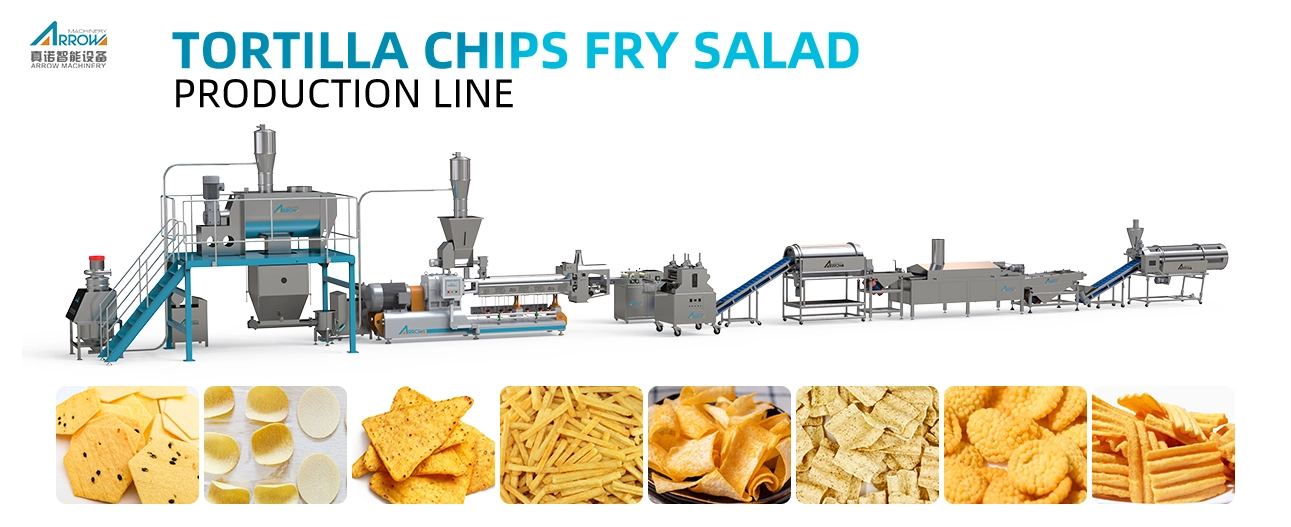
Direct-cut expanded snacks commonly move through batching, mixing, Extruding, drying, seasoning, cooling, and packing. Center-filled products add a filling route and closer coordination between the die, cutter, and downstream handling. Fried pellets require a defined pellet-forming and drying route before frying, together with oil-management equipment. Each route changes the modules, utility connections, floor area, and points that need cleaning and operator access.
Formula and Output Assumptions
Formula details influence more than ingredient cost. Bulk density, particle size, moisture, fat level, filling behavior, and the desired expansion affect batching, feeding, screw configuration, die selection, cutting, and drying. Output also needs a time basis: planned hours per shift, changeover frequency, and the products that must share the line. Without those inputs, equipment sizing lacks a reliable technical basis and a production target can be mistaken for a guaranteed result.
Separate the Equipment Budget into Cost Blocks
A complete project budget should be divided into blocks that can be checked independently. The main equipment price is only one block. Ask for a scope sheet identifying included modules, options, local-supply items, installation boundaries, and exclusions so a low initial number can be compared with a fuller proposal.
Build a Line-by-Line Cost Checklist
Before comparing totals, check five blocks: batching, mixing, and feeding; extrusion, dies, cutters, and change parts; drying, seasoning, cooling, or frying; packing, inspection, coding, and case handling; and utilities, installation, transport, commissioning, and startup support. Mark each item as included, optional, locally supplied, or excluded, and record the quotation owner. This exposes missing scope before the purchase order.
Core Processing and Forming Equipment
The core block may include batching, mixing, feeding, the extruder, and any required pre-conditioner, die and cutter, and the control system. Depending on the product, it may also include filling, conveying, or a specific forming unit. Buyers comparing snack extruder equipment should match each module to the product brief instead of treating the main extruder as the whole line. ARROW MACHINERY offers food-processing extruders and related equipment for configured routes. See its puff snack equipment range. The correct selection still depends on the defined formula, format, and downstream route rather than on the machine name alone.
Drying, Seasoning, Cooling, and Packing
Downstream equipment is where many factory budgets become incomplete. A dryer may require hot-air circulation, exhaust, gas, steam, or electric heating depending on its design. Seasoning can involve oil or powder application, followed by cooling before packing. Packing equipment, nitrogen generation where selected, conveyors, metal detection, coding, and case packing may sit outside an extrusion supplier’s quoted scope. Every interface needs an owner, a utility note, and a place in the layout.
Utilities, Building Work, and Hidden Installation Costs
Utilities should be priced from the selected equipment rather than copied from a generic factory template. Electrical capacity, heating fuel or steam, compressed air where required by conveying, control, or packing modules, water, drainage, ventilation, and dust control can all affect the building plan. The factory also needs access routes, equipment foundations where applicable, safe maintenance clearance, raw-material storage, finished-goods movement, and cleaning areas. Include the connection point and responsible party for each service.
A quotation should distinguish supplier installation from local civil, electrical, ventilation, drainage, and utility work. Travel, lifting, unloading, commissioning support, operator training, and startup materials can also sit outside the equipment total. These are not minor details. If the site is not ready when the line arrives, the factory may incur repeat mobilization charges or additional storage costs before it can be tested.
Cost ownership should be written beside each interface. The equipment supplier may define connection points and provide drawings, while the factory or a local contractor completes cabling, ducting, drainage, foundations, or building permits. The same split can apply to product-development trials, packaging-film approval, laboratory testing, and finished-goods release. A responsibility matrix turns those assumptions into questions that can be answered before the purchase order, while changes are still manageable.
The budget should also separate one-time project costs from recurring operating costs. Initial tooling, change parts, commissioning materials, spare parts, staff training, and validation work can be listed separately from electricity, fuel, labor, packaging film, oil, cleaning materials, and maintenance consumption. It shows which costs affect the investment decision and which costs belong in the operating model after startup.
That separation also helps the factory compare a smaller launch line with a staged expansion. The cheaper first purchase is not automatically the lower-cost project if it creates major utility changes, extra handling, or a second packing investment when demand grows.
Use Trials and Acceptance Checks to Protect the Budget
A product trial cannot predict every site result, but it can expose an unsuitable process route before the factory layout is finalized. The trial brief should identify the representative raw material, formula range, die or cutter arrangement, target product form, and observations to record. It should also state what the trial does not prove, such as long-run production, local utility performance, packing speed, or final shelf-life results.
FAT, Commissioning, and Open Items
Factory acceptance testing and site commissioning answer different questions. FAT can check equipment identity, listed modules, controls, safety functions, and an agreed run before shipment. Commissioning deals with the delivered line, site utilities, installation, formula inputs, and operator actions. A budget should carry open items from FAT into the installation and startup plan instead of treating a factory demonstration as acceptance of the complete food process.
Food-facility equipment and maintenance decisions also need to be reviewed against the applicable operating market. For a U.S. facility, the equipment discussion can be checked against 21 CFR 117.40 equipment requirements. The rule does not transfer the factory’s food-safety responsibilities to the equipment supplier, but it is relevant to hygienic design and maintenance planning.
Make the Supplier Scope and Support Visible
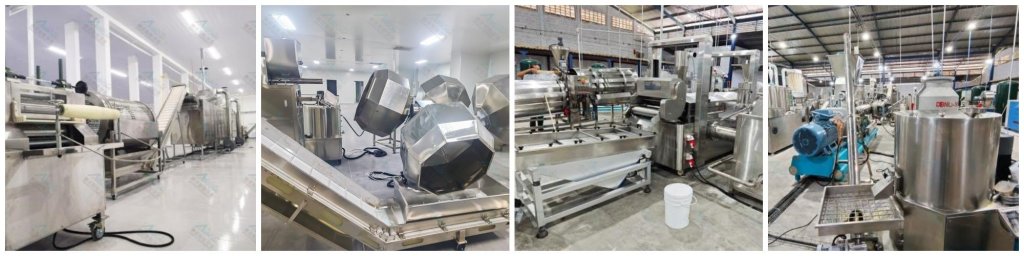
Once the product path and cost blocks are clear, the equipment supplier’s role can be compared more fairly. The buyer can ask for the equipment list, layout input, utility schedule, manuals, installation plan, training scope, spare-parts recommendation, and the process for handling startup issues. A supplier may support design, installation, testing, and training, while the factory remains responsible for its formula, staffing, food-safety system, and production release.
ARROW MACHINERY can support installation, testing, operator training, spare parts, and troubleshooting within the agreed service scope. Those items should be matched to the selected puff snack route and written into the project responsibility list.
Plan for Expansion without Paying for Unused Capacity
A new puff snack factory may begin with one format and add another later. Space can be reserved for additional drying, seasoning, packing, or storage modules, but future expansion should not be treated as an included capability unless the quotation states what is prepared now. A staged plan can compare the cost of spare electrical capacity, structural access, control expansion, and future change parts with the cost of rebuilding the workshop later.
A budget is strongest when each future option has a trigger. For example, a second product may require a different die, cutter, filling system, or dryer setting. The project team can then decide whether to purchase a change part now, reserve space only, or wait for a confirmed market demand. This protects cash flow without pretending that every product can run on one unchanged setup.
Conclusion
Starting a puff snack factory requires a route-based budget. A dry or fried puff snack production line should be priced around the intended product route and finished format. Define the product and formula range first, separate core processing from drying, seasoning, packing, utilities, and building work, then use trials, FAT, commissioning, and responsibility lists to close the gaps. Unassigned interfaces can create additional installation and startup costs. A supplier discussion becomes more useful when the buyer brings a product brief, site conditions, output plan, and a list of questions about what is included today and what belongs to a later expansion.
FAQs
Q: What equipment is usually needed for a puff snack factory?
The route may include batching, mixing, feeding, an extruder, die and cutter, drying or baking, seasoning, cooling, conveying, and packing. Filled or fried products can require additional modules, so the final list depends on the product format and formula.
Q: Why can two puff snack line quotations have very different prices?
They may cover different process routes or exclude different downstream equipment, utilities, installation work, controls, change parts, or packing modules. A line-by-line scope comparison is needed before the totals can be judged.
Q: Can one extruder produce every type of puff snack?
An extruder can support more than one product family when the configuration, dies, cutters, formula range, and downstream equipment are suitable. Product trials and a defined changeover plan are needed before treating one setup as suitable for all formats.


