



A fortified rice kernel may leave the extruder with a clean outline yet arrive at the packing machine with chipped ends, cracks, or excessive fines. Damage that appears after drying is often blamed on the formula, although the first broken pieces may have developed at a conveyor discharge, a vibrating transfer, or a poorly controlled change in product temperature.
For extruded fortified rice, the practical target is not simply a visually convincing grain at the die. The line must deliver kernels that survive cooling, conveying, screening, and packing with an acceptable proportion of intact product. That requires a transfer plan based on the physical condition of the kernels at each stage.
Where Does Breakage Begin After Extrusion?
Freshly formed rice-shaped kernels contain moisture and have not yet reached their final mechanical condition. Their surfaces can be soft enough to stick or deform, particularly where the die produces thin tips or an uneven cross-section. Aggressive movement immediately after cutting can flatten these features rather than produce the brittle fracture associated with later handling.
The first inspection point belongs directly after the forming and cutting section. A sample here establishes whether the kernel already has cracks, irregular lengths, thin tails, or joined pieces. Without this reference, a plant may attribute defects to the conveyor even though they were present before transfer.
As the kernels dry, the type of damage can change. A grain with a hard surface and a wetter center may develop stress during subsequent moisture removal or cooling. Once it becomes sufficiently dry, a sharp impact may chip an end or split the grain.
Why Does the Product Condition Matter More Than Conveyor Speed Alone?
The same conveyor can handle a warm, partly dried kernel differently from a cooled, finished kernel. At an early stage, sticking and surface deformation may dominate. At a later stage, collisions and drops can create visible fractures.
Transfer design also depends on how kernels meet the equipment. A short, controlled slide into a receiving hopper is not equivalent to a vertical fall onto a metal surface. A belt that carries a thin, even layer behaves differently from one that repeatedly builds a deep pile at the discharge. Impact direction, contact material, and accumulation points deserve attention alongside throughput.
For this reason, a fortified rice conveying damage assessment should identify the condition of the kernels at each transfer, not just the number of conveyors.
What Should Be Checked at the First Cooling and Transfer Point?
The transition from extrusion into initial cooling is sensitive because the newly formed kernels have not completed moisture removal. ARROW’s instant rice process configuration includes a vibration cooling system and a pneumatic conveyor before pre-drying. This sequence makes the condition of kernels entering the air-conveying stage an important trial checkpoint rather than an assumed constant.
Vibration can help distribute material and prevent a dense mass from moving as one lump. Excessive movement or a harsh discharge can still damage delicate shapes. The trial should compare kernel dimensions and visible defects before and after this section while the line is running at a representative feed rate.
The inlet to pneumatic conveying needs separate attention. Air movement transports kernels through the line, but bends, receiving surfaces, and abrupt deceleration can become impact points. The conveying design should be reviewed against sample behavior and the required transfer distance.
How Can Drying Create Breakage That Appears Later?
Pre-drying and main drying serve different purposes. The early stage reduces surface moisture and helps limit sticking or clumping. Main drying then removes additional moisture from the kernel interior. A surface that becomes too rigid while the center remains comparatively wet can create an uneven condition that is only revealed after cooling or handling.
Dryer loading influences this result. If kernels form a thick layer or gather in one area, some pieces receive different exposure to hot air. Samples from separate belt positions, taken during stable operation, help show whether cracking is concentrated in particular parts of the product stream.
A visible crack at the packing station therefore does not prove the final conveyor caused it. The damage may have started as a drying defect and grown during normal transfer. Compare samples after pre-drying, after main drying, and after cooling before changing the conveying equipment.
What Changes When Kernels Pass Through Final Cooling?
Final cooling prepares dried kernels for handling and packing. A countercurrent cooling stage is among the components described for ARROW’s fortified and instant rice systems.
Cooling can expose earlier structural weaknesses. A kernel that has developed internal stress during drying may split when it is subsequently moved, even if the cooler itself does not apply a severe force.
The discharge arrangement matters as much as the cooling principle. Kernels falling into an undersized hopper can strike the receiving surface and then be compressed by incoming material.
How Should Different Transfer Methods Be Compared?
A belt conveyor can carry a relatively gentle layer when loading and discharge are controlled, but the final drop remains important. A vibrating conveyor may spread product and meter the flow, while its amplitude and contact surfaces must suit the kernel. Pneumatic conveying can move material through an enclosed route, although changes in direction and the receiving separator require particular scrutiny.
|
Transfer point |
Main condition to inspect |
Useful trial observation |
|
Extruder to first cooler |
Soft or irregular kernels |
Deformation, sticking, joined pieces |
|
Cooling to air conveyor |
Partly conditioned kernels |
Chipping after bends and at receiver |
|
Dryer to final cooler |
Dried kernels |
New cracks, fines, uneven moisture |
|
Cooler to screening or packing |
Finished kernels |
Broken ends, dust generation, accumulation |
The choice depends on kernel condition, route length, available space, cleanability, and the transfer interfaces already specified.
How Can Screening Data Identify the Damaging Stage?
Screening separates fines and broken fragments from acceptable kernels, but the final reject bin alone does not locate the cause.
Define the acceptance categories before testing. A buyer may distinguish intact kernels, chipped but acceptable kernels, broken pieces, and fines. The boundaries should reflect the actual saleable specification and downstream use, including whether the fortified kernels will later be blended with conventional rice.
For a basic intact-kernel yield check, divide the mass of accepted kernels by the mass of the corresponding sample and report the percentage. Use the same sieve and inspection rules at each point. Where moisture changes significantly between samples, account for that change before treating differences in mass as breakage losses.
How Does ARROW’s Fortified Rice Line Fit This Review?

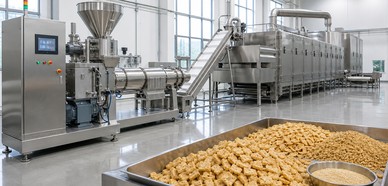
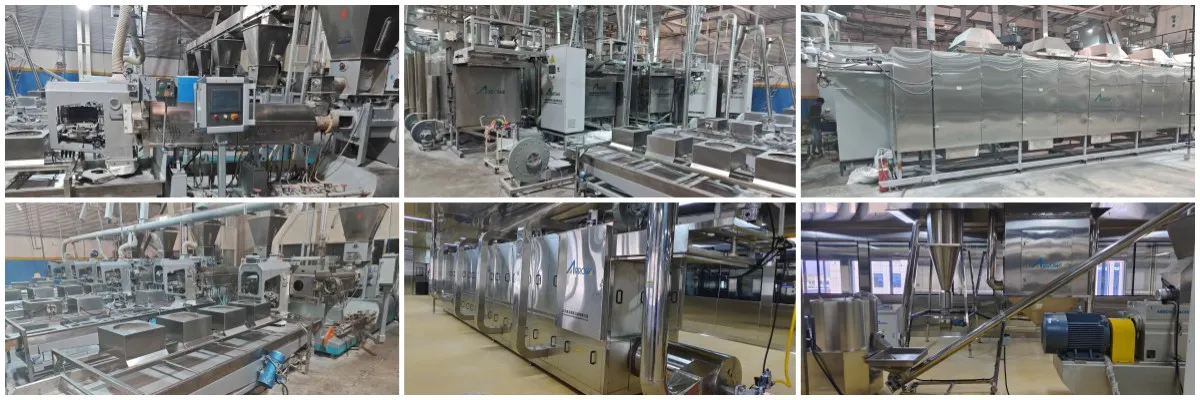
ARROW’s Extruded Fortified Rice Kernel Production Line combines ingredient mixing, twin-screw extrusion curing, pre-drying, drying, cooling, and packaging. Its product information describes precision dies for different rice shapes and continuous drying and cooling equipment. The configuration provides a relevant starting point for a fortified rice kernel handling review, but it does not establish a universal breakage rate.
The separate Instant Rice Production System shows vibration cooling, pneumatic conveying, pre-drying, further drying, and countercurrent cooling in its equipment sequence. The actual order and equipment specification must follow the quoted project, since fortified rice and other instant rice products can require different process conditions.
The manufacturer’s equipment selection should be tied to the target kernel size, formulation, throughput, and final moisture specification. A buyer comparing configurations needs both figures, along with a clear definition of where each is measured.
What Should a Site Acceptance Trial Record?
A representative trial begins with the agreed formulation and kernel dimensions. Record the feed condition, die and cutter arrangement, and the state of the kernels at the extruder outlet. Keep operating conditions stable long enough to obtain comparable samples from the successive transfer and drying stages.
At each location, inspect visible cracks and broken ends, collect fines using the agreed method, and note temperature and moisture where relevant.
ARROW describes technical design, installation, and commissioning services for food production projects. For this application, the agreed commissioning scope should specify sample points, acceptable breakage criteria, and which party supplies the inspection and weighing methods.
Which Requirements Belong in the Purchase Specification?
The equipment enquiry should include a representative fortified kernel sample, target length and shape, formulation category, planned output, and whether the product will be packed directly or blended later. A simple flow diagram should identify every discharge, elevation change, pneumatic section, dryer, cooler, and screening step.
Acceptance criteria should cover both product quality and equipment performance. The buyer needs a defined method for measuring intact-kernel yield, the allowable fraction of fines, and the conditions under which the result is tested. Any required changes to chutes, receivers, or conveyor interfaces should be included in the quotation rather than left as unassigned site work.
For a project-specific review, buyers can submit fortified kernel samples and transfer requirements alongside their layout and capacity targets. This gives the equipment supplier a practical basis for discussing the handling route and acceptance plan.
Conclusion
Fortified rice kernel breakage is best traced by sampling the product as it moves through forming, cooling, conveying, drying, and packing. A crack found at the final screen may originate in an earlier drying stage, while a sudden increase in chips after one discharge points toward handling damage.
That approach makes transfer design, rather than a general promise of gentle handling, part of the equipment acceptance decision.
FAQs
Q: Is pneumatic conveying unsuitable for fortified rice kernels?
A: Not necessarily. Suitability depends on kernel condition, conveying velocity, bends, receiving equipment, and the complete route. A representative trial should check damage before and after the pneumatic section.
Q: Can screening alone solve a high kernel breakage rate?
A: Screening can remove fragments from saleable product, but it does not prevent damage. Samples taken upstream are needed to identify whether breakage begins during drying, cooling, or transfer.
Q: Should fortified rice and instant rice use the same handling settings?
A: Not by default. Their formulations, kernel structure, moisture targets, and finishing requirements can differ. Settings should be validated against the specific product and agreed acceptance criteria.


