




A filled snack can leave the die with an even outer shell and still split at the next cut. Another batch may show cream at the seam or irregular pillow lengths. The cause may sit in the extruded shell, the filling feed, or the cutter’s timing. Increasing the filling rate without finding that cause often moves the defect instead of correcting it.
For a center filled snack production line, the useful starting point is the point where the shell, filling stream, and cut meet. The finished piece helps identify which stream changed first.
Where Does the Mismatch Begin?
The outer shell comes from the extrusion and forming section. Its movement through the die must remain sufficiently consistent for the filling stream and cutter to work against it. Changes in shell speed or cross-section alter the filling carried per piece, even with a constant pump setting. A stretched shell may also have a thinner wall at the closure point.
The filling stream has its own behavior. Chocolate cream, fruit paste, and nut-based fillings do not necessarily flow alike at the same temperature. A pump may deliver an acceptable average quantity while individual pieces still receive unequal portions because of pulsation, temperature drift, or a partial restriction in the feed path. These are diagnostic possibilities, not confirmed defects.
The cutter adds a third event. It must divide a moving, filled strand without pushing too much filling toward the cut face. A small timing change may be barely visible in a long stick but obvious in a short pillow. Compare the shell before filling, the filled strand, and the cut pieces.
Shell Stability Sets the Window for Filling
A co extrusion snack machine cannot compensate indefinitely for an unstable shell. The grain mixture, feed condition, extrusion settings, and forming die determine the shape that receives the filling. If the shell expands or stretches unevenly, the opening available for filling changes along the strand. That can leave one piece with a thick wall and the next with a weak corner.
Observe the unfilled shell during a controlled trial where the equipment permits it. Record its width or diameter at the same point after the die, then note any drift as the line warms up. A correct die opening does not prove shell stability. Transfer must not twist or flatten it.
Pillows, Sticks, and Balls Behave Differently
A long filled stick places fewer closures along a given length of product. Short pillows have frequent cut faces and need repeatable sealing or closure behavior. Rounded pieces place more emphasis on how the forming and cutting arrangement creates a closed end. The same filling quantity per kilogram of product will not produce the same visible result in all three formats.
A new die calls for another sample run; the previous cutter setting may no longer close the piece properly.
When Is the Filling Stream Responsible?
Judge filling feed at the nozzle, not by pump setting alone. If the deposit varies while the shell dimensions remain steady, examine filling temperature, consistency, supply level, and any interruption in the delivery path. A recipe change alters flow resistance and possibly the deposit.
For cream filled snack leakage, the location of the leak is useful evidence. Filling exposed at every cut face suggests a different problem from occasional seepage through a side wall. Repeated end leakage points toward deposit position or closure behavior. Isolated side-wall leaks warrant a closer look at shell thickness, surface damage, or pressure during handling.
Do not assume that more viscous filling always seals better. A thick filling can resist movement through the nozzle, whereas a thin one can spread before the cut closes. Establish the workable range with measured deposits and cut samples, not a universal viscosity figure.
How Cutting Speed Changes the Finished Piece
Filling and cutting synchronization is a relationship between the speed of the moving strand, the rate of filling delivery, and the cutter cycle. No single panel setting describes it. When the strand travels farther between cuts, the piece becomes longer; the deposit and closure must still match that length. If the cutter cycles too frequently for the chosen filling behavior, exposed ends or distorted pillows may appear.
A useful test holds the shell condition steady and changes only one adjustable variable at a time. Mark a short run of consecutive pieces in production order. Measure their lengths and weights, then open selected pieces to compare the position and quantity of filling. This preserves patterns lost in mixed samples. If every second piece is underfilled, the team has a repeatable sequence to investigate. Random defects suggest a different line of inquiry. In either case, keep the order of samples intact and note the time of each adjustment; otherwise a good result cannot be linked confidently to the setting that produced it.
Cutting blades and forming components also deserve inspection. A dull or poorly aligned cutter may drag the shell instead of separating it cleanly. The result can resemble a filling-pressure problem even though the filling stream was stable. Maintenance records help identify mechanical changes.
Read the Defect Before Changing the Setting
A short defect record can connect the visible result to the most relevant process stage. It directs inspection without presuming the cause.
|
Observed result |
First comparison |
Possible process area |
|
Alternating long and short pillows |
Strand travel per cutter cycle |
Cutter timing or strand-speed variation |
|
Filling exposed at many cut ends |
Deposit position before cutting |
Filling delivery and closure sequence |
|
Occasional side-wall leakage |
Wall thickness and handling marks |
Shell forming or downstream damage |
|
Uneven fill weights with stable shell size |
Deposit quantity across consecutive pieces |
Filling feed stability |
|
Cracked shells after drying |
Samples before and after the dryer |
Drying conditions or shell strength |
The order of observations matters. If the strand is already irregular before the cutter, adjusting the cutter alone is unlikely to restore uniform fill weight. If pieces are sound at cutting but leak after drying or cooling, the investigation moves downstream. Samples from both points localize the defect.
How Do Drying and Cooling Affect a Filled Snack?
A filled snack is not finished when the cutter releases it. The shell still passes through thermal processing and handling, and the filling responds differently from the outer cereal structure. Excessive deformation or cracking after drying can expose a deposit that was initially enclosed. A cooling stage can also reveal damage created by transfer or an unsuitable product condition.
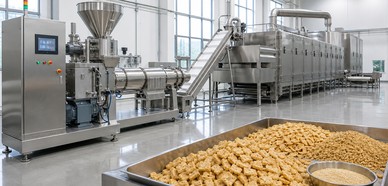
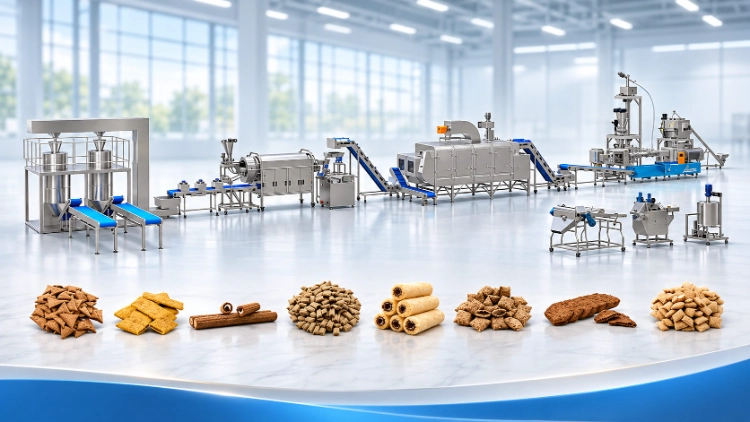
The Co-extrusion Chocolate Filling Snacks Production Line from ARROW covers mixing, extrusion, forming, filling, cutting, drying, seasoning, and downstream handling. Its applications include filled sticks, pillows, and balls. The configuration must match the selected product.
The relevant acceptance samples come from several positions: immediately after cutting, after drying, and after cooling. For coated products, retain a post-coating sample. Compare leakage, shell cracking, and visible shape change. Identify the first stage where a sound piece fails.
What Changes When a Factory Switches Fillings?
A factory using one chocolate cream may be able to keep a stable production routine for long runs. A plant switching between cocoa cream, fruit paste, and nut filling faces a different task. Each material may need its own handling temperature, feed setting, and cleaning procedure. The filling feed may become the limiting step.
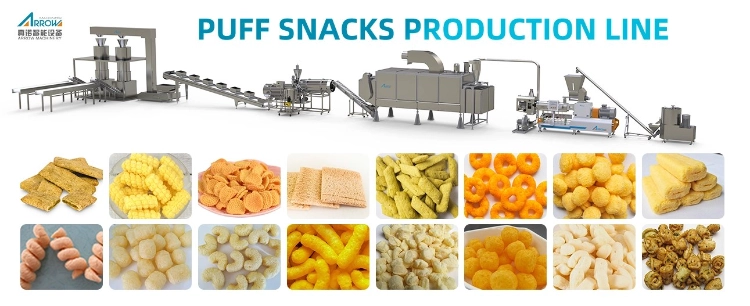
A factory comparing filled snack production equipment with a standard puff snacks production line should review access to the filling path, removal of residual product, and practical changeover steps. A recipe with particles or a different flow profile may call for a nozzle review or a new trial. The quotation should identify any change parts needed for the planned product range; compatibility with one filling does not establish compatibility with every filling.
Build Acceptance Around Consecutive Saleable Pieces
A short demonstration can conceal intermittent leakage. For a production acceptance test, agree on the filling formula, shell dimensions, piece weight, cut length, and sampling points before the run. Define output as gross throughput or accepted finished pieces.
Take consecutive samples after the line has reached the agreed running condition. Record the total produced, the number rejected, and the defect types. If the buyer plans several shapes or fillings, each representative combination needs a defined trial. One successful chocolate-filled pillow run cannot prove a fruit-filled ball will meet the same quality target.
ARROW’s technical design and operating support includes process planning, workshop layout guidance, field debugging, and operator training. Tie commissioning to the actual filling and cutting arrangement.
Conclusion
The critical decision is where the mismatch starts. A changing shell dimension, an unstable deposit, and a mistimed cutter can all create an open or leaking filled snack, but each requires a different correction. Samples taken before cutting and after downstream processing give the factory a clearer route to the cause.
Before approving a center-filled line, agree on representative shapes and fillings, consecutive-piece sampling, and a definition of saleable output. Buyers can share their filling recipes, target shapes, and trial requirements with ARROW’s technical team to establish the equipment scope and acceptance method.
FAQs
Q: Can a filled snack line use the same cutter setting for pillows and sticks?
A: Not automatically. Piece length and closure frequency differ between formats. The forming tool, strand speed, filling delivery, and cutter cycle need a representative trial for each shape.
Q: Does leakage always mean the filling pump is set too high?
A: No. Leakage can originate from a thin shell, poor closure at the cut, handling damage, or changes during drying. The position and timing of the leak help determine which stage to inspect first.
Q: Should capacity be checked before or after rejected pieces are removed?
A: The quotation may state a nominal line rate, but purchase acceptance should also measure finished pieces that meet the agreed specification. Record rejects and interruptions so the buyer can distinguish gross throughput from saleable output.


