



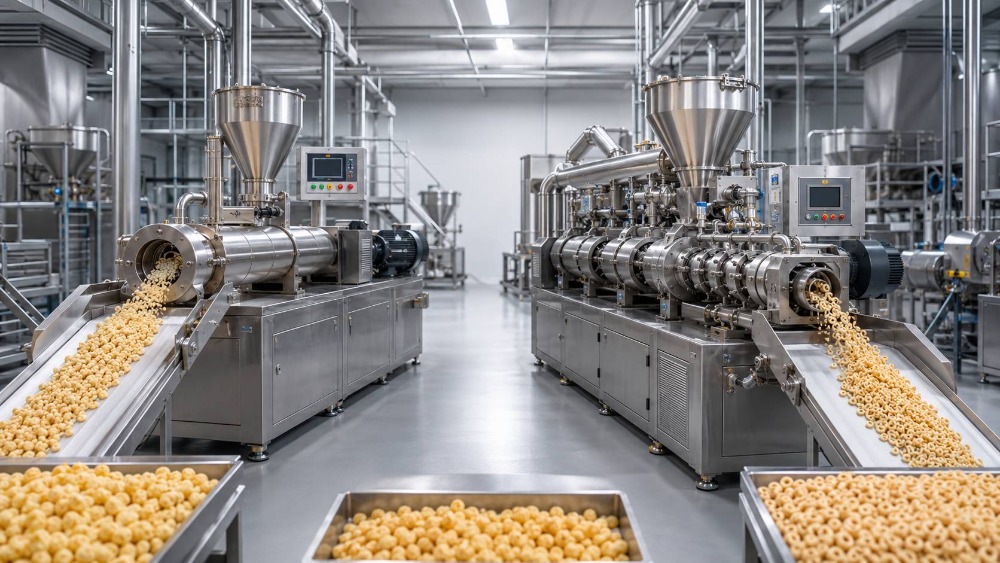
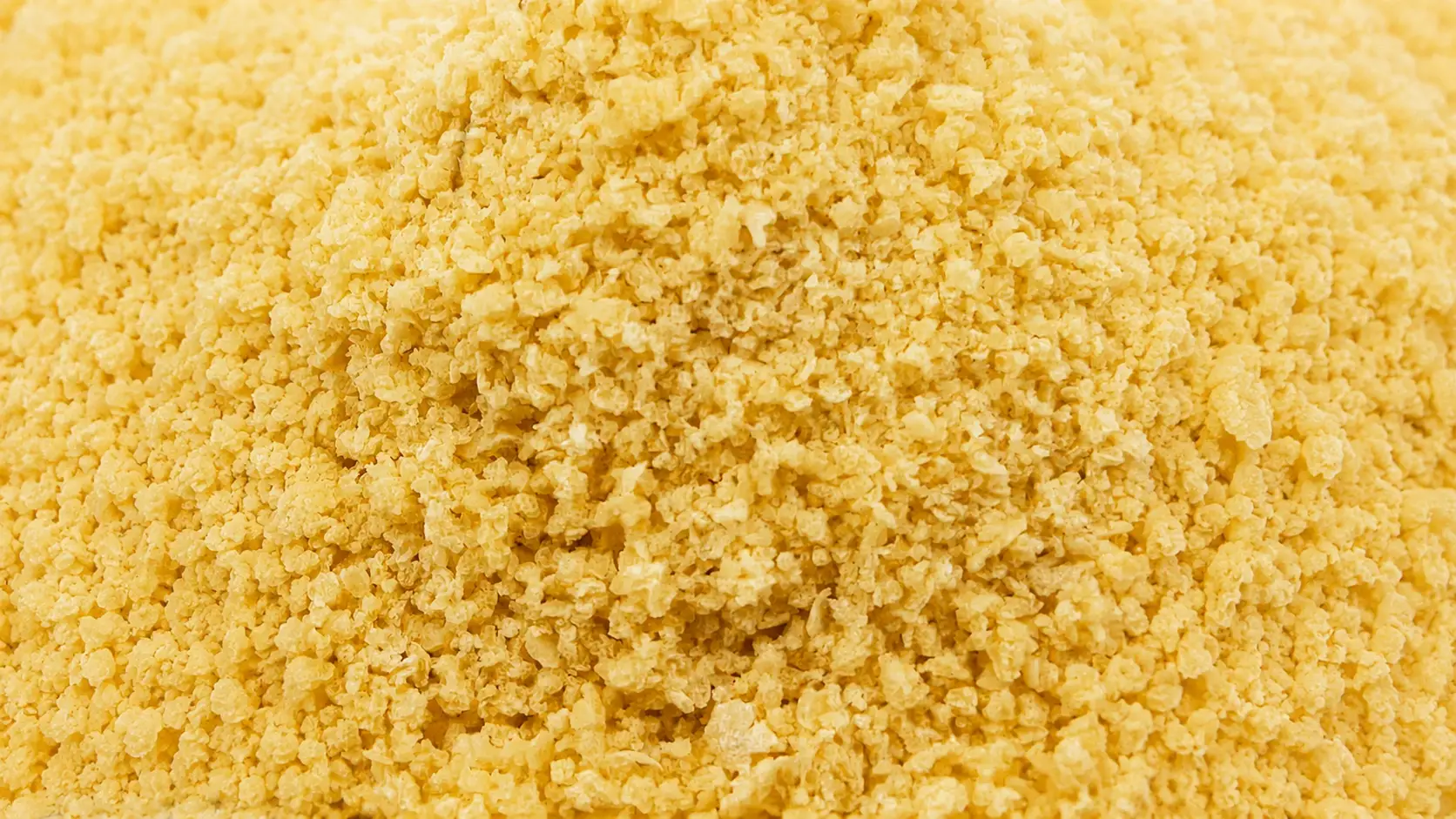
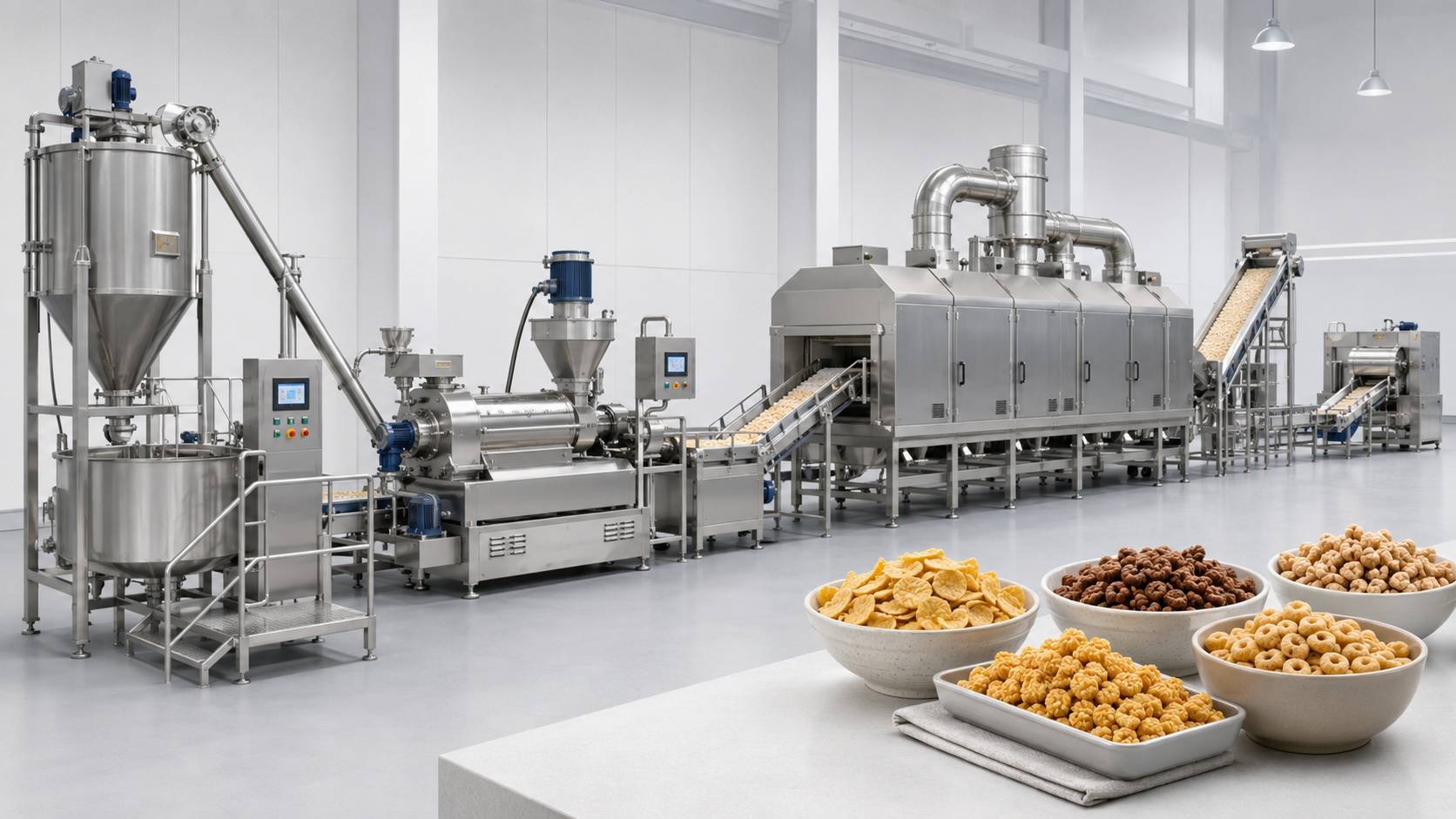
Ordering cereal equipment is a long-term production decision. A breakfast cereals processing equipment manufacturer should be checked by product fit, process completeness, mechanical quality, documentation, and service support before any final payment is made. For B2B buyers, the risk is not only buying the wrong model. The bigger risk is ordering a line that cannot support the intended cereal shapes, grain formulas, coating process, drying demand, or packing route.
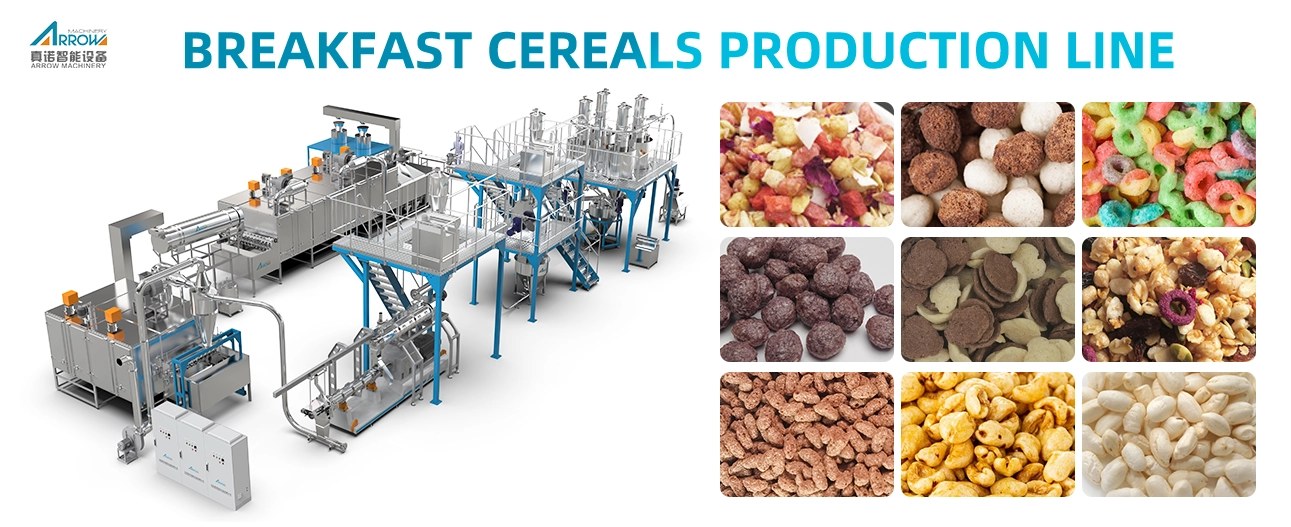
A practical inspection starts with the product plan. A Breakfast Cereals Production Line may be used for fruit loops, crispy rice, honey rings, cheerios, oat rings, bran cereals, coco crunch, core-filled cereals, and chocolate cereal. Each product brings different checks. Some need stable expanded shapes, some need syrup or powder coating, and core-filled products need filling and cutting control.
What Product Range Should Buyers Confirm First?
The first check is not the machine price. It is whether the planned cereal range can be made on the proposed line without later rebuilding the process. Buyers should prepare a product list before asking for a final configuration.
Check planned cereal shapes and product styles
Fruit loops, cheerios, honey rings, crispy rice, and bran cereals all belong to the wider breakfast cereal category, yet they do not behave the same in forming, drying, coating, and packing. A buyer should confirm shape size, surface texture, coating level, and target package type before ordering. This helps the supplier match the breakfast cereal production line with the real production target.
Check whether raw materials are compatible
Breakfast cereals can use corn, rice, wheat flour, oats, buckwheat, quinoa, millet, sorghum, barley, and gluten fiber. These materials differ in water absorption, expansion, and drying behavior. When raw materials are not checked early, the factory may face unstable shape, uneven texture, or longer adjustment time during startup. The raw material list should be part of the first technical discussion.
Check future SKU expansion before ordering
Many factories begin with one or two shapes, then add coated cereal, filled cereal, or multi-grain products. A breakfast cereal production line should be reviewed for possible future modules. Filling, coating, cooling, or packing connections are easier to plan before the equipment layout is fixed. The solution center can help buyers compare cereal and extrusion applications before final planning.
What Process Flow Should Be Inspected Before Final Selection?
A complete line should be checked as a continuous process, not as loose machines placed in sequence. If one section is missing or undersized, the whole line can lose stability.
Check whether the basic process flow is complete
For common breakfast cereals, the standard flow includes weighing and mixing, extruding, pre-drying, coating, drying, cooling, and packing. Flake products may require flaking and toasting as extra sections. Buyers should request a clear process flow drawing before ordering a breakfast cereal production line. A list of machine names alone is not enough.
Check whether each section has a clear function
Each section should have a defined role. Weighing and mixing keep recipe ratios stable. Extruding cooks, shears, and forms the material. Pre-drying prepares the product for later handling. Coating applies syrup, oil, powder, or flavor materials. Drying and cooling prepare cereal for packing. This checklist helps buyers inspect whether the breakfast cereals production line is truly complete.
Check whether special products need extra modules
Core-filled cereals need filling and cutting units. Coated cereals need a stable cereal coating system. Cornflakes need flaking and toasting. A flexible breakfast cereal processing line should match the buyer’s product roadmap, not only the first sample.
Which Main Equipment Sections Need Careful Inspection?
Once the product scope and flow are clear, buyers should inspect the main equipment sections. The goal is to reduce hidden risks before the order is signed.
Inspect the twin screw extruder structure
The twin screw extruder for cereals is the core of many expanded cereal products. Buyers should check screw design, barrel sections, drive system, heating and cooling control, rotary cutting, die access, and operation interface. A breakfast cereal machine should support practical changeover because cereal plants often switch between shapes, sizes, or formulas.
Inspect the weighing and mixing system
The weighing and mixing system affects repeatability from the first step. Buyers should check raw material distribution, vacuum feeding, silos, weighing modules, and ribbon mixer options. For multi-grain formulas, the system should help keep ratios stable and reduce manual feeding errors. Ask which parts are included as standard and which are optional.
Inspect coating, drying, and cooling equipment
Coating, drying, and cooling decide the final texture and packing condition. A cereal coating system should provide controlled spraying or syrup application. A cereal drying machine should offer suitable hot-air circulation, moisture exhaust, belt design, and cleaning access. Cooling should lower the product temperature before packing, so the cereal does not stick or soften in the bag.
What Technical Documents Should Buyers Ask For?
Documentation is part of procurement control. It helps purchasing, engineering, and production teams check the same facts before the order is confirmed.
Ask for a process flow and equipment list
A cereal processing equipment manufacturer should provide a process flow, equipment list, optional modules, layout direction, and utility requirements. Buyers should check whether conveyors, dryer, coating unit, cooler, packing connection, electrical cabinet, and control system are included in the offer. Missing supporting equipment can make a quotation look lower than the real project cost.
Ask for model parameters and capacity basis
Rated capacity should be checked with the product type and processing conditions. The following model data is useful for early inspection, but the final choice should still be matched with the whole process.
| Model | Power | Capacity |
| AHE62 | 90–110 kW | 200–800 kg/h |
| AHE78 | 110–160 kW | 300–1200 kg/h |
| AHE98 | 200–250 kW | 800–2500 kg/h |
The selected breakfast cereal machine should be checked against the whole process; the capacity of one section should not be treated as the final line output. Buyers should check the extrusion, drying, coating, cooling, and packing balance together.
Ask for FAT, layout, manuals, and spare parts details
Before shipment, buyers may request a factory acceptance test, equipment photos, a trial video, layout drawings, manuals, electrical details, and a spare parts list. These materials help the buyer confirm equipment status and prepare the workshop team. Spare parts details are especially useful for wear parts such as screws, cutters, seals, nozzles, and sensors.
What Supplier Support Should Be Confirmed Before Ordering?
Supplier support should be confirmed before signing, not after problems appear during installation. This section is where the buyer should check responsibilities in writing.
Confirm trial, recipe, and process adjustment support
Shape, texture, color, coating, and drying result depend on both equipment and process parameters. Buyers should confirm whether recipe discussion, sample trial, and process adjustment are available. Arrow Machinery can discuss cereal equipment configuration together with food extrusion process needs, which helps align the order with production goals.
Confirm installation and operator training
Installation, field debugging, and operator training affect the first production period. Buyers should know who handles on-site support, what online guidance covers, and how operators will be trained for startup, cleaning, shutdown, and basic maintenance. The Service section covers technical design, digital services, field debugging, operating training, spare parts, and troubleshooting.
Confirm after-sales response and spare parts supply
After delivery, questions may appear around recipe changes, coating ratio, dryer settings, cleaning routines, or packing connection. The buyer should confirm service contact methods, response time expectations, spare parts supply, and troubleshooting support. A reliable breakfast cereals processing equipment manufacturer should be able to discuss both machine operation and cereal process adjustment. A capable cereal processing equipment manufacturer should also keep spare parts and troubleshooting responsibilities clear.
Before ordering, prepare your product list, raw materials, target output, workshop size, heat source, coating requirements, packing method, and inspection checklist. We can review the process route, equipment configuration, layout direction, and service support around your actual cereal project. Contact us to discuss a cereal line configuration before the order is finalized.
FAQ
Q: What should buyers check first when choosing breakfast cereal processing equipment?
A: Start with product scope, raw materials, process flow, and required product shapes. These points decide the equipment configuration and reduce later changes.
Q: Can one breakfast cereal production line make different cereal products?
A: Yes, but the line must be configured for the planned products. Rings, flakes, coated cereals, and core-filled cereals may require different modules.
Q: Why should buyers ask for FAT and layout drawings before ordering?
A: FAT and layout drawings help buyers check equipment operation, process connection, workshop fit, and possible installation issues before shipment.


