



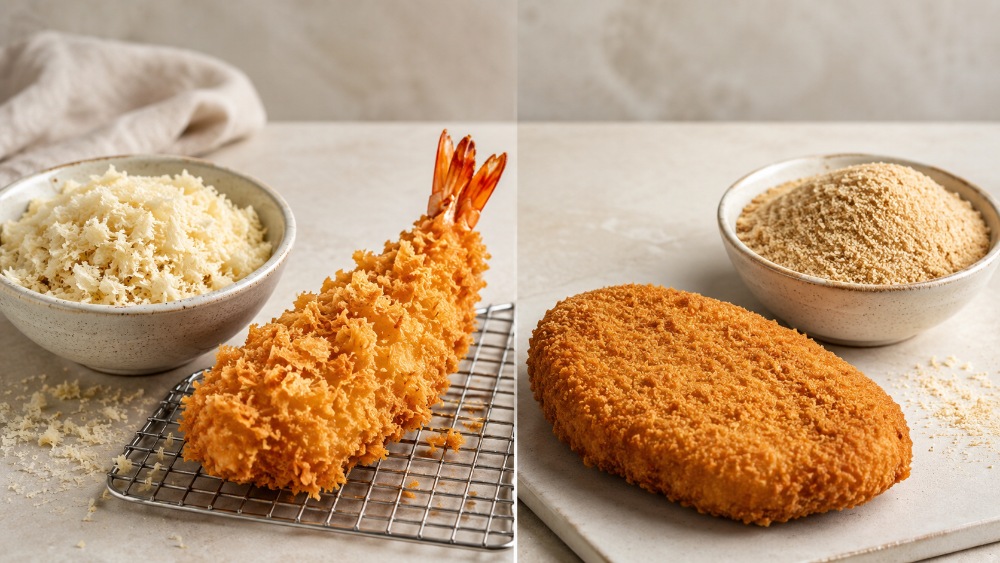
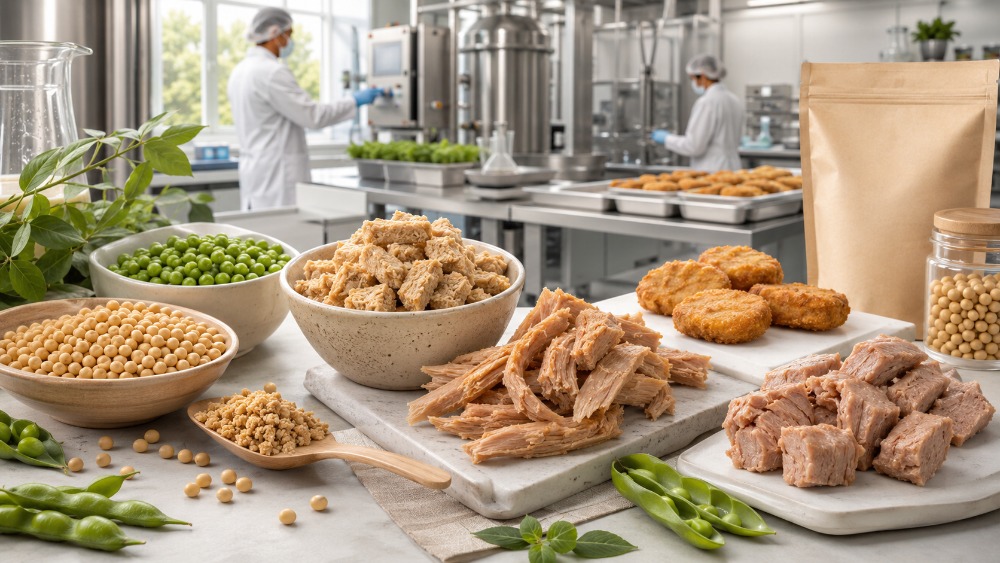
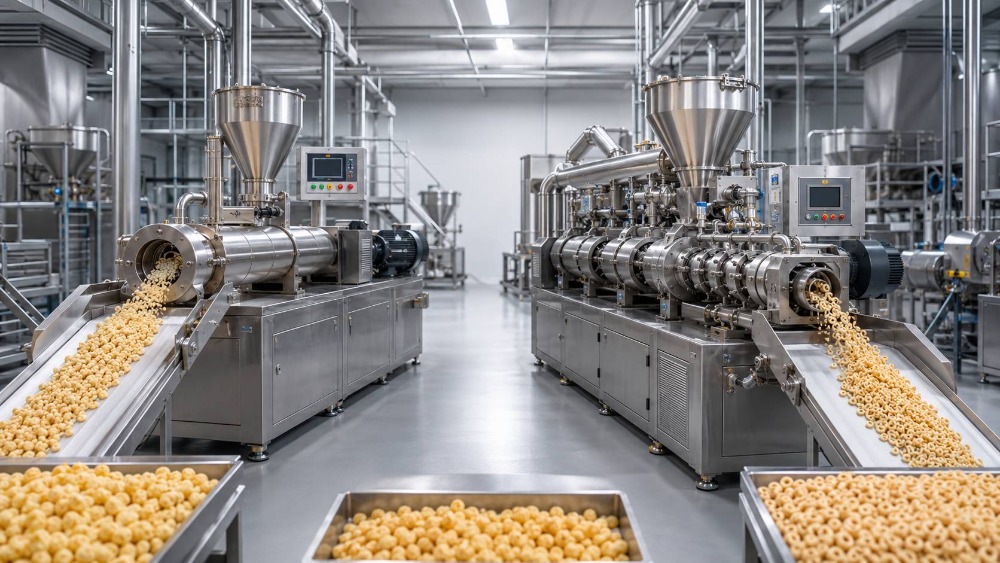
Choosing an extruder is not only a machine purchase. It affects raw material usage, texture, cleaning, formula changes, and line stability. Many factories compare a single screw extruder and a twin screw extruder because both can process grain, starch, protein, and snack materials, but they do not serve the same production logic.
The choice of screw extruder depends on the target product, future product plans, and the level of process control required. This guide compares the two technologies using process logic, a flowchart, a comparison table, and a B2B selection checklist.
Why extruder selection matters in food processing
Extruder choice affects more than output
A food extruder does more than push material through a die. It may support conveying, heating, compression, cooking, forming, puffing, and partial texture control. This is why food manufacturers should not compare only motor power or quoted capacity. A food extruder machine should be selected based on product type, raw material behavior, formula complexity, required texture, downstream drying or frying, and long-term product planning.
The main decision is product fit.
A one-screw system may be efficient when the formula is stable and the product range is clear. A twin-screw system is often more suitable when the project needs stronger mixing, broader raw material use, more precise cooking, and flexible product development. The right choice starts with the product.
How both extruder types work
Single-screw working principle
A single-screw extruder uses one screw inside a barrel to move material forward. During the process, the material is conveyed, compressed, heated, and pushed through a die or forming section. The structure is usually simpler, which can make operation and maintenance more direct.
This type can fit projects with stable raw materials, predictable moisture, and relatively simple product shapes, such as selected pellets, corn snacks, or fried snack bases.
Twin-screw working principle
A twin-screw extruder uses two screws that work together to improve conveying, mixing, shearing, cooking, and pressure control. This structure gives the process more adjustment space, especially for mixed grains, starches, proteins, fibers, or raw materials with different flow behavior.
For factories developing puffed foods, snack foods, breakfast cereals, nutritional powder, pet feed, or plant-based products, twin-screw extrusion can support wider formulation work. It is especially useful when the project requires stronger mixing, more flexible moisture control, and repeated product trials before mass production.
Process flow comparison
Basic flow for one-screw extrusion
Raw material preparation
-
feeding
-
single-screw conveying
-
heating and compression
-
die forming
-
cutting or shaping
-
drying, frying, or cooling
-
seasoning and packaging
This flow is direct. It is often suitable when the factory already has a fixed product route and does not need frequent formula changes. Adjustment may be narrower when raw materials vary or when the product needs stronger mixing before forming.
Basic flow for twin-screw extrusion
Raw material preparation
-
accurate feeding
-
twin-screw mixing and shearing
-
cooking and pressure control
-
die forming
-
cutting, puffing, or shaping
-
drying, cooling, seasoning
-
packaging
This flow gives more control before the product reaches the die. It helps when formulas contain several powders, fibers, proteins, or functional ingredients, and when factories plan several product families.
Parameter comparison table for equipment selection
| comparison factor | one-screw system | twin-screw system | b2b selection note |
| structure | simpler screw and barrel | more complex twin-screw system | one-screw is easier to operate; twin-screw gives more control |
| mixing ability | moderate | stronger mixing and shearing | important for multi-ingredient formulas |
| raw material flexibility | better for stable materials | better for grains, starches, proteins, and mixed powders | useful for several product categories |
| formula adjustment | limited | wider | important for new product development |
| moisture and cooking control | suitable for simpler needs | stronger zone control | valuable for puffed foods, cereals, and protein products |
| operation skill | lower technical demand | higher technical demand | training and records matter |
| investment level | usually lower | usually higher | compare total project value, not only price |
| best-fit use | stable products and simple shapes | complex products and flexible production | selection should follow process needs |
Price matters, but it should not be the only decision. If a lower initial price limits the product range or creates repeated adjustments, the total cost may rise.
Which extruder fits different food products
Puff snacks and corn puff products
For simple corn puffs or stable snack bases, a one-screw setup may be enough. For multi-shape puff snacks, coated snacks, or formulas with several grains, a twin-screw setup usually gives more control. Factories comparing snack equipment can also review broader options in the main equipment category.
Breakfast cereals and grain-based products
Breakfast cereals often need accurate cooking, forming, drying, and coating control. A cereal extruder used for rings, pillows, flakes, or filled products must support texture and shape stability. When grains, nutritional additions, or coatings are involved, twin-screw extrusion is often more flexible.
Plant protein, pet food, and feed-type products
Plant protein and pet food formulas may contain proteins, starches, fibers, oils, and minerals. These materials can require stronger mixing and controlled shear. In these cases, a twin screw food extruder is often better for development, while a single screw food extruder can still fit selected stable feed-type products.
When each option makes better business sense
When the simpler option may be better
A one-screw setup can be practical when the project has a clear product range, limited formula changes, simple shapes, and a tighter budget. The key is to confirm that the selected machine can meet the current product target without blocking near-term expansion.
When the twin-screw option may offer better value
A two-screw setup may offer better long-term value when the factory plans to develop several formulas, use mixed raw materials, or produce more technical foods. It is also stronger for research, pilot testing, and product upgrades. If future output depends on flexible recipes and new market trials, a higher initial investment may be easier to justify.
Decision checklist before choosing a food extruder
Before buying a food extrusion equipment system, factories should ask practical questions.
What product will be produced first?
Will the factory add new shapes or formulas later?
Are the raw materials simple, mixed, fibrous, or protein-rich?
Does the product need high expansion, dense texture, or fibrous structure?
Is the project for R&D, pilot production, or mass production?
How important are cleaning, maintenance, and operator training?
Is the team comparing only the machine price or the full production value?
A simple decision path can help. If the product is stable, raw material variation is low, and the investment budget is limited, compare a single screw extruder first. If the product needs stronger mixing, wider raw material use, formula flexibility, and future development space, evaluate a twin-screw option first.
Where ARROW equipment fits in this decision
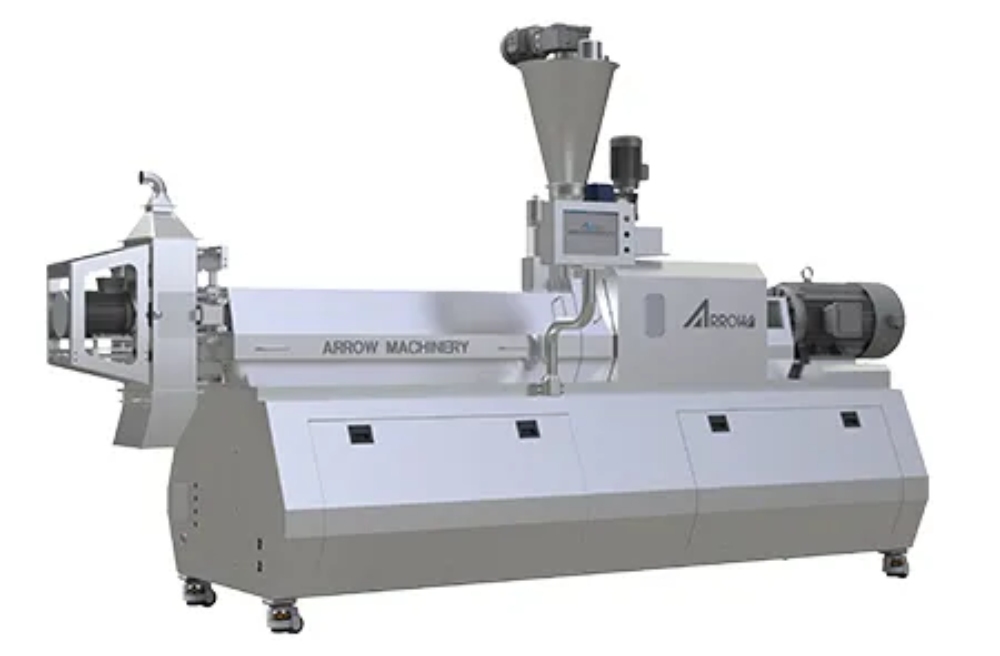
At Arrow MACHINERY, we usually suggest starting with product requirements before discussing a machine model. Raw material type, product shape, output target, factory layout, trial needs, and downstream equipment should guide the equipment route.
For projects still in formula testing, sampling, or pilot production, the AHT36 Experimental Twin Screw Extruder can be a practical starting point before full-scale equipment selection. Its 10–50 kg/h output supports small-batch trials, while the twin-screw structure helps test different raw materials, screw combinations, moisture levels, and product shapes. This makes it suitable for factories that need to verify puffed foods, snack foods, breakfast cereals, nutritional powder, pet feed, or plant-based product formulas before committing to a larger production line.
For early-stage projects, trial runs can reduce selection risk. They help test formula behavior, product shape, texture, and process stability before mass production planning. Factories that need consultation, layout support, training, or after-sales support can review our service page before building the full project plan.
Final thoughts
There is no single answer to which extruder offers the best performance. One-screw equipment can be practical for stable products, simple process needs, and cost-sensitive projects. Twin-screw equipment is usually stronger for complex formulas, wider raw material use, and long-term production flexibility.
The best food extruder is the one that matches the factory’s product plan, process route, team capability, and market goals. Planning a new extrusion project or comparing equipment options? Contact us to discuss the right food extruder machine route for your factory.
FAQ
Q: Which is better for food processing, a single screw extruder or a twin screw extruder?
A: There is no absolute answer. A single-screw option can fit stable formulas and simple product ranges. A twin-screw option is often better for complex raw materials, stronger mixing, formula flexibility, and product development.
Q: Is a twin-screw extruder always worth the higher investment?
A: Not always. If a factory produces one stable product with limited changes, one-screw equipment may be more suitable. If it plans several formulas, twin-screw equipment may offer stronger long-term value.
Q: What should factories consider before buying a food extruder machine?
A: Factories should compare product type, raw materials, formula complexity, output target, cleaning needs, operator skill, trial production needs, downstream equipment, and future product expansion, not only the purchase price.


