




Puff snacks are light and expanded snack foods. They are made from grain flour, starch, or mixed cereal materials. They can be cooked, shaped, expanded, dried, fried, baked, seasoned, or filled. This depends on the product style. On retail shelves, they may appear as corn puffs, curls, rings, shells, tubes, chips, core-filled snacks, or pellet snacks.
For food manufacturers, puff snacks are appealing. One product family can support many shapes, textures, flavors, and price levels. A factory can create direct-cut snacks, seasoned products, chocolate-filled snacks, or 2d 3d pellet snacks. This flexibility comes from changes in raw materials, dies, forming methods, and post-processing steps. This guide explains the main types, ingredients, and production methods. It also helps a factory compare industrial production routes.
What Are Puff Snacks?
Puff snacks are expanded snacks made from grain or starch-based materials. Producers cook and shape these materials under heat, pressure, and mechanical force. In many industrial processes the material goes through extrusion. In this stage moisture, temperature, pressure, and screw movement transform the dough structure. When pressure drops at the die or during later puffing the product expands. This expansion creates the light texture associated with many puff snacks.
Some puff snacks expand directly and are cut at the extruder outlet. Others are produced as semi-finished pellet snacks. These items are then fried, baked, or puffed in a later step. Some receive coatings of sugar syrup, chocolate, or seasoning powder. All types share one common feature. They deliver a crisp, airy bite that comes from controlled expansion and drying.
Common Types of Puff Snacks
Direct-Cut Puff Snacks
Direct-cut puff snacks are formed and cut right after extrusion. Corn, rice, wheat, or mixed grain flour can be cooked in the extruder and shaped through a die. The cutter then creates pieces with a planned length and form.
This type is common in corn puffs, grain puffs, and small crunchy snacks. In many projects, a puff snacks processing line for direct-cut products includes mixing, extrusion, cutting, drying, seasoning, cooling, and packaging.
Corn Puff Snacks and Curl Snacks
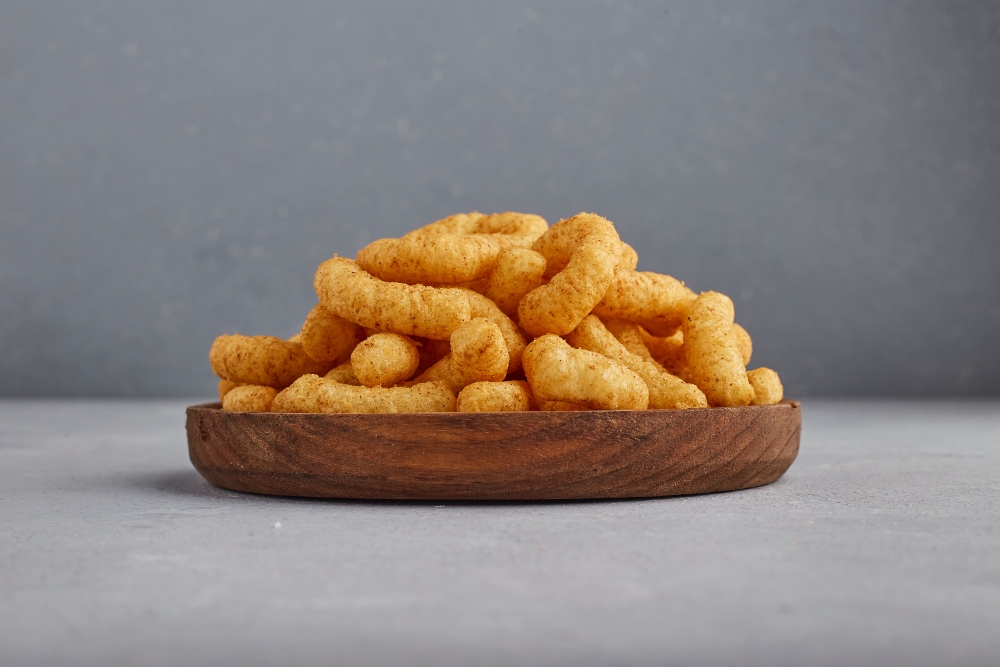
Corn puff snacks commonly use corn grits, corn flour, or mixed cereal materials. Curl snacks, such as Cheetos-style, Kurkure-style, or Nik Naks-style products, need a particular extrusion and forming method. This method helps them form irregular twisted shapes.
A corn puff snacks production line may focus on light expansion and clean cutting. It need a frying or baking section as well. In addition, it need a flavoring system..
2D and 3D Pellet Snacks
Pellet snacks are usually made as semi-finished pellets first, then expanded through frying, baking, or hot air puffing. A snack pellet production line can produce shells, tubes, spirals, wheels, animal shapes, and other 2d 3d pellet snacks.
This route gives factories more shape options. It can also support markets where semi-finished pellets are produced in one location and finished by frying or baking in another.
Core-Filled and Coated Puff Snacks
Core-filled snacks add chocolate, cream, jam, or other fillings during forming. Coated puff snacks use powder seasoning, oil spraying, sugar syrup, or chocolate coating to build flavor and appearance.
These products need more post-processing than plain puff snacks. Filling accuracy, coating control, drying, cooling, and packing all affect the final product style.
What Ingredients Are Used in Puff Snacks?
Grain and Starch-Based Ingredients
Common raw materials include corn, rice, wheat flour, potato starch, cassava starch, and mixed grain flour. Each material behaves differently during cooking and expansion. Corn often gives a familiar puff texture and cereal flavor. Rice can create a lighter bite. Wheat and starch blends can support more flexible shaping.
The ingredient choice affects expansion, density, color, flavor absorption, and mouthfeel. For puffed snacks production, factories should test raw materials before large-scale output, especially when adding fiber, protein, sugar, or natural color.
Oils, Seasonings, Fillings, and Coatings
Plain expanded snacks become market-ready products through seasoning and coating. Oil helps seasoning powder attach to the surface. Sugar syrup creates sweet coated cereals and snack pieces. Chocolate, cream, and jam fillings create higher-value products with richer taste.
These ingredients also change production needs. A simple salted product may need oil spraying and powder seasoning. A sweet coated product may need syrup heating, drum coating, drying, and cooling. A filled product needs filling control and careful cutting.
How Ingredients Affect Product Style
Ingredients shape the product’s market position. Corn and rice can fit everyday snacks. Starch blends are common for pellet snacks. Multi-grain formulas can support healthier product claims when the formula and labeling meet local rules. Fillings and coatings can move a product toward premium snack segments.
For B2B planning, ingredients must fit the selected equipment, target capacity, finished shape, seasoning system, and packaging format.
How Are Puff Snacks Made in Food Factories?
Mixing and Feeding
The process starts with weighing, mixing, and feeding. Stable mixing helps raw materials, water, and minor ingredients enter extrusion evenly. If the mixture changes between batches, texture and expansion can also change.
Extrusion and Puffing
Extrusion is key to many puff snacks. In a usual process the material cooks. It then shapes with screw movement. This also involves heat, pressure, and die design. Twin screw extrusion technology is commonly used for grain and starch-based snacks. It works this way because it supports mixing, cooking, shaping, and formula flexibility within one process section. All these steps take place in one process section.
A complete puffing snack production line may use extrusion for direct expansion. It can also make semi-finished pellets. These pellets are for frying or baking later. The appropriate choice depends on product type. It depends on market plan. It depends on factory scale as well.
Cutting, Drying, Frying, Seasoning, and Packing
After extrusion or forming, the product may be cut, dried, fried, baked, coated, cooled, and packed. Direct-cut snacks often move from extrusion to drying and seasoning. Pellet snacks may need drying before final frying or puffing. Core-filled snacks require filling and cutting control before drying or coating.
For factories comparing different snack formats, an expanded snacks processing line can connect these process steps in industrial production. Seasoning and packing then decide flavor consistency, surface appearance, shelf appeal, and production efficiency.
Puff Snacks vs Pellet Snacks: What Is the Difference?
Puff snacks can be a broad category, while pellet snacks are one important subcategory. Direct puff snacks are usually expanded during extrusion and then finished by drying, seasoning, and cooling. Pellet snacks are often made first as semi-finished shapes, then expanded later through frying, baking, or hot air treatment.
The difference matters for factory planning. Direct puffing may suit simple products and continuous production. Pellet processing may suit complex shapes, export-oriented semi-finished products, or brands that need many product styles from one base process.
What Should Food Manufacturers Consider Before Starting Puff Snacks Production?
Product Type and Market Positioning
A factory should first define the product type. Corn puff, curl snack, pellet snack, coated snack, and core-filled snack need different process routes. The shape, texture, flavor, oil level, and packaging size should be clear before equipment selection.
Factories can also review wider food extrusion applications through the solution center when comparing snack formats and production routes.
Raw Material and Formula Flexibility
Raw material flexibility is another key point. A factory planning several formulas may need stronger mixing, broader die options, and more stable extrusion control. Raw materials may include corn, rice, wheat, starch, mixed grains, fillings, oils, and seasoning powders.
Output Capacity and Factory Space
Output capacity and factory space should match the planned product range. A small test line and a high-output puff snacks production line are not planned in the same way. The line layout should also leave enough room for drying, frying, seasoning, cooling, packing, cleaning, and daily operation.
Where a Puff Snacks Production Line Fits In
When a project moves beyond trial production, a complete puff snacks production line can connect mixing, extrusion, drying or frying, seasoning, cooling, and packaging in a more organized way. Separate machines may work for small tests, but continuous production needs better line balance.
At ARROW, we keep the company role practical in this type of project: product target, raw material, processing route, and output plan should come before puff snacks production line selection. Trial runs help reduce investment risk by testing formula behavior, product shape, texture, seasoning, and process route before mass production.
Final Thoughts
Puff snacks are not one single product. They include corn puffs, curl snacks, pellet snacks, 2d 3d pellet snacks, core-filled products, and coated snack formats. Their value comes from flexible ingredients, creative shapes, and strong flavor possibilities.
For manufacturers, the best production route depends on product type, raw materials, texture target, output, seasoning method, and packaging plan. A well-planned puff snacks processing line can turn those choices into stable factory production, when puffed snacks production supports several styles. Project references in the case center can also help factories compare different snack production applications before planning a new line.
Planning a new snack project or comparing different product formats? contact us to discuss your target product, raw materials, capacity plan, and production method before choosing a production route.
FAQ
Q: What are puff snacks made of?
A: Puff snacks are made from corn, rice, wheat flour, potato starch, cassava starch, or mixed grain flour. These form the primary materials. Oils, seasoning powders, sugar syrup, chocolate, cream, or other fillings may be added as well. Producers make these additions based on the desired final product style.
Q: Are puff snacks fried or baked?
A: Some puff snacks are fried. Others are baked. In addition, some puff snacks are dried after extrusion. Pellet snacks are often made as semi-finished pieces at first. Producers then expand these pieces by frying, baking, or hot air puffing.
Q: What machine is used to make puff snacks?
A: Many puff snacks are produced using extrusion equipment. This is especially the case for grain and starch-based products. Furthermore, a full production line may also include mixing, drying, frying, seasoning, cooling, and packaging systems.


