



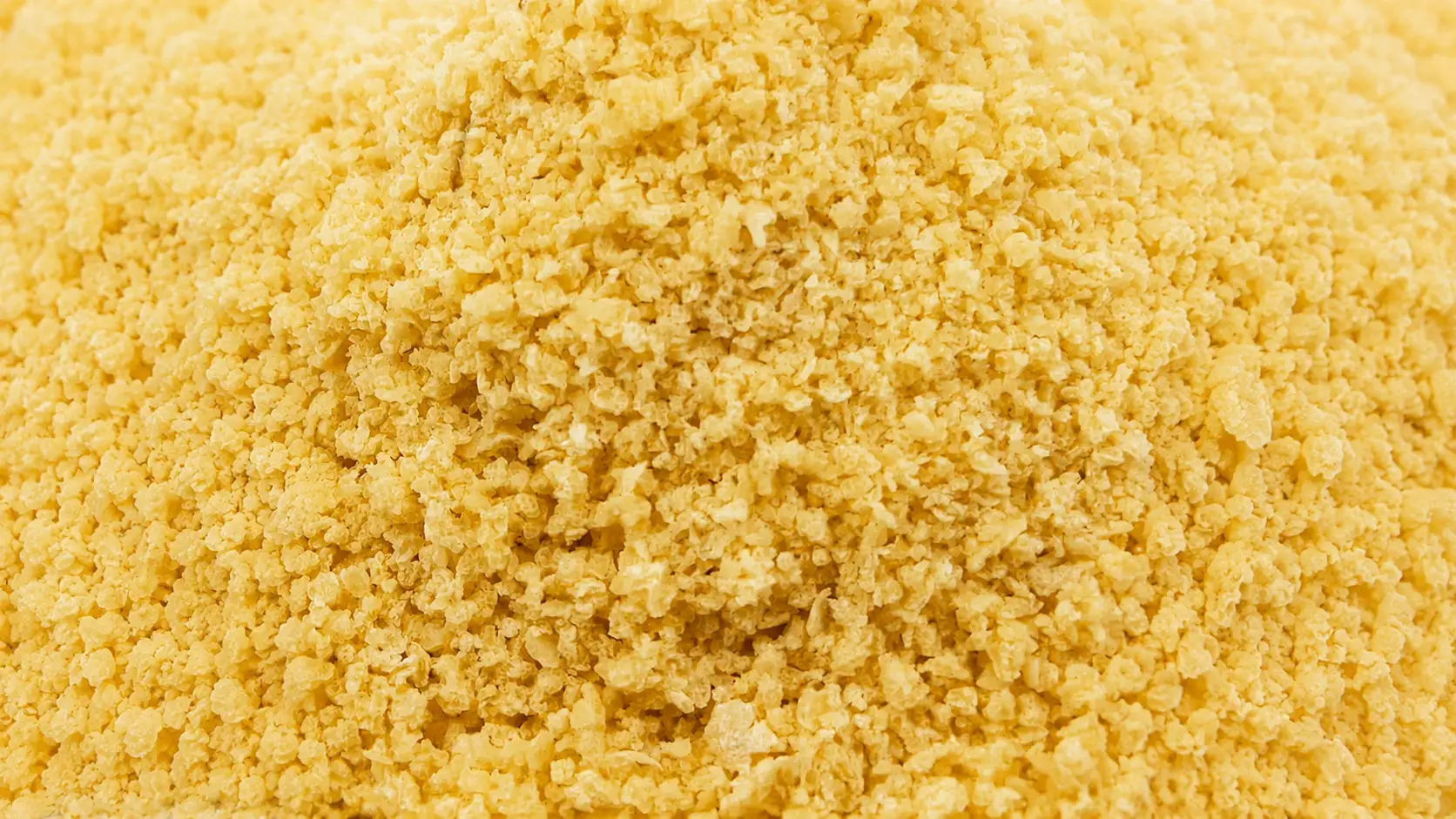
For a food factory, investing in a fermented panko bread crumbs processing line involves far more than simply buying a bread crumbs machine. The project covers several important stages. These stages include formula testing. They also include dough handling. The stages continue with fermentation. They proceed to curing. The process then moves to cooling. It includes refrigeration next. It continues with crushing. It then covers drying. The stages include screening after that. They also cover metal detection. Packaging completes the full set of steps.
Buyers should confirm several key details in advance. These details include product style. They also include formula direction. They cover output target. They address workshop layout. They include packaging format as well. They must complete all these steps before they compare equipment. This article explains how to plan a bread crumbs production line. It addresses the subject from equipment, formula, and factory operation perspectives.
Why Fermented Panko Needs Whole-Line Planning
Panko Quality Depends on the Full Process
Fermented panko is different from ordinary ground bread crumbs because its light structure comes from dough preparation, fermentation, bread curing, controlled cooling, and later grinding. The finished product should have a clean crumb shape, stable particle size, suitable dryness, and good coating performance during frying.
This is why a panko bread crumb food process line should be planned as one connected system. A mixer, fermentation chamber, curing oven, cooling section, bread crumb grinder machine, dryer, screen, metal detector, and packaging unit must all support the same product target.
Start from Finished Product Specifications
Before selecting a commercial bread crumb machine, buyers should define the target crumb. Some markets need needle-like crumbs for premium fried chicken. Some need finer crumbs for seafood, frozen prepared foods, or food service coating. Others may prefer larger flakes for a stronger, crisper surface.
Crumb size, color, aroma, oil absorption, and coating behavior will affect the formula, bread structure, grinding screen, drying condition, and packaging method. Equipment selection should follow the finished product, not the other way around.
Formula Planning Before Equipment Selection
Flour Type and Dough Structure
Fermented panko usually depends on a dough structure that can form light bread before crushing. High-gluten flour is often used because it helps build dough elasticity and internal bread structure. Water ratio, mixing time, and dough handling also affect crumb shape after curing and grinding.
For commercial projects, buyers should test how flour quality, hydration, fermentation behavior, and bread texture match the target market.
Fermentation and Crumb Application
Fermentation helps create bread aroma and internal structure before curing. Temperature, humidity, dough condition, and batch timing should be controlled within the production plan. If the bread structure is too weak, the final crumbs may become powdery. If it is too dense, the finished crumb may feel heavy after frying.
Application also matters. Fried chicken, fish fillets, shrimp, cutlets, hamburger patties, and vegetable products may require different coating effects. This is where the bread crumb grinder machine and screening section become important.
Standard Process Flow for Fermented Panko Production
In a standard fermented panko bread crumbs processing line, raw materials enter the dough mixing section at the start. In that section, flour, water, and other ingredients are blended together to form a suitable dough structure. The process continues with dough lifting. It also includes dough cutting, dough rounding, and dough shaping. Subsequently the dough is loaded into molds or carts before it enters the fermentation chamber. After the fermentation stage, the dough is cured in an electric curing oven to form light bread. It is then unloaded. The next step is bread cooling. Following bread cooling, it is transferred to low-temperature refrigeration. This action allows the internal structure to become more suitable for crushing. Later, the prepared bread is crushed into crumbs and then dried to support storage stability. Screening comes next in order to control particle size. Then the material is checked by metal detection equipment. It is conveyed to the packaging section. In the end it is packed as finished panko bread crumbs.
The description provided demonstrates why a bread crumbs production line is more than a grinder and dryer. Dough handling has an effect on fermentation. Fermentation has an effect on curing. Cooling has an effect on crushing. Drying has an effect on storage stability as well as packaging readiness.
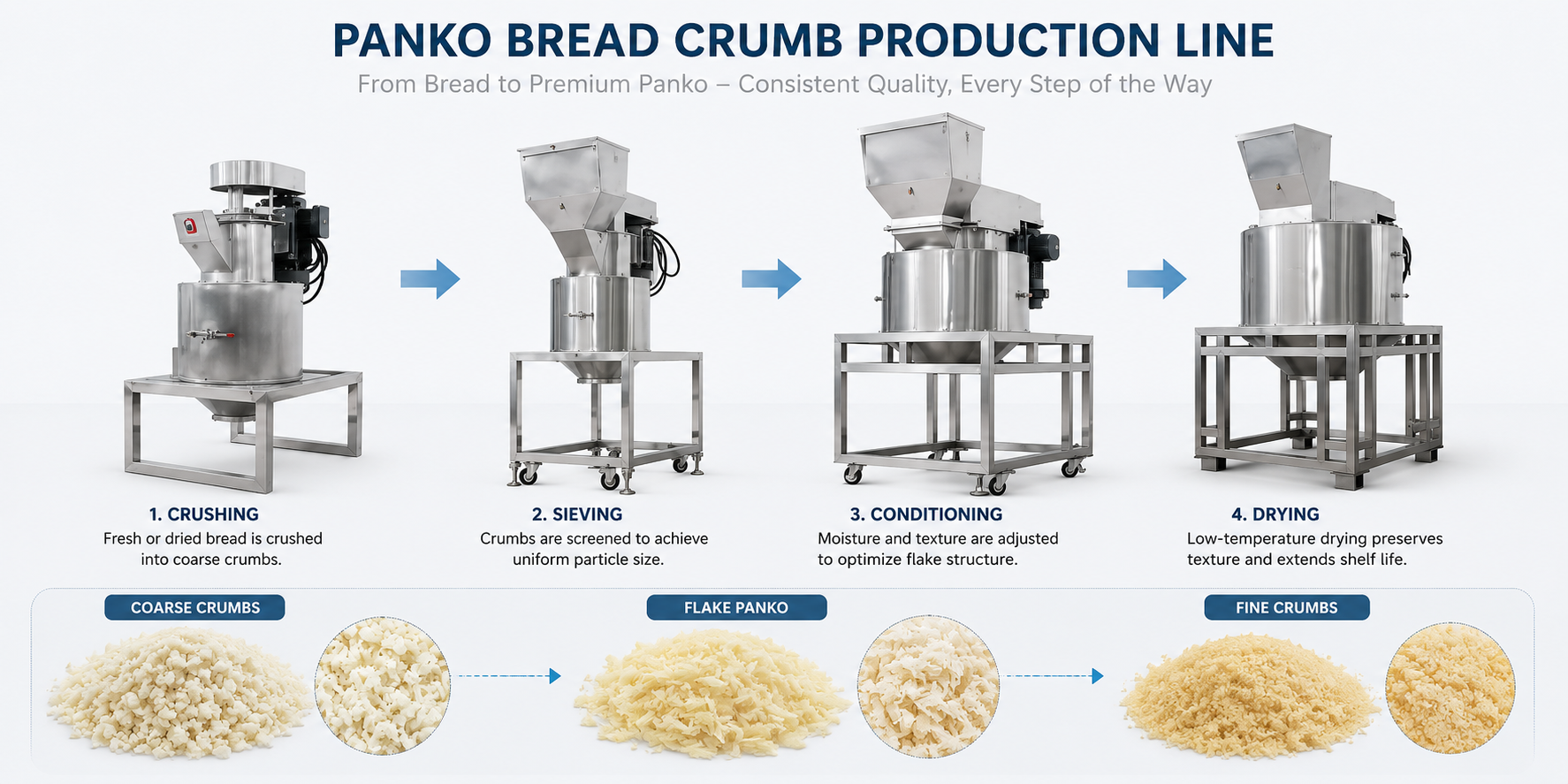
Key Equipment Sections Buyers Should Compare
Dough Preparation Section
The front section may include vacuum feeding, dough mixing, dough lifting, dough cutting, rounding, and shaping. Buyers should evaluate mixing consistency, dough transfer, cleaning access, operator safety, and whether the system can support repeatable batch records.
A commercial bread crumb machine system should not create unnecessary manual handling between steps. Labor planning is part of equipment planning, especially when daily output increases.
Fermentation and Curing Section
Fermentation and curing decide whether the later crumb has the right bread-like structure. A fermentation chamber should support stable dough development. A curing oven should help form bread that can be crushed without creating too many hard fragments or fines.
For factories comparing a complete line instead of separate machines, the Fermented Panko Bread Crumbs Processing Line can be reviewed around dough preparation, fermentation, curing, crushing, drying, screening, and final packaging needs.
Crushing, Drying, Screening, and Detection
The crushing section defines particle style. A bread crumb grinder machine should match the target crumb size and work together with screening. Oversized pieces, fines, and uneven particles need to be controlled before packaging.
Drying brings crumbs into a stable condition for storage and shipping. Vibrating screening supports size classification, while metal detection helps meet buyer and food factory audit expectations.
Packaging Section
Packaging should be planned from the beginning. Bulk bags, foodservice packs, and retail packs require different weighing, sealing, conveying, and dust-control arrangements.
Fermented Panko Line vs Extruded Bread Crumb Line
A fermented panko line usually follows dough preparation, fermentation, curing, cooling, crushing, drying, screening, and packing. An extruded bread crumb food line follows mixing, extrusion, cutting or pulling, crushing, drying, cooling, and screening.
Neither route is automatically better. Fermented panko usually focuses on bread aroma, light structure, and coating performance. An extruded bread crumb food line may be better when the factory needs continuous extrusion efficiency, flexible shapes, and a more direct industrial route.
| comparison item | fermented panko line | extruded bread crumb food line |
| core process | dough fermentation and curing | extrusion and shaping |
| main target | light bread-like crumb | controlled crumb shape and output |
| key equipment | mixer, fermentation chamber, curing oven, grinder, dryer | mixer, extruder, cutter, crusher, dryer |
| buyer focus | aroma, texture, coating result | efficiency, shape adjustment, continuous production |
Capacity and Factory Layout Planning
Output Should Match Order Type
Buyers should define hourly output, daily production time, SKU quantity, packaging style, and expected market channel before requesting a quotation. A line for bulk industrial coating supply will not be planned like a smaller line for mixed retail packs.
Equipment capacity should be balanced across mixing, fermentation, curing, cooling, grinding, drying, screening, and packaging. If one section is much slower than the others, the full project loses efficiency.
Layout and Utilities
A practical layout usually moves from raw material storage to dough preparation, then fermentation and curing, then cooling and refrigeration, then crushing, drying, screening, detection, and packaging. This direction helps reduce backflow and unnecessary handling.
Factories planning a turnkey bread crumb production line should consider maintenance space, cleaning routes, dust collection, packaging storage, operator movement, electricity, air supply, temperature control, humidity control, drainage, and dust management.
For buyers comparing investment models, this guide on fermented bread crumb production line planning can support the commercial discussion before final selection.
Quality Control Points in Panko Production
Dough consistency and fermentation conditions should be recorded by batch. If operators only rely on visual experience, later problems can be hard to trace. Stable panko bread crumb production needs repeatable mixing, proofing, curing, cooling, and crushing standards.
A good sample is useful, but repeatability matters more in commercial supply. The bread crumb grinder machine and screening section should deliver a controlled particle range across batches. Drying should support storage stability and packaging safety. Metal detection, clean conveying where needed, dust control, and bag sealing should be included in the technical conversation.
What Buyers Should Prepare Before Requesting a Quotation
Prepare target crumb size, product application, flour direction, desired bread aroma, sample reference, and whether formula testing is required. This helps suppliers evaluate the real production route instead of offering a generic breadcrumbs machine.
Buyers should also prepare expected kg/h output, workshop dimensions, utility conditions, packaging format, automation level, installation expectations, spare parts plan, and training needs. A commercial bread crumb grinder may look simple in isolation, but its performance depends on upstream bread condition and downstream drying and screening.
Where ARROW Fits in Production Planning
At ARROW MACHINERY, we usually suggest confirming crumb style, formula direction, output plan, workshop layout, and packaging method before discussing equipment configuration. This reduces the risk of choosing machines before the product route is clear.
For factories reviewing a full project, the priority is not to choose the largest machine first. It is to confirm whether the formula, fermentation process, crushing method, drying plan, screening requirement, and packaging target can work together in daily production.
Final Thoughts
A fermented panko bread crumbs processing line is a complete production system. It should connect formula testing, dough preparation, fermentation, curing, cooling, refrigeration, crushing, drying, screening, detection, and packaging.
For buyers entering industrial breadcrumb production, early planning is more valuable than quick machine comparison. Once product style, capacity, layout, and quality targets are clear, equipment selection becomes more accurate.
If your team is preparing a new panko project, do not start with a generic machine list. Share your target crumb style, sample reference, expected output, workshop size, packaging format, and formula testing needs. ARROW can review these details and turn them into a clearer production route before equipment ordering and trial production. Request a panko line planning review for your next project.
FAQ
Q: What equipment is included in a fermented panko bread crumbs processing line?
A: It usually includes dough mixing, dough cutting, rounding, shaping, fermentation, curing, bread cooling, refrigeration, crushing, drying, screening, metal detection, conveying, and packaging equipment.
Q: How is fermented panko different from extruded bread crumbs?
A: Fermented panko relies on dough fermentation, bread curing, cooling, crushing, and drying. Extruded bread crumbs use extrusion, cutting, crushing, drying, cooling, and screening. The best route depends on the target crumb style and production plan.
Q: What should buyers confirm before ordering a panko line?
A: Buyers should confirm crumb size, flour direction, fried coating use, output, workshop size, utility conditions, packaging format, automation level, and whether formula testing or layout planning is needed.


