



Two machines can list similar motor power and screw diameter yet behave differently with the same food formula. Twin screw extruder specifications should therefore be reviewed as a connected process package, not as isolated numbers. The comparison should link raw-material behavior, screw and barrel design, torque, feeding, liquid addition, cutting, control, cleaning, and the test conditions behind quoted capacity.
A twin screw extruder can convey, mix, cook, pressurize, and shape material, but those functions must fit the intended product. Different foods may require changes to conditioning, liquid addition, screw arrangement, die design, and downstream equipment.
Start with the Food Process, Not the Machine Model
The correct configuration begins with the product and raw materials. This prevents buyers from comparing nominal output while ignoring how the formula behaves during production.
Raw Materials Determine Processing Intensity
Corn flour, mixed grains, starch blends, protein concentrates, fiber, and oils behave differently during extrusion processing. Particle size, bulk density, fat, and moisture affect feeding, shear, pressure, and motor load.
Buyers should provide ingredient specifications, liquid additions, and pretreatment steps. A twin screw extruder manufacturer cannot select the right screw arrangement from the product name alone.
Finished Products Change the Configuration
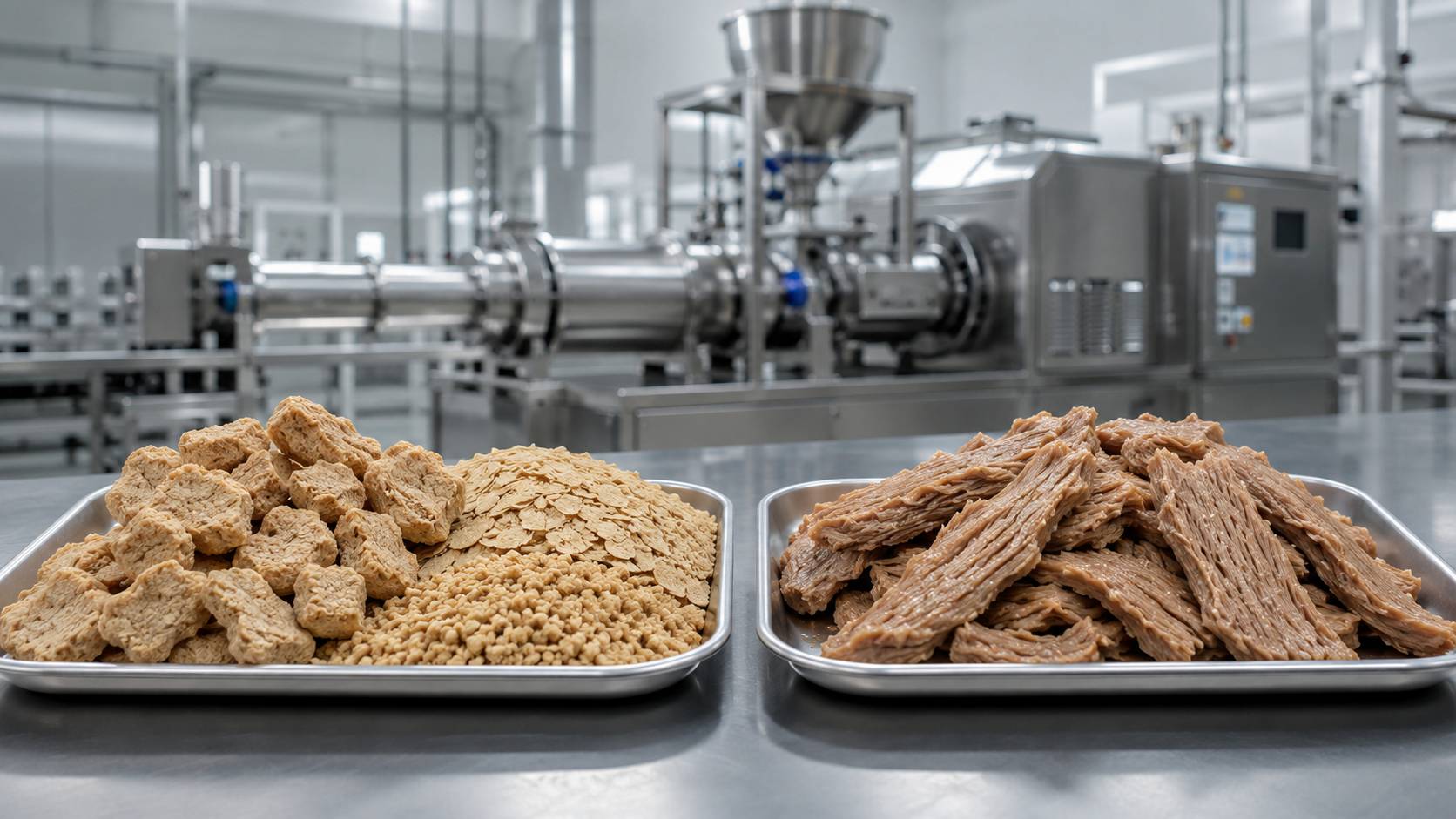
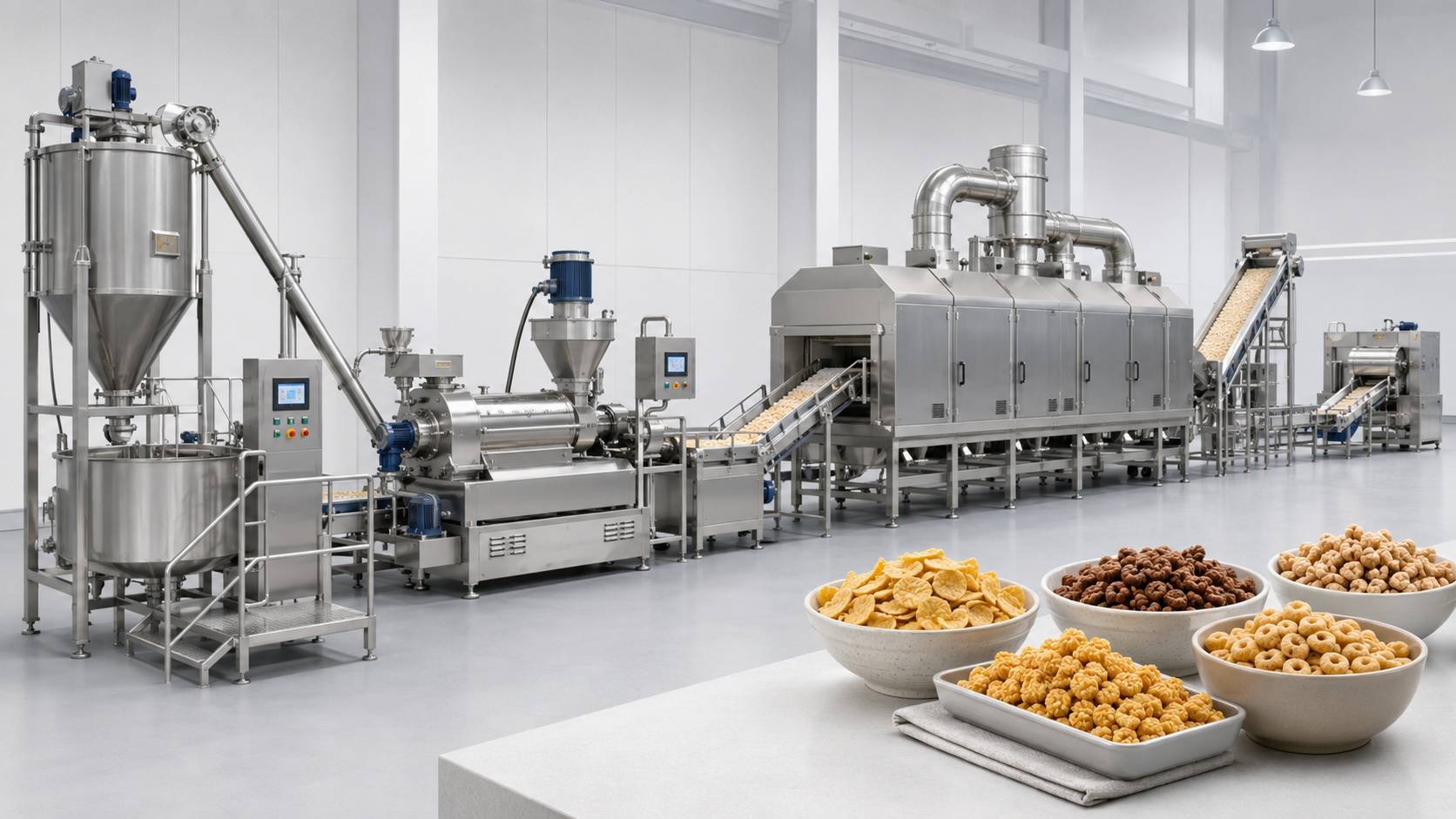
Direct-expanded snacks rely on cooking, pressure release, die forming, and rotary cutting. Breakfast cereals may go through additional processes such as flaking, filling, coating, or toasting. Fortified rice needs stable forming and drying. Dry textured protein requires structuring and drying, while high-moisture meat analog projects depend more on liquid control and a cooling die.
These applications do not share one universal setup. Density, texture, moisture, shape, and downstream handling should guide the configuration.
Downstream Equipment Limits Usable Output
Extruder discharge is only one capacity point. Drying, coating, cooling, or packing can limit practical output. A twin screw extruder manufacturer should confirm both main-machine output and the capacity of connected sections.
Which Screw and Barrel Specifications Matter Most?
After the food process is clear, buyers can evaluate screw diameter, length-to-diameter ratio, element arrangement, barrel sections, and wear protection. These twin screw extruder specifications should be compared by processing purpose.
Screw Diameter Indicates Scale, Not Guaranteed Capacity
A larger screw diameter usually provides more processing volume, but it does not guarantee proportional saleable output. Throughput also depends on material density, moisture, screw speed, die resistance, and product quality.
Two suppliers may quote different capacity ranges for similar diameters. The proposal should state the raw material, die, moisture, speed, and stable-run period behind each number.
Length-to-Diameter Ratio Defines Process Space
The screw length-to-diameter ratio affects the space available for feeding, mixing, cooking, pressure building, and discharge. A longer section is not automatically better. For scale-up, buyers should ask whether pilot and production equipment use comparable geometry and screw arrangements.
Modular Elements Support Formula-Specific Adjustment
A modular screw can place conveying, mixing, kneading, and pressure-building elements in different positions. Detachable elements also simplify replacement.
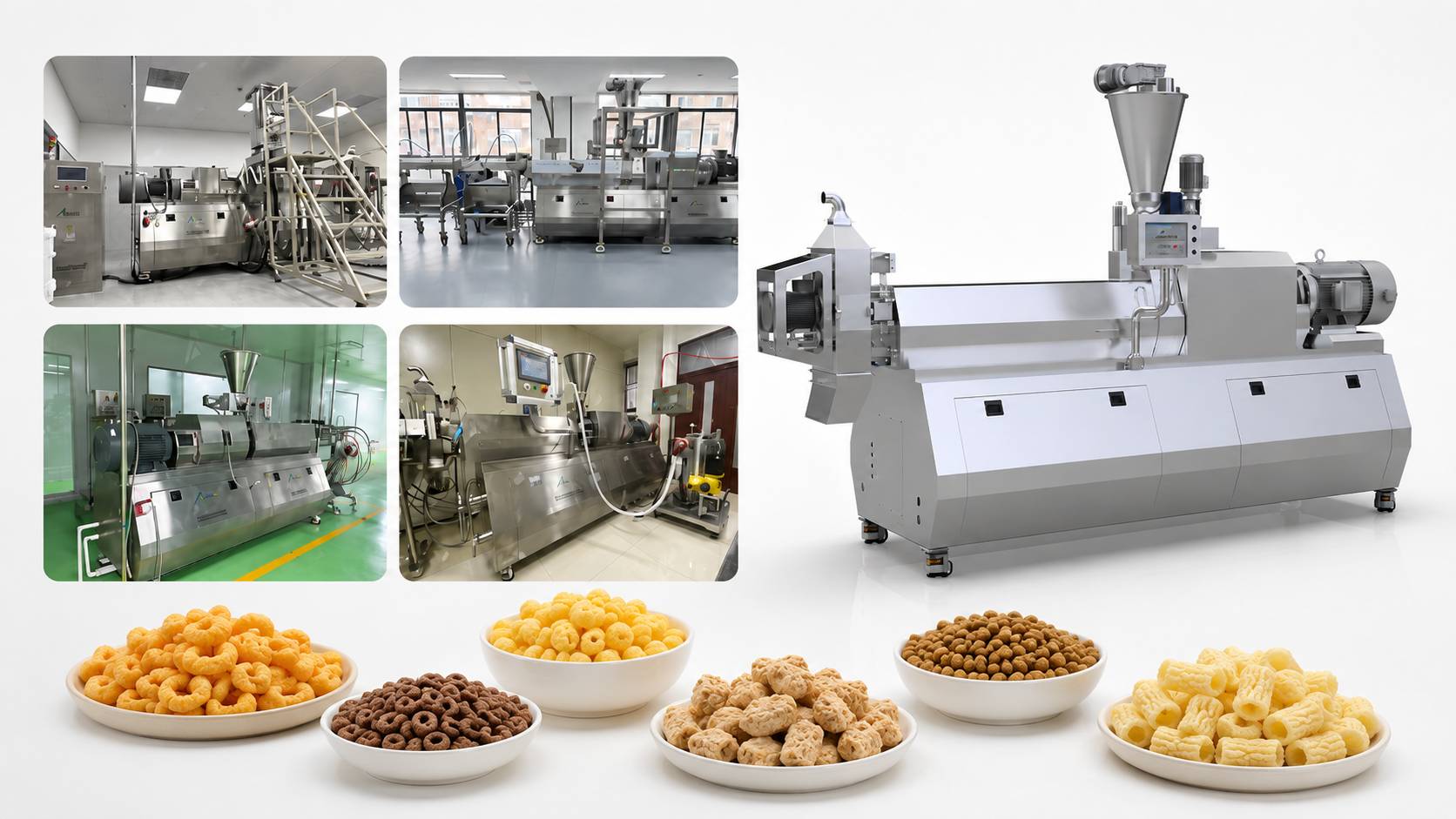
The AYE Series Twin Screw Extruder uses a modular design, upgraded gearbox, rotary cutting, hygienic frame, and increased operating access. These features still need to be matched to the product and verified through trials.
Before finalizing a twin screw extruder, the supplier should explain the purpose of each screw section.
Barrel Zones Need Independent Control
Buyers should check independent heating and cooling, sensor positions, pressure points, liner material, and inspection access. More zones help only when the screw arrangement, formula, and die are suitable.
Compare Motor Power, Torque, and Capacity on the Same Basis
Motor power and hourly output matter only when load, formula, and operating conditions are defined. A reliable review of twin screw extruder specifications should separate installed power, operating load, gearbox capability, tested output, and finished-line capacity.
Installed Power Is Not Normal Operating Demand
Installed motor power shows the drive rating, not actual demand. Buyers should separate the main motor from feeders, cutters, pumps, heaters, and downstream equipment, then request motor-load data from a representative trial.
Gearbox Torque Matters with Difficult Formulas
Protein-rich, fiber-rich, or dense formulations can raise mechanical load. The gearbox must transfer torque without excessive vibration, heat, or instability. Torque protection may reduce overload damage, but high torque alone does not improve product quality.
Capacity Requires a Complete Test Basis
A capacity statement should identify raw material, moisture, screw configuration, speed, die, product dimensions, accepted quality, and stable operating time.
Before accepting a stated range, buyers should ask the twin screw extruder manufacturer to identify the exact trial conditions. They should also separate extruder output from finished-line output after cutting, drying, coating, cooling, and packaging.
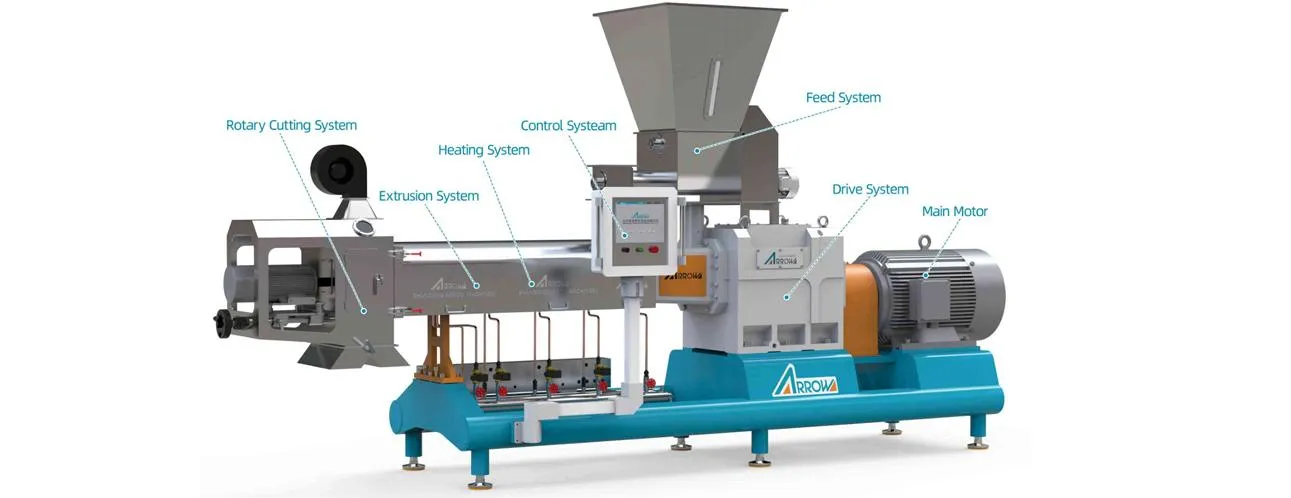
The main equipment portfolio provides access to several extruder series for different development and production scales.
Which Process Modules Change the Equipment Package?
Quotation differences often come from modules around the core machine. Feeding, conditioning, liquid addition, die design, and cutting can change process performance and project cost.
Feeding and Pre-Conditioning Affect Stability
The feeder must deliver material without bridging or surging. Buyers should compare feeder type, speed range, hopper design, agitation, and batching integration.
A pre-conditioner can add water, steam, oil, or other liquids before extrusion. The supplier should explain why the selected method fits the raw material.
Liquid Addition Must Match the Formula
The proposal should state addition points, flow-control method, water and steam connections, measurement accuracy, alarms, and cleaning access. Moisture variation can change pressure, expansion, texture, and motor load, so trials should record the actual addition rate.
Die and Cutting Systems Define the Format
Die geometry affects pressure, shape, and product release. Buyers should confirm included dies, product dimensions, cutter adjustment, changeover, blade access, and cleaning requirements. A new die does not make every formula compatible.
Control, Safety, Hygiene, and Maintenance Belong in the Specification
Control visibility, protection, cleaning access, and wear-part planning can affect downtime as much as headline capacity. A food twin screw extruder supplier should state which functions are standard, optional, or limited to a particular equipment series.
The HMI Should Show Process-Relevant Data
A useful HMI can display feeder and screw speed, barrel temperatures, motor load, alarms, and operating status. Factories should confirm whether recipes, access levels, production history, and data exchange are included.
Protection and Cleaning Need Clear Checks
Protection may include emergency stops, motor and torque protection, cutter-door interlocks, and temperature alarms. Each feature should be listed and demonstrated during acceptance testing.
Buyers should also check residue points, removable contact parts, tool requirements, and expected changeover time.
Wear Parts Should Be Identified
The spare-parts list should identify screw elements, barrel liners, cutter blades, seals, sensors, and model-specific wear components.
Verify the Specifications Before Ordering
A technical sheet is only a starting point. Twin screw extruder specifications become meaningful when supported by a documented trial, agreed criteria, and a clear division between factory testing and site commissioning.
Test with Representative Material
Whenever practical, the trial should use the buyer’s material or an agreed equivalent. The brief should define formula, moisture, target shape, texture, output, and downstream handling.
Record feeder rate, liquid addition, screw speed, zone temperatures, pressure where measured, motor load, cutter speed, output, sample condition, and stable-run duration. This turns the twin screw extruder working principle into measurable evidence.
Set FAT Criteria Before the Trial
Factory acceptance criteria may cover equipment scope, loaded operation, safety responses, capacity basis, sample quality, controls, cleaning access, spare parts, and documents.
Factory testing cannot fully reproduce local utilities, ambient conditions, downstream machines, or operator practice. Installation, commissioning, and site acceptance should therefore be defined separately. A food twin screw extruder supplier should distinguish measured results from projections based on similar applications.
Confirm Service Responsibilities
Later in purchasing, Arrow Machinery can connect application discussion, equipment selection, testing, and startup planning.
The Service scope covers technical design, field debugging, operating training, spare parts, and troubleshooting. The order should state included services and buyer-side responsibilities.
What Should the Technical Proposal State?
A useful proposal should explain why the configuration fits the product and make quotations easier to compare.
| Specification area | What the proposal should state | Why it matters |
| Product basis | Raw material, moisture, finished format | Establishes selection basis |
| Screw system | Diameter, L/D, element arrangement | Shows process functions |
| Barrel | Sections, controls, sensors, liners | Affects adjustment and wear |
| Drive | Motor, gearbox, torque protection | Relates to operating load |
| Capacity | Formula and stable-run conditions | Prevents misleading comparisons |
| Feeding | Feeder and conditioner | Affects material consistency |
| Die and cutter | Formats and adjustment | Defines SKU capability |
| Control | Data, alarms, interlocks | Supports repeat operation |
| Service | Trial, installation, training | Clarifies responsibility |
A twin screw extruder manufacturer should provide the process flow, machine list, utilities, layout, included scope, exclusions, and acceptance basis. The proposal should explain what changes are required for another formula.
A food twin screw extruder supplier should connect the configuration with the product, test conditions, output target, and downstream process.
The proposal should also identify the documents delivered with the equipment, including electrical drawings, operation manuals, maintenance schedules, lubrication instructions, spare-parts references, and safety procedures. These records help production and maintenance teams prepare before installation. Where the project includes several product families, the supplier should state which screw elements, dies, cutting parts, or process settings change between products and which items must be ordered separately.
What Should Factories Include in the Application Brief?
The inquiry should include target products, raw materials, moisture plan, shapes, output, shifts, downstream equipment, workshop dimensions, utilities, automation needs, trial materials, and acceptance criteria.
Buyers should also state planned annual operating hours, expected SKU change frequency, local electrical standards, and whether existing dryers or packing machines will remain in use. These details prevent unnecessary modules and reduce integration gaps.
A twin screw extruder manufacturer needs this information to select the process configuration, while a food twin screw extruder supplier should use it to define testing and delivery scope.
Future products also matter, but flexibility does not mean selecting the largest machine.
The final comparison should cover product fit, screw and barrel architecture, torque, feeding, liquid control, die and cutter design, controls, cleaning, testing, and line balance.
Prepare an application brief before comparing general quotations. Request a Twin Screw Extruder Specification Review to discuss a configuration based on the actual food process.
FAQ
Q: Is a larger screw diameter always better for a food factory?
A: No. A larger diameter may support greater processing volume, but suitable scale depends on the formula, moisture, product shape, die, quality target, downstream capacity, and operating schedule.
Q: Can one twin screw extruder produce several types of food?
A: Modular screws, barrel sections, dies, and controls can support several applications. Different products may still require another screw arrangement, conditioner, liquid-addition system, die, cutter, or downstream process.
Q: What should be tested before ordering a twin screw extruder?
A: A representative trial should record raw material, formula, moisture, feeder rate, liquid addition, screw speed, temperatures, motor load, output, stable-run time, product sample, safety response, and acceptance criteria.


