



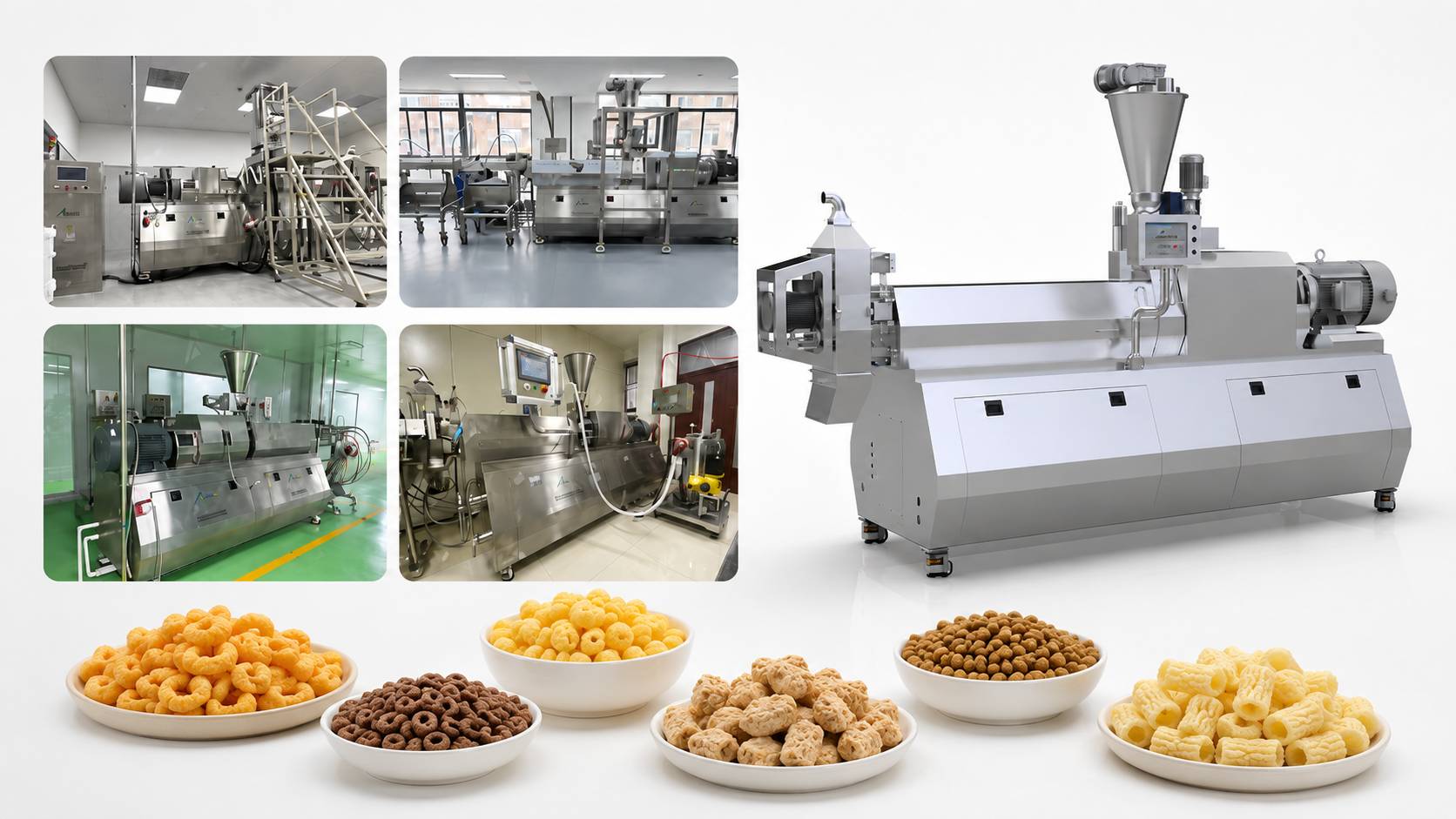
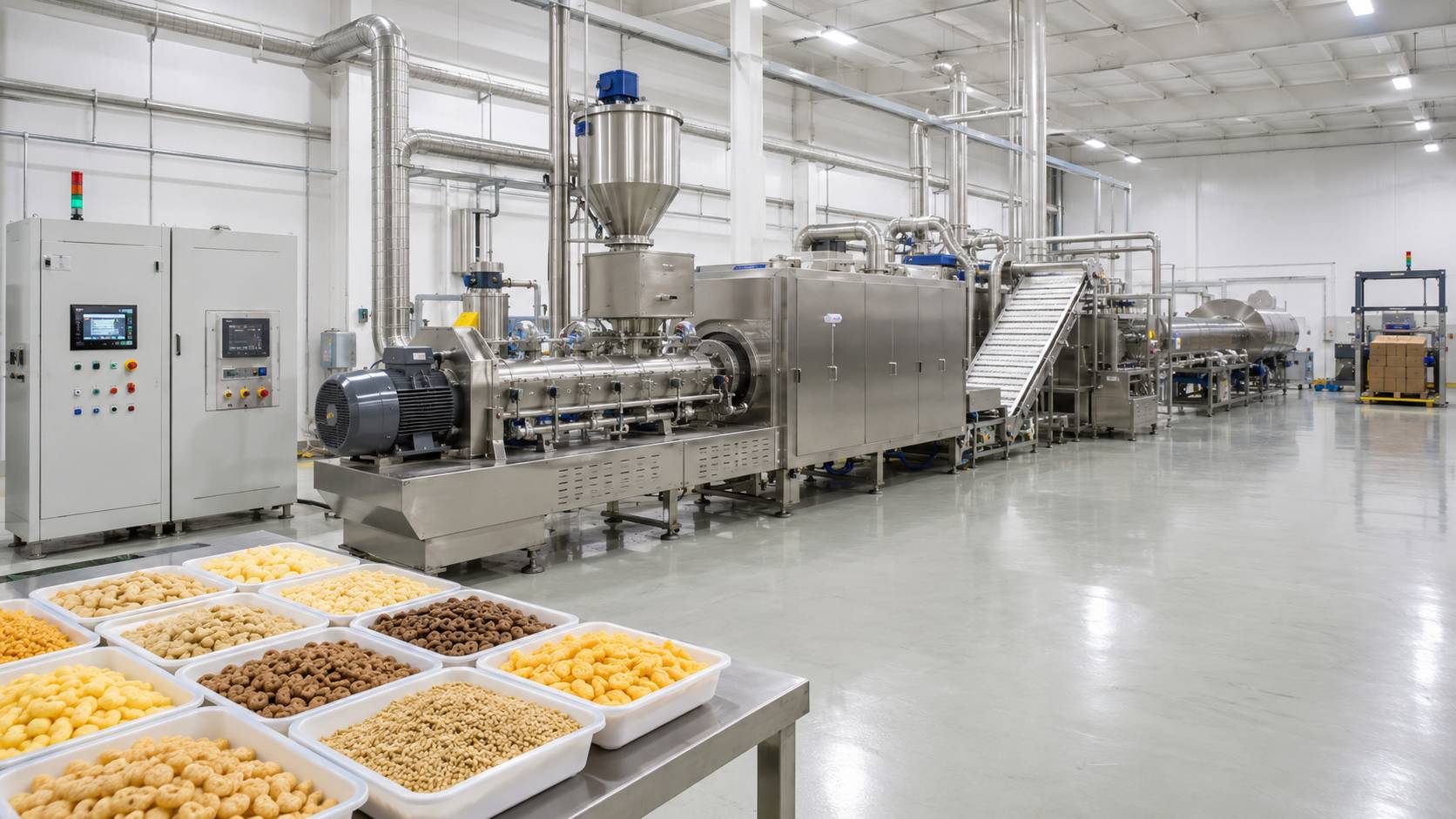
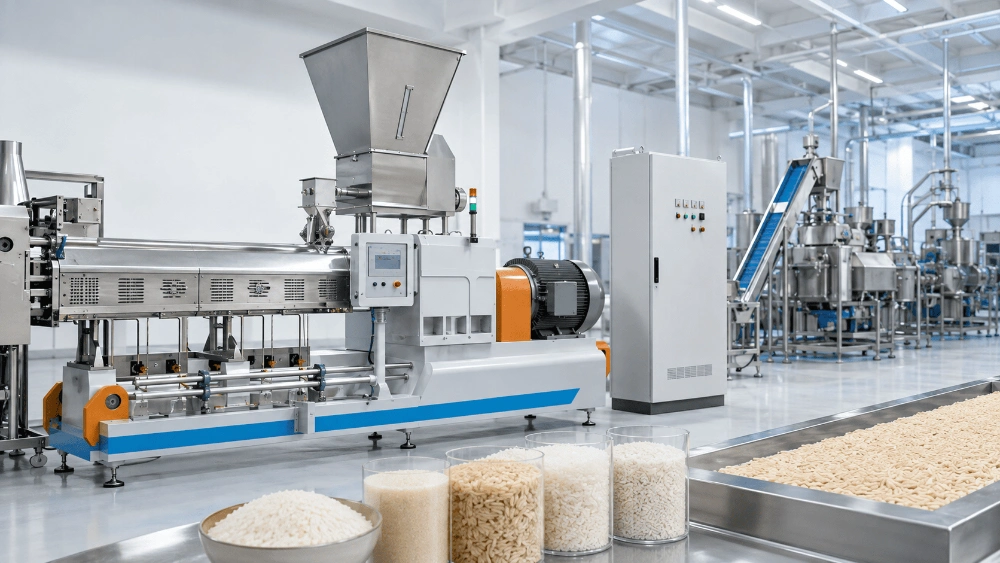
Choosing the extruder too early can send a fortified rice project in the wrong direction. The line has to begin with a product target: extruded fortified rice kernels, instant rice, Artificial Rice,reconstituted rice, or a blended nutrition rice product that must match local taste, cooking habits, and nutrient rules. Equipment follows that target. Formula work, moisture control, drying, cooling, packing, layout, and trials shape the final line. For a buyer comparing a fortified rice production line, this planning stage helps distinguish a technically defined project from a quotation that lacks a clear process basis.
Start With the Product Target, Not the Machine List
Product identity comes first. Fortified rice kernels are usually designed to carry vitamins, minerals, or nutrients into a rice-based staple. Artificial rice and reconstituted rice may also focus on texture, convenience, or raw material reuse. A plant built for instant rice meals will not always need the same drying curve, kernel target, or packing arrangement as a plant built for blending fortified kernels with natural rice.
That is why the buyer brief needs to be more specific than “rice machine.” It has to name the product, raw material base, eating method, output range, and whether the finished product will be sold as standalone instant rice, fortified kernels for later blending, or a mixed retail product. Without that clarity, equipment sizing lacks a reliable technical basis.
At this stage, useful details are plain factory details. Kernel size, moisture target, packing format, workshop space, heating preference, and automation level all matter. Together, they give equipment selection a firmer technical frame before line configuration is discussed.
Core Equipment Flow for a Fortified Rice Production Line
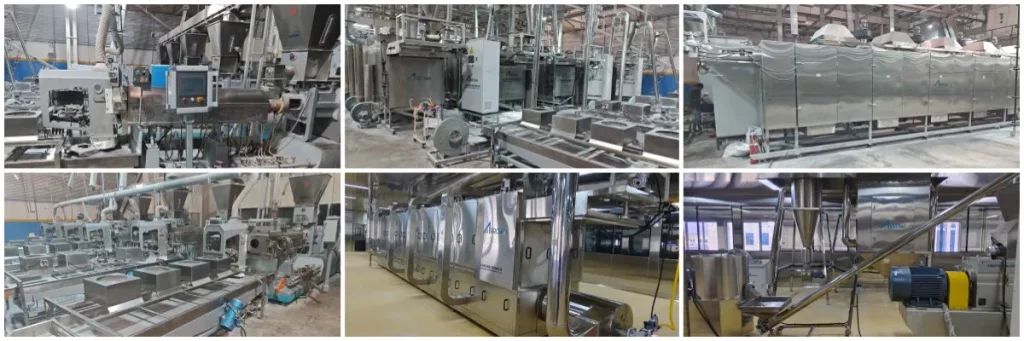
Viewed as a factory process, a fortified rice plant is not a row of unrelated machines. The main flow starts with flour preparation and blending, moves into cooking and extrusion, then passes through pre-drying, drying, cooling, and packing. Some projects add storage, automatic batching, pneumatic conveying, vibration cooling, secondary drying, inspection, or packing systems.
Raw Material Preparation and Batching
Raw material preparation decides whether the extrusion section receives a steady, repeatable mix. Broken rice, rice flour, corn, millet, oats, or other grain powders may be used, but each material has its own particle size, moisture, starch behavior, and flow habit. Nutrient premix adds another layer because small dosing errors can affect compliance and consistency.
Batching and mixing therefore belong near the beginning of the design discussion. A manual line may suit a small pilot plant, but industrial reconstituted rice production usually benefits from controlled feeding, weighing, and mixing. Raw material storage and batching systems can combine material separation, weighing, storage, and mixing. This section protects the rest of the plant from unstable input.
Cooking, Extrusion, and Forming
In the forming stage, rice-based powder is cooked, shaped, and cut into rice-like grains or other required forms. The goal is not only shape. The process must create enough structure for the grain to survive drying, cooling, packing, transport, and later cooking or blending. For fortified kernels, it also has to handle nutrient premix without making the grain fragile or uneven.
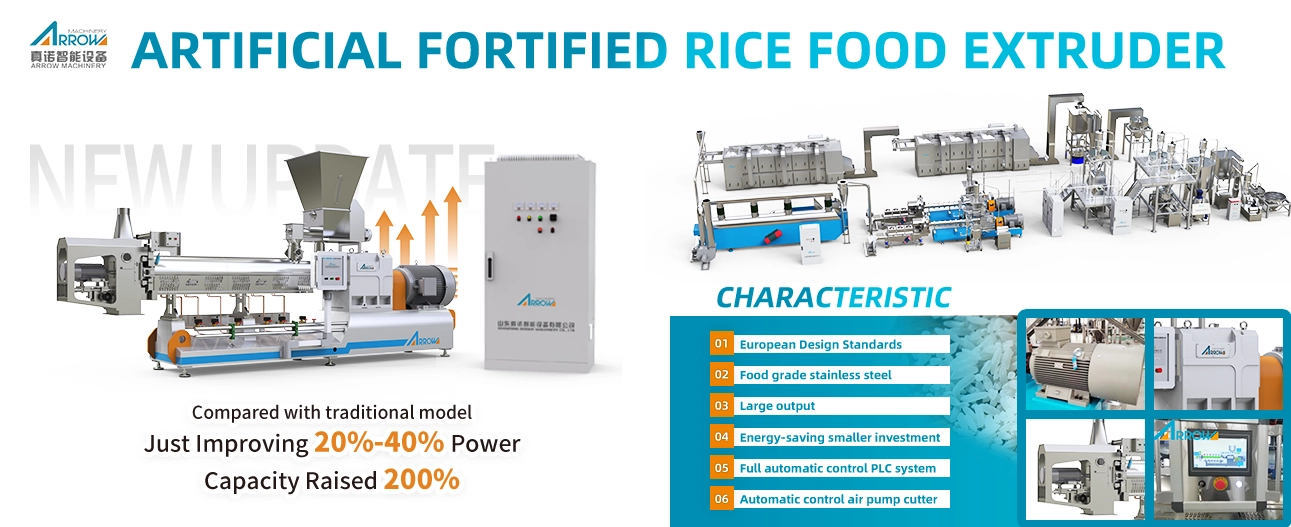
ARROW MACHINERY supplies nutrition and fortified rice production systems for rice flour, broken rice, and selected grain-based materials. The production route combines mixing, extrusion forming, pre-drying, drying, cooling, and packing. This makes the nutrition and fortified rice production systems a relevant product reference for buyers comparing an artificial rice production line, while final equipment choice still depends on formula behavior, kernel target, and scale.
Pre-Drying, Drying, Cooling, and Packing
Drying is a critical control stage in fortified rice production. Wet extruded kernels need moisture removed without cracking, clumping, over-hardening, or damaging product quality. Pre-drying can reduce surface moisture before deeper drying. A main dryer then brings the product closer to the target moisture range, while cooling prepares the rice for packing or later blending.
Plant planners should reserve enough floor space and utility capacity for this back end. Depending on the selected dryer, the project may require gas, steam, or electric heating, together with hot-air circulation, exhaust, or dehumidification arrangements. Cooling matters because warm rice packed too soon can create condensation risk. Packing equipment then has to match bulk bags for further blending or retail packs for finished products.
Formula Planning Without Guessing Nutrient Dosage
Formula work is where a fortified rice plant becomes more than a machinery purchase. The base formula may look simple: rice flour or broken rice, water, oil if required, and nutrient premix. In production, that mix has to pass nutrition targets, local food rules, extrusion behavior, appearance checks, cooking performance, and shelf-life expectations. Guessing a premix level from a machine quotation is risky.
Extrusion, fortification effects, and kernel production as technical control topics. That separation matters. Nutrient work belongs with a food technologist, a qualified premix supplier, and local regulatory guidance. The equipment supplier can support process trials, but it should not replace nutrition design or legal review.
Trial production is valuable because the same nutrient package can behave differently when the rice base, moisture, barrel temperature, die, cutter speed, or drying curve changes. A kernel that looks acceptable after forming may still crack after drying. Another formula may cook well but fail color or aroma expectations. Small-batch testing can reveal these issues before the full plant layout is finalized.
For buyers, the useful question is not whether one sample looks acceptable on a table. The question is whether the planned formula can run repeatably through the selected feeding, extrusion, cutting, drying, cooling, and packing sections, with reproducible machine settings.
Plant Layout and Production Planning
Plant planning turns an equipment list into a workable factory route. Space is only one part of it. Utilities, operator movement, cleaning access, trial acceptance, and future expansion all affect the move from installation to stable output.
Workshop Layout and Material Flow
A fortified rice plant layout should follow material movement from dry storage to finished packing. Raw material receiving and powder handling need dust control, cleaning access, and practical routes for operators. Around the extrusion area, space is needed for the feeder, conditioner, barrel, cutter, controls, and maintenance points. Drying and cooling can take more floor area than expected when residence time is longer.
Material flow should avoid unnecessary cross-movement between powder handling, wet forming, drying, cooling, and packing. Buyers may reserve space for future instant rice, nutrition rice, or related grain products. That reserve is easier to plan before utilities, walls, and conveyors are fixed.
Utilities and Drying-Side Requirements
Utility planning deserves the same attention as machine selection. Power capacity, water, steam or gas, ventilation, drainage, temperature control, and compressed air where required by the selected conveying, control, or packaging modules can affect installation. Even a compact equipment list can become difficult to run if dryer exhaust or heating capacity is poorly planned.
The drying side also affects workshop comfort, cleaning rhythm, and product consistency. Hot air movement, exhaust route, cooling air, and inspection access need enough space around the machines. If these details are left until installation, the buyer may face duct changes, cable rerouting, delayed commissioning, or reduced room for maintenance.
Trial Acceptance and Operator Readiness
Production planning includes labor, cleaning rhythm, shift pattern, spare parts, and commissioning. A line that runs well during a supplier trial may still need operator training before stable factory output appears. Useful acceptance checks include feeding accuracy, kernel shape consistency, moisture trend after drying, cooling temperature before packing, package seal quality, and repeatability across more than one run.
Operator readiness is part of the setup decision. The team needs to know which settings matter most, which product changes require formula review, and which quality problems are linked to feeding, extrusion, drying, or cooling.
What Support Should Buyers Confirm with the Equipment Supplier?
Supplier support belongs in the technical checklist, not in a sales wrap-up. Buyers need to confirm what can be tested before ordering, what layout information will be provided, what installation and commissioning support is available, and how operators will be trained. These checks keep the discussion focused on technical risk instead of general promotion.
ARROW can support formula testing, layout suggestions, equipment design, installation, trial operation, and training for food extrusion projects. For a fortified rice plant, that support is most useful when the buyer brings a clear brief: product type, target output, raw material list, expected nutrient claim, workshop conditions, preferred heating method, packing format, and limits around labor or automation. With those details, the supplier discussion becomes more concrete.
Buyers should also separate confirmed equipment support from items that need outside professional review. Nutrient dosage, food labeling, fortification rules, and market-specific claims normally require qualified nutrition, regulatory, or testing support. The equipment supplier can help with process trials and line configuration, but the final product standard belongs to the buyer’s compliance route.
Conclusion
A fortified rice project is more coherent when equipment, formula, and production planning are evaluated together. The core line may include flour preparation, blending, cooking and extrusion, drying, cooling, and packing, but the final setup depends on product target, nutrient rules, raw materials, utilities, and operator readiness. A workable plan defines the product first, tests the formula, checks the plant, then selects a line configuration that can repeat the target product at factory scale.
FAQ
Q: What equipment is usually needed for a fortified rice plant?
A: A typical fortified rice plant may include flour preparation, batching and mixing, cooking and extrusion, forming or cutting, pre-drying, drying, cooling, conveying, and packing. Larger projects may add automatic raw material storage, weighing, secondary drying, inspection, or advanced packing. The exact configuration depends on product target, raw materials, output, and factory layout.
Q: Is fortified rice the same as artificial rice or reconstituted rice?
A: Not always. Fortified rice focuses on adding selected nutrients to rice-based products, often through fortified kernels later blended with natural rice. Artificial rice and reconstituted rice can also involve shaping rice flour or broken rice into rice-like grains, but the goal may include convenience, texture, raw material reuse, or instant meal formats. One line may support several related products, but the formula and drying plan can differ.
Q: How should a factory plan the formula before ordering a nutritional rice machine?
A: The project team should define base raw materials, nutrient target, local regulatory limits, cooking method, sensory target, and shelf-life expectation before final equipment selection. Lab or pilot trials are strongly recommended. Trial runs help check extrusion behavior, kernel shape, drying response, color, texture, and repeatability before the factory commits to a full setup.


