




Two quotations may use the same equipment name while describing very different projects. One may cover a forming machine and one standard mold. Another may include grain preparation, conveying, drying, seasoning, cooling, controls, spare parts, commissioning, and training. The useful question is not simply which rice cake machine price is lower. Buyers need to know whether each supplier has priced the same finished product, output basis, automation level, and delivery scope.
Product shape, mold quantity, grain type, coating method, cooling demand, and packing connection can all change the final quotation. A purchasing team should therefore define the intended SKU before comparing suppliers. This keeps the discussion focused on commercial output rather than a headline price that does not represent the full project.
Does the Quote Cover One Machine or a Connected Line?
The first comparison should establish what the quotation covers. A standalone unit may suit a factory that already has preparation, flavoring, cooling, and packing equipment. A new project usually needs more connected sections.
A Standalone Machine Covers the Forming Cycle
A basic puffed rice cake machine loads prepared grain, heats the mold, forms the cake, and discharges each cycle. The offer should state whether the hopper, standard mold, control panel, safety devices, discharge tray, and basic tools are included.
This offer should not be compared directly with a line quotation containing elevators, mixers, dryers, coating systems, or packing conveyors. The two packages solve different production needs.
A Connected Line Includes Material and Product Handling
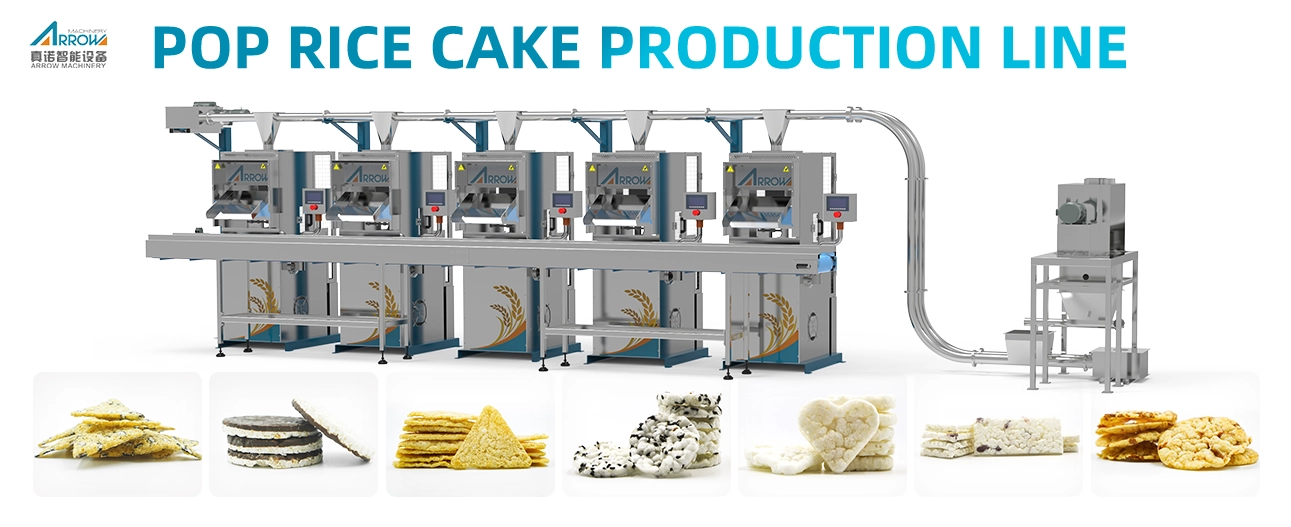
A connected rice cake production line may combine lifting, storage, mixing, forming, sieving, drying, seasoning, and tunnel cooling. Plain cakes require fewer downstream stages than seasoned or chocolate-coated products. Each module should be marked as standard, optional, buyer-supplied, or excluded.
The delivery boundary should also cover electrical controls, conveyors, spare molds, manuals, export packing, installation, and training.
Which Product Specifications Change the Quote?
The finished product should be defined before model selection. Grain characteristics, shape, thickness, and surface treatment affect the machine setup and the supporting equipment around it.
Grain Choice Affects Preparation and Settings
Commercial rice cake equipment can process suitable grains such as rice, corn, quinoa, oats, brown rice, black rice, micropellets, multi-grain mixture. The grains may need controlled moistening before loading.
Buyers should send representative materials and describe any completed pretreatment. A quotation based on one grain may not transfer directly to another because moisture behavior and forming response can change.
Shape and Mold Quantity Affect Cycle Output
Different mold sets can produce round, triangular, square, rectangular, heart-shaped, pentagonal, or hexagonal products. Thickness can also be adjusted within the compatible machine and mold setup. The number of cavities per cycle affects output, handling, and mold price.
A buyer planning several SKUs should ask how many custom rice cake molds are included and whether each shape changes the cycle rate. The Popped Rice Cake Production Project presents round, triangular, square, and heart-shaped products and includes seasoning powder and chocolate-coating routes.
Coating Creates a Different Downstream Requirement
Plain rice cakes may move from forming to screening, cooling, and packing. Seasoned cakes normally need drying, a seasoning drum, powder feeding, and controlled cooling. Chocolate-coated products require a coating section and enough cooling before packaging.
These options influence line length, cleaning, transfer, and packing readiness, so they should appear as separate modules in the quotation.
How Do Capacity and Automation Affect Investment?
Rated capacity is a useful starting point, but it does not describe final commercial output by itself. Grain condition, cake size, mold cavities, cycle time, coating, cooling, and packaging can all change saleable output.
Model Data Must Use the Same Capacity Basis
The current range lists BMH200 at 4.7 kW with a capacity of 5–6 kg/h, and BMP500 at 8 kW with a capacity of 10–15 kg/h. These figures indicate general scale. Buyers should still confirm the grain, cake dimensions, thickness, and mold used to establish the quoted capacity.
A rice cake machine manufacturer should state whether the figure represents plain cakes leaving the forming unit or finished products after seasoning, cooling, and packing.
The Slowest Section Sets Final Output
A faster forming cycle will not increase saleable output when screening, drying, seasoning, cooling, or packaging cannot keep pace. The full puffed rice cake machine configuration should therefore be reviewed section by section.
Coated products may need longer cooling, while larger cakes can change handling. Packing speed may become the final bottleneck when product collection remains manual.
Automation Changes Labor and Coordination
A basic configuration may use manual loading, collection, seasoning, and transfer. An automatic rice cake machine project can add elevators, storage hoppers, connected conveyors, continuous seasoning, tunnel cooling, and a packing interface.
Automation reduces repeated handling but adds controls, maintenance work, and capital cost. Selection should follow shift pattern, labor availability, and order volume.
Which Supporting Equipment Should Be Included?
Supporting equipment determines whether the machine can operate as a repeatable commercial process. A low quotation may reflect a narrow scope rather than a lower total project cost.
Upstream Sections Prepare Consistent Batches
A mixer, moisture-addition step, elevator, storage hopper, and feeding system may be required before forming. The offer should show how grain is prepared, stored, and delivered to the main unit.
Downstream Sections Define the Finished SKU
| Production target | Basic requirement | Possible additional modul |
| Plain rice cakes | Forming and collection | Sieving and basic cooling |
| Seasoned rice cakes | Drying | Seasoning drum and powder feeder |
| Chocolate-coated cakes | Coating unit | Tunnel or controlled cooling |
| Several shapes | Standard mold | Additional custom molds |
| Automated packing | Discharge conveyor | Weighing and packing interface |
Inspection conveyors, coding, metal detection, cartoning, and final packing may sit outside the standard machine offer. Buyers should ask where the supplier’s scope ends.
Spare Parts and Changeover Items Need a Separate List
Startup spares may include sensors, seals, heating components, control parts, and model-specific wear items. Mold sets and cleaning tools should be listed separately.
What Factory Conditions Can Change the Final Cost?
The same equipment can require a different project budget when local voltage, workshop access, utilities, or packing arrangements change. Site information should be submitted before the final offer.
Utilities and Layout Must Match the Equipment
Buyers should provide voltage, frequency, electrical load, compressed-air conditions, workshop dimensions, entrance size, drainage, and cleaning arrangements. An early layout can reveal conflicts around columns, doors, floor levels, and the packing area.
If the electrical standard or control components need adjustment, cost and delivery time may change.
Cooling and Packing Need Reserved Space
Seasoned and chocolate-coated products need more downstream space than plain cakes. Buyers should confirm the packing inlet height, conveyor direction, inspection points, package sizes, and cooling time before the layout is fixed.
The product should reach a suitable condition before sealing.
Shipping and Startup Services Need One Clear Scope
Export packing, freight, customs documents, installation, commissioning, trial materials, training, and remote support should be separated in the offer. At the supplier-comparison stage, Arrow Machinery can discuss the machine, molds, process flow, layout, and startup requirements within one project review.
How Should Buyers Compare Manufacturers?
The most useful comparison begins with one technical brief sent to every supplier.
Compare the Same Finished Product
Each supplier should receive the same grain list, cake dimensions, thickness, mold quantity, output target, coating plan, cooling requirement, automation level, and packing method.
This shows whether a rice cake machine price difference comes from build scope, output basis, service, or missing information.
Ask for Drawings, Tests, and Clear Exclusions
A rice cake machine manufacturer should identify the model, power, capacity basis, included molds, process flow, equipment list, layout, utilities, trial conditions, warranty, and service scope.
Buyers may request a test video, samples, or a trial with agreed material. Acceptance criteria should state what will be measured.
Review Support Before Signing
Installation and commissioning can expose issues not visible in a quotation. Operator training should cover loading, startup, shutdown, cleaning, mold changes, parameter adjustment, and basic fault response.
The Service scope includes technical design, consultation, field debugging, operating training, spare-parts supply, and troubleshooting. The order should specify which elements are included and which costs remain with the buyer.
What Should Buyers Prepare Before Requesting a Quote?
A precise inquiry should include the grain blend, samples, shapes, dimensions, thickness, target output, mold quantity, coating plan, cooling method, packing format, workshop drawing, utilities, and installation expectations.
The buyer should also state whether the project replaces one machine or creates a new rice cake production line. That decision changes the required conveyors, preparation equipment, post-processing modules, and layout work.
A useful quotation is not simply the lowest headline price. It is based on the same finished product, capacity basis, mold scope, downstream process, factory conditions, and service boundary.
Prepare these project details before comparing suppliers. Our team can review the product plan and identify which forming, drying, seasoning, cooling, and handling sections belong in the offer. Request a Project-Based Rice Cake Line Review to build the quotation around your actual production plan.
FAQ
Q: Why do commercial rice cake machine quotations vary?
A: Differences may come from machine model, mold quantity, product size, capacity basis, automation, drying, seasoning, coating, cooling, packing connection, spare parts, and service scope. Buyers should compare complete equipment lists rather than headline prices.
Q: Can one machine produce several rice cake shapes?
A: Different shapes can be produced with compatible mold sets. Buyers should confirm available molds, dimensions, cavities per cycle, thickness range, changeover procedure, and any effect on output before ordering.
Q: Should seasoning and chocolate coating be included in the first order?
A: It depends on the first product range and equipment already available. Including these sections can simplify startup for coated products, while a plain-cake project may reserve space for later expansion.


