




The growing worldwide need for easy, healthy food choices has changed the production world in 2026. Old rice milling methods always cause a big loss of important small nutrients. Today’s food makers need better machines that can mix key nutrients right into the blend before cooking with extrusion. Raising output levels while keeping full nutrient quality is the main problem for factory bosses right now. Strengthened rice shows up often in health plans, but lots of makers do not fully understand how it gets made. This lack of know-how often causes bad equipment picks and risks with rules.
As a well-known specialist in the extrusion machine-making field, ARROW MACHINERY offers full, ready-to-use engineering help made just for these tough current needs. Started in 1993, our firm has focused on building, making, and setting up extrusion food production gear for makers around the globe. By closely linking solid production steps with strong machine engineering, we give systems that work well under the hard needs of steady, high-output runs, now helping over 5,000 customers in 118 nations.
Why High-Capacity Extrusion is Crucial for Artificial Rice in 2026
In the tough market of 2026, work efficiency and raw material care set the leaders apart. The best money-making factories use their raw materials fully by turning broken rice bran, once seen as trash, into valuable fake rice grains. This smart way cuts down on nature’s waste and lowers total costs, making a lot, boosting profits for big plants.
Also, the top extrusion gear must handle many raw materials well to match quick shifts in what people like. Our better machines easily work with many grain powders, such as corn, wheat, rice, millet, oats, konjac, yams, soybeans, and mung beans. This great range lets food company heads change their plans fast and take advantage of hot items like brewing instant rice, self-heating rice dishes, and quick rice porridge. More than material options, workers can shape the rice mix into new forms just by swapping the extruder mold. This easy but strong shape change helps plants offer many product types without high costs.
Core Technologies Defining the Best Nutrition Rice Extruders
To get good product quality steadily at large sizes, the tech behind the line must be perfect. The change process starts with strong extrusion cooking. The broken rice and rice flour get ground fine, mixed with a nutrient pack full of vitamins and minerals, and combined with water and oil. This blend then cooks fully inside the extruder to make the right rice-grain form. Hot extrusion is the most common and workable way. It puts small nutrients deep into the rice structure, not just on the outside. Cooked fortified rice keeps nutrients even after washing and boiling, gives steady nutrient amounts, and gets okayed by the government and group programs.
After this high-pressure, high-heat step, careful drying and cooling at low temperatures make sure the final fake rice holds its strengthened nutrients well. Exact control is a must-have for today’s food-building plants. Linking a better auto temperature system makes heat handling simple and makes all process settings much more accurate. This high auto level cuts down on mistakes by people. Twin screw extrusion remains the top choice for this job, giving the strong mixing and exact cutting forces needed to lock added vitamins and minerals deep and lasting into the starch base.
Spotlight on Top Extruders for High-Capacity Food Engineering
Growing factory sizes need tough, factory-level machines built for steady, hard work. When plant heads check what the best extrusion equipment for high-capacity artificial rice production in 2026 is, the exact tech details and output powers of the extruders decide it all. The new AHE series types show clearly what real high capacity means for today’s manufacturing factories. I believe these machines stand out because they handle big loads without breaking down, which is key for busy operations. For example, they use strong motors that run smoothly for hours, and their parts fit together perfectly to avoid leaks or jams.
For example, the useful AHE62 model uses 90-110kW of power to give a steady output from 200-800KG/H. To raise the production size, the AHE78 model gives 110-160kW of power to hit 300-1200KG/H. The AHE90 uses 160kW to give 300-1500KG/H. For really huge, sell-abroad runs, the strong AHE98 model uses a big 200-250kW of power to reach great outputs from 800-2500KG/H. Good upkeep planning is key to cutting factory stop times. These high-end extruders have a smart split design just for the auger and cylinder parts. This new engineering lets machine users swap worn pieces without changing the whole screw group. In my experience working with these systems, this feature saves time and money, as operators can fix issues quickly on the spot. Plus, the materials used in these parts resist wear better than older models, extending the life of the machine overall. We have seen clients run these for years with minimal replacements, which boosts their trust in our products.
The Complete Turnkey Process Flow for Fortified Rice
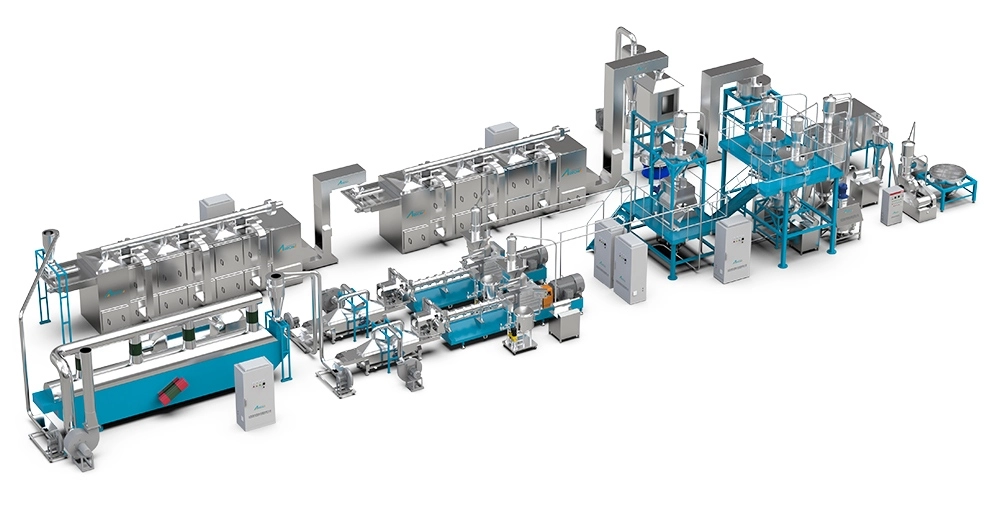
A broken or badly linked production line always causes big work problems and ongoing quality troubles. The best way for big production is to use a smooth, highly automated Extruded Fortified Rice Instant Rice Nutrition Rice Kernel Production Line. The whole job flows in a clear, ongoing way through these clear steps: Ingredients – Mixing – Extrusion Curing – Pre-drying – Drying – Cooling – Packaging.
By keeping tight auto watch over this ongoing flow, makers make sure the strengthened rice grains have the right feel, exact water level, and high health value needed by the 2026 buyers. After extrusion, the strengthened grains have extra water and need drying for long-term storage. The goal after drying water level is often about 10–12%, based on store and weather settings. Drying does many jobs: it stops germ growth, lengthens shelf life, and gives a strong build for blending. In most big plans, strengthened rice gets made by mixing strengthened rice grains with normal shiny rice at a set ratio. Factory blending setups are built to keep even mixing even at fast speeds. The same grain size and weight are key to stopping splitting during moving and packing. From what I have seen in our projects, getting this blending right means the final product looks uniform and meets strict quality checks every time. We always test the mix ratios in our factory to ensure no separation happens later, which helps clients avoid complaints from end users.
Exceptional Service and Unmatched Manufacturing Strength
Giving top extrusion machines is just part; offering the solid base to back it up is where real lasting worth comes from. We take pride in our great making skills. We see a food production line as a full engineering setup, not just some machines. We give full, all-in-one services that cover plant planning, study and build, custom build, building work, exact making, world shipping, safe drop, and work training. Our new factory has cutting, putting together, electric linking, and check areas, backed by more than 150 full-time workers. We use one way for step design, gear linking, and setup order for each job. This job-based way cuts down on site changes after setup. Our own making skills and standard cutting ways make sure close fit control for main parts like extruder screws and barrels, cutting tools, and drying and moving parts. I can say from our daily operations that this control leads to machines that run quieter and use less energy, which clients appreciate in their bills. Our team spends time on each part to meet international standards, ensuring everything fits without gaps.
When it comes to send times and plant setup, normal machines stay in stock ready, while much custom gear needs 30 work days to end making, hard checks, and safe pack steps. The real setup work at the buyer’s plant often takes 2-3 weeks to finish. We send very clear setup guides, plus run machines for quality watch and checks of varied mixes. We fully support our engineering skills and build trust with a clear 1-year promise for the split auger and cylinder parts. For makers aiming to build or update a food line, early tech talks form the base of a good job. In practice, these talks help us understand the client’s space and power setup, so we can adjust designs early and avoid delays later. Our support team is always available via email or call to guide you through every step. Contact us today!
FAQ
Q: What specific kinds of end products can be made using this advanced extrusion line?
A: The high-capacity system works well with many types and is built to make brewing-type instant rice, easy self-heating rice meals, and healthy instant rice porridge without trouble. These products meet the needs of busy families and health-focused eaters, and our line ensures they come out consistently in taste and nutrition every batch.
Q: How long does the manufacturing and setup process typically take for a customized production line?
A: Custom extrusion gear usually needs 30 work days to wrap up the making, strict inside checks, and safe shipping packing. The next setup and install part at your plant often takes 2-3 weeks to complete. We make sure all parts arrive on time and include tools for easy assembly, which shortens the overall timeline for starting production.
Q: What is the exact warranty coverage provided for the artificial rice extrusion equipment?
A: We offer a focused 1-year warranty for the auger and cylinder parts, using the smart split design that allows for a simple swap of worn pieces without changing the whole costly screw group. This coverage gives peace of mind, as it covers common wear from daily use, and our team helps with claims to get back online fast.


