




At 2026, the worldwide food production field experiences a major change toward better automation and health-focused methods. Businesses seeking to lead in the breakfast area must view equipment selection as a key step for ongoing gains. Our team has dedicated more than 30 years to improving food engineering knowledge, assisting over 5,000 clients in 118 nations. Our 50,000-square-meter plant serves as a center for fresh ideas, where data analysis and smart tech combine with classic methods to develop eco-friendly, green food options. We place strong emphasis on quality as the base, helping producers handle the tough needs of the 2026 market with exactness and dependability. To see how our skills can change your setup, check out the background of ARROW MACHINERY, where we blend years of know-how into each complete project.
The Strategic Importance of Cereal Production in 2026
The breakfast cereal sector in 2026 shows a quick move to useful nutrients and “clean label” items. Producers deal with growing costs for basic materials and a more careful group of buyers who want steady quality and varied tastes. This setting calls for a manufacturing setup that proves sturdy yet adaptable to manage various components, from usual corn to fiber-rich mixed grains.
Choosing an Automatic Corn Flakes Production Line stands out as the best method to gain an advantage in this changing scene. This setup enables smooth blending of mixing, extruding, and roasting steps, making sure the end item arrives at the store with the crunchy feel and strong nutrition that mark top cereals. Through stress on automatic processes and portion measuring, we aid our associates in cutting human mistakes and boosting the yield from each cycle.
Technical Superiority Through Advanced Extrusion
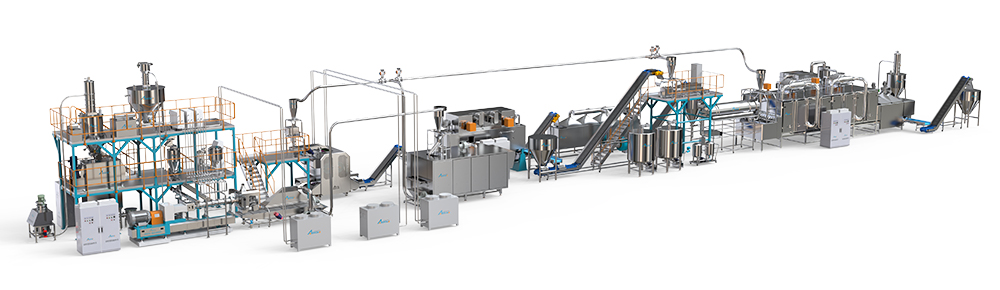
The output of a current cereal operation relies fully on the steadiness of its main parts. For 2026, the field norm has shifted to smart double-screw setups that run steadily without much risk of stops. Our updated extruders include a flexible screw layout and a divided barrel build, which lets us fine-tune settings to fit the special traits of diverse recipes.
We achieve this exactness via our special twin-screw extrusion technology, which applies strong shearing and ripening to basic materials under elevated heat and force. This method guarantees that the starch gels completely, yielding a better item that holds its form and taste post-processing. Moreover, our devices feature a side-feed exact placement for the turning cut setup, letting workers swap blades without halting the unit—a crucial element for keeping quick pace in big factory efforts.
A Unified Workflow from Raw Materials to Finished Products
A smooth production chain consists not just of separate devices but a linked design where each phase matches the true power of the site. In our efforts, we make certain that the extruder yield aligns with the exact abilities of the heaters and roasters, avoiding blocks and lessening waste. The method sticks to a standard factory path aimed at managing feel, dampness, and taste with great care.
-
Ingredient Mixing: Basic materials and extras get accurate weighing and combining through built-in parts that save room and cut worker expenses.
-
Extrusion and Maturation: using grains powder as basic material under high pressure and temperature to create a dough-like mixture.
-
Flaking: Mature mixture are pressed into tables using roller flaking machine to maintain a uniform thickness.
-
High-Temperature Toasting: We employ stream-feed roasters that roll the item in a moving bed, forming the swelled and foamy layer that buyers seek.
-
Coating and Drying: Post-roasting, the pieces may gain a layer of honey, chocolate, or vitamins prior to a last drying phase to hit the perfect dampness for extended keeping.
Smart Factory Integration and Energy Efficiency
Running in 2026 demands attention to digital control and eco-conscious power use. We have added clever setups that sort and convert production jobs, allowing higher work levels. These tools let us track power use, improve device output, and handle recipe details via an easy user interface. This info-based way makes sure each effort hits top speed in mere weeks after startup.
To cut running costs more, we stress power savings in our heating and roasting sections. Our heaters apply cross-flow and edge-air push builds to speed up drying while stopping material loss. By applying top insulation goods and sharp heat rule parts, we lower fuel needs and confirm that the site follows the strict green rules of today.
Comprehensive Service and Global Turnkey Expertise
We hold that a thriving cereal manufacturing plan begins with early tech checks and skilled site design. Our group of more than 30 food and machine specialists delivers tailored fixes, from first plan sketches to end handover and skill building. This full-service style removes link problems among various providers, making all devices function as one strong, effective unit.
Our support goes beyond setup. We supply a strict quality check frame that spans from basic stock storage to end item shipment. We also give expert guidance to make the buyer’s staff skilled in each part, from before-run safety reviews to after-close care. With a record of aiding 118 countries and areas, we possess the worldwide effort background to adjust our plans to your area rules and basic supplies. To begin your path to a high-return food handling site, please Contact us today for a tailored budget and tech advice.
FAQ
Q: Can the production line be used to produce different cereal shapes or snacks?
A: Yes, our twin-screw extrusion systems are designed with high flexibility. By changing the molds and adjusting parameters such as temperature and moisture, you can produce a variety of products, including Froot Loops, filled pillows, and puffed snacks on the same line.
Q: How does the system ensure food safety and hygienic standards?
A: All parts in contact with food are made from high-grade stainless steel according to “GMP” standards. Our equipment is designed for easy cleaning and sanitization, featuring a hygienic frame and a modular design that minimizes residue and prevents contamination.
Q: What is the estimated time frame for setting up a full production line?
A: A complex industrial project usually takes several months to over a year, covering engineering design, manufacturing, and installation. However, because we handle the entire process independently in our 50,000-square-meter facility, we can guarantee on-time delivery and faster commissioning compared to trading companies.


