




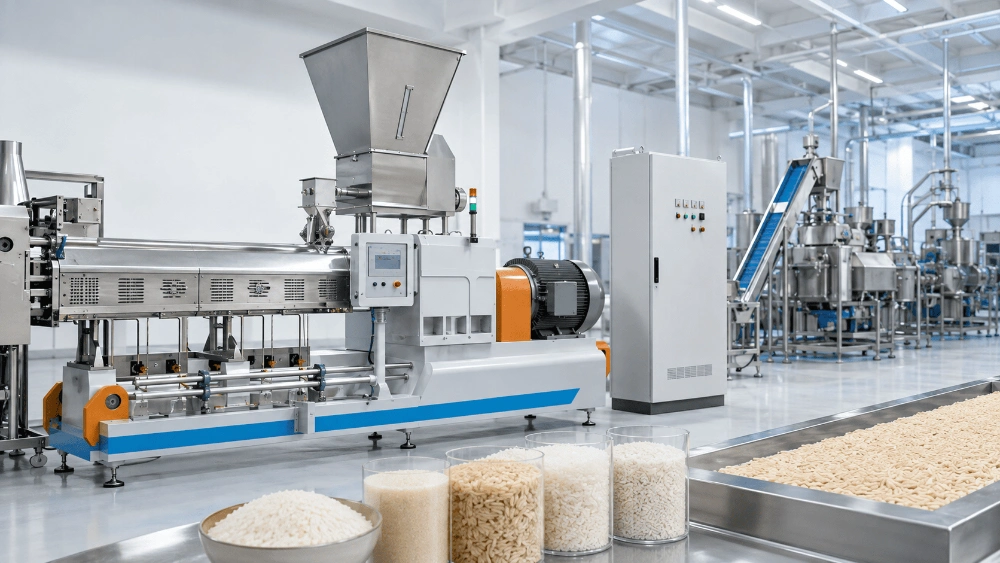

A modified starch production line is not simply an extruder with several machines placed after it. It is a connected process that takes prepared raw materials through mixing, extrusion, drying, cooling, crushing, re-mixing, and packaging. For a factory planning a new project, the useful question is therefore not only which modified starch machine to buy. It is whether the proposed line matches the intended raw material, finished-product requirement, operating method, and available utilities from the first stage to the last.
A complete modified starch process line should be planned around the full production sequence rather than a single machine. The configuration may include raw material storage and batching, mixing equipment, a twin-screw extruder, a dryer, cooling, crushing, re-mixing, and packaging. Exact equipment selection should start with samples and a written product brief, because changes at the raw-material stage affect every downstream operation.
Define the Product Before Selecting the Line
Modified starch is a broad project category. A buyer may be planning pre-gelatinized starch, another modified starch product, or modified flour for a particular industrial application. Those products should not be treated as interchangeable during equipment selection. Their target moisture, particle size, handling characteristics, and packaging format can lead to different operating requirements even when the overall process sequence is similar.
Start the project with a concise specification for the finished material. It should identify the intended application, the starch or grain base, added ingredients, required final form, target moisture range, particle-size requirement, packaging unit, and expected production schedule. Where the required properties depend on a formula or downstream use, provide a representative sample and the current process method as well.
This information gives the supplier a basis for configuring starch process lines. Without it, a quotation may list major machines but leave important interfaces unresolved. A line is complete only when material can move through each stage in the required condition and at a compatible rate.
Check Raw Materials Before Process Design
Materials derived from rice, corn, beans, and other grains may be considered for nutrition powder, modified flour, and modified starch projects. That range is useful for initial project screening, but it does not mean every material can run under the same recipe or machine settings. The supplier needs to evaluate the actual material planned for the project.
Identify the Base Material and Its Incoming Form
State the crop or starch source and describe how it arrives at the line. Is it a refined starch, flour, meal, or another milled material? Is it supplied in bags or bulk? Does it already meet the required particle-size range, or will preparation be needed before batching? These details determine what belongs in raw material preparation and how the storage and feeding arrangement should be designed.
For blended formulas, list every dry and liquid component with its normal inclusion range. A formula that combines several powders creates a different mixing task from a single-base material. If liquid must be incorporated, the mixer configuration and the method of addition need to be discussed before the layout is fixed.
Provide Data That Affects Feeding and Mixing
Raw materials should be described with practical production data rather than a product name alone. Useful checks include incoming moisture, particle size, bulk density, flow behavior, tendency to cake, and normal batch variation. Buyers should also identify foreign-material controls and any upstream screening or separation already in place.
These properties influence storage, weighing, transfer, and mixing. A powder that bridges in a bin or changes bulk density between lots can disrupt the feed presented to the extruder. The right starting point is a representative sample supported by recent material specifications, not an idealized description.
Separate Material Possibilities From Confirmed Formulas
Materials derived from rice, corn, beans, and other grains can be considered for this process-line category. That does not mean every formula based on those materials is ready for commercial production without testing. The buyer should ask which samples, formulation details, and product targets are required for process confirmation. This keeps the discussion focused on the material actually being purchased and processed.
Follow the Modified Starch Process Stage by Stage
The process sequence covers raw material preparation, mixing, extruding, drying, cooling, crushing, re-mixing, and packaging. Each stage produces the input condition needed by the next, so equipment should be reviewed as a coordinated line.
Raw Material Preparation and Mixing
Raw material preparation covers the work needed to make ingredients suitable for controlled feeding. Depending on the project, that can include storage, distribution to different silos, weighing, and delivery to the mixer. A storage and batching system may use different bin forms, silo distribution, precision weighing, and variable-speed feeding, but the selected arrangement must match the material and production basis.
The initial mixer then creates a consistent feed blend before extrusion. For formulas that combine powder and liquid, optional mixing elements, liquid-addition methods, and sealing arrangements should be selected around the batch method and leakage risk. These options are not universal requirements for every line, so the quotation should explain why the proposed mixer suits the formula.
Extruding
Extrusion is the central processing stage in this line. Prepared material enters a twin-screw extruder, where the selected screw, barrel, conditioning, heating, and control arrangement creates the processing conditions required for the intended product. The inquiry should define required functions, throughput, feed condition, and output condition before the supplier selects a suitable extruder configuration.
Selecting an extruder model does not settle the project design. The supplier still needs the raw-material specification, product target, proposed throughput, and operating schedule to select the actual arrangement. Buyers should ask what feed condition must be maintained at the extruder inlet and what output condition the downstream dryer is expected to receive.
Drying and Cooling
After extrusion, the material moves to drying and then cooling. Drying must remove moisture in a way that prepares the product for stable downstream handling. Cross-circulation airflow, air filtration, heat exchange, moisture discharge, and leakage control are relevant proposal checks, but the supplier should state which features are included in the offered dryer and how they match the product and throughput.
Cooling follows drying because hot material should not be sent directly into size reduction or final packing. The cooler and transfers need to fit the physical form leaving the dryer and the condition required by the crusher. When comparing proposals, check that dryer discharge, cooling, and crusher feed are described as connected operations rather than isolated equipment items.
Crushing, Re-Mixing, and Packaging
Crushing converts the dried and cooled material toward the specified final particle size. A crushing system may combine a pulverizer, cyclone separator, dust collection, fan, and screen-based fineness control. The proposal should identify the actual arrangement, material-contact construction, dust-control method, and expected particle-size result instead of relying on an unlinked machine name.
The process then returns to mixing. This second mixing stage is easy to overlook: the crushed product is re-blended before packaging. A single-shaft ribbon mixer can serve this post-crushing duty. Buyers should distinguish the initial ingredient-mixing duty from the post-crushing re-mixing duty when reviewing a machine list.
Packaging completes the process. The packaging requirement should state bag size or other pack format, target weighing method, closure method, and how finished material will be moved and stored. These details affect the final interface and should be defined before the line layout is approved.
Match Equipment to Its Process Duty
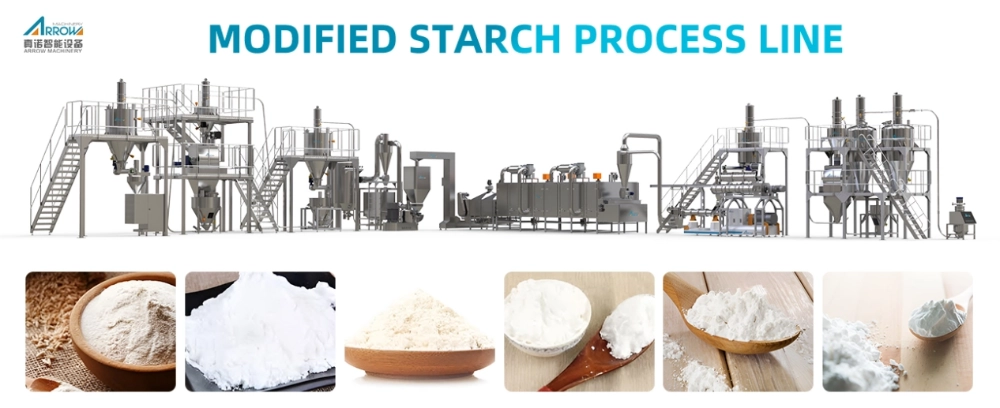
A useful equipment schedule should map every machine to a process stage, material condition, and required output. After the process and raw-material checks are complete, an ARROW MACHINERY modified starch process line proposal may include:
– Raw material storage and batching equipment for silo distribution, weighing, and controlled feeding
– A high-efficiency mixer for the initial blend, with optional features selected for the formula
– A twin-screw extruder configured for the required conditioning and extrusion duty
– A high-efficiency dryer using cross-circulation hot air
– Cooling equipment between drying and crushing
– A multi-functional pulse vacuum shredder for size reduction and material separation
– A single-shaft ribbon mixer for re-mixing after crushing
– Packaging equipment matched to the finished pack format
This list is a configuration range, not a statement that every project needs identical equipment or specifications. Ask the supplier to show the material balance and interface for each stage. Feed rate, residence time, discharge condition, transfer method, and buffer capacity should make sense as one system. An oversized or undersized stage can limit the whole line even when the individual machine operates correctly.
Layout review matters for the same reason. Confirm the direction of material flow, access for cleaning and maintenance, lifting and replacement paths, dust collection connections, and space around the dryer, crusher, and mixers. The project team should also identify which utilities are supplied by the factory and which items are included in the equipment proposal.
Build a Complete Inquiry Package
A precise inquiry allows a supplier to propose a more relevant modified starch machine configuration. Before requesting a quotation, assemble the following information.
Product and Raw Material Information
Provide the product name and intended application, the base raw material, full ingredient list, incoming material specifications, and representative samples. Add the required finished moisture, particle size, bulk handling behavior, and packaging format. If the product already runs elsewhere, include the current process sequence and the operating issues the new line should address.
Production and Factory Information
State the required production rate and whether it is a nominal target, minimum acceptable rate, or future expansion goal. Include planned operating hours, batches or changeovers, available floor area and height, preferred material-flow direction, and local utility conditions. Avoid asking for a capacity number without defining the product and operating basis behind it.
Proposal Scope and Commercial Boundaries
Request a stage-by-stage equipment list, layout, utility schedule, control boundary, material-contact construction, spare and wear parts, installation responsibilities, commissioning plan, operator training, and spare-parts support. The quotation should specify exactly what is included for the proposed project.
The buyer should also ask what material test or process confirmation is recommended before final configuration. That discussion is especially important when the formula, raw-material form, or finished-product target differs from a previously processed sample.
Turn the Process Brief Into a Line Proposal
The strongest modified starch production line inquiry connects four things: the actual raw material, the target finished product, the eight-stage process, and the equipment duty at every handoff. Begin with material samples and specifications, define the output and packaging requirements, then review the proposal as one connected system from preparation through final packing.
To move from a general line concept to a project-specific equipment proposal, contact ARROW MACHINERY with the raw material, product target, required production basis, packaging format, and factory utility information.
FAQ
Q: What information should a buyer provide before selecting a modified starch production line?
A: Provide the base raw material, complete formula, representative samples, target finished form, moisture and particle-size requirements, production basis, packaging format, operating schedule, factory layout, and available utilities. These details allow each process stage and equipment interface to be sized around the same project assumptions.
Q: Can one modified starch line process different grain-based raw materials?
A: A line may be configured for materials derived from rice, corn, beans, or other grains, but a shared machine list does not mean the same recipe or settings will suit every formula. Feeding behavior, liquid addition, extrusion conditions, drying duty, crushing, and final mixing should be confirmed with the actual material and finished-product target.
Q: Why should raw material testing happen before the equipment layout is finalized?
A: Testing can reveal differences in moisture, bulk density, flow, caking, mixing, and extrusion response that affect storage, feeding, mixer selection, residence time, drying, and downstream handling. Resolving those points early reduces the risk of designing a layout around assumptions that do not match the production material.
Q: Which process stages should a complete modified starch line proposal cover?
A: The proposal should connect raw material storage and batching, initial mixing, extrusion, drying, cooling, crushing, re-mixing, and packaging. It should also define transfer points, buffers, utilities, controls, cleaning access, installation responsibilities, commissioning, training, and spare-parts scope.


