



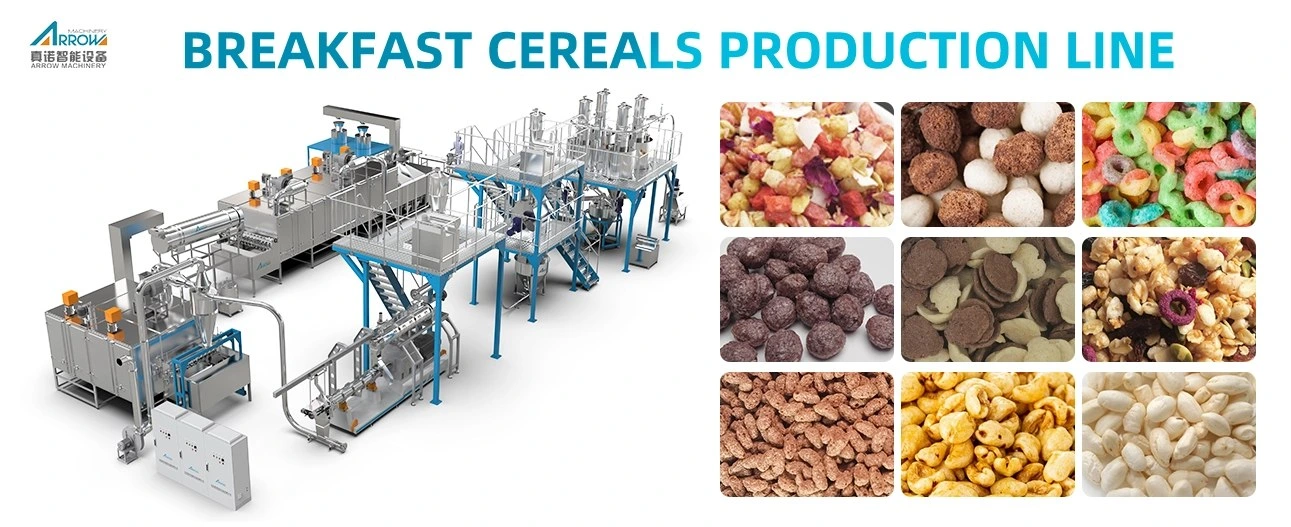
People around the world want healthy, reliable, and tasty breakfast cereals, from crunchy corn flakes to detailed multigrain shapes. Yet, keeping top quality in factory production presents a tough task that needs exact management of heat and mechanical force to avoid uneven heating or damage to the structure.
At Arrow Machinery, we fill this need with more than 30 years of knowledge in extrusion. We serve over 5,000 clients in 118 nations, offering full, eco-friendly setups—from plant design to tailored formulas. By mixing smart twin-screw methods with solid process understanding, we help makers create better items that catch the eye on store shelves.
Precision in Raw Material Handling: The Foundation of Consistency
The path to fine breakfast cereal starts well before the cooking begins; it starts with careful control of basic ingredients. Current buyer habits have expanded the range of materials past basic corn and rice flour to cover oats, buckwheat, quinoa, sorghum, barley, and different gluten fibers. Dealing with such a wide mix of grains calls for a smart weighing and blending setup that can adjust to varying weights and flow traits.
In our cereal production line, we stress the key role of the early mixing stage. If the balance of wet to dry parts shifts just a bit, the dough will act in unexpected ways in the extruder, causing changes in puffing and feel. To fix this, we use accurate weighing tools linked with adjustable-speed feeders. This arrangement makes sure the mix stays spot-on, no matter the grain type in use. By firmly guiding the starting factors, we build a steady base for the whole operation, making certain that the nutrient makeup—be it a protein-packed bean mix or a usual corn blend—stays the same from the first run to the end.
Advanced Extrusion Technology: Defining Texture and Shape
The main change of cereal materials occurs inside the extruder, where machine power and heat turn starches into gel and reshape proteins. This stands as a vital point where item quality can quickly suffer if the gear misses accuracy. Uneven cutting force can produce tough, bad-tasting flakes, while unchecked heat levels might harm sensitive vitamins in enriched cereals.
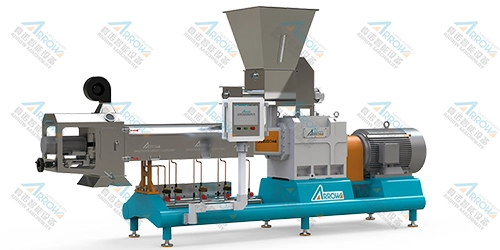
We apply the AHE Series Twin-Screw Extruder, built with a flexible barrel and screw setup, to tackle these issues. This flexibility lets us fine-tune the cutting and stay time for certain formulas. For example, making a solid, crisp fiber piece needs a unique screw pattern compared to forming a soft, puffy fruit loop. Most importantly, our setup has separate heat management for each section. This stops spot overheating, which leads to scorching or color spots, and makes sure the heating stays even.
Besides, the strength of the cereal form—be it a star, ring, or flake—gets set at the die end. Our turning cutter system uses a side-drive exact placement build, which gives clean, neat slices without twisting the pushed product. This method makes every bit hold its planned form, crucial for looks and even drying later on.
Optimizing the Flaking and Toasting Process
When talking about cornflakes production, the physical strength of the flake matters most. A usual problem in weaker factory lines is making flakes that come out either too heavy, leading to a tough chew, or too light, causing too much snapping in packing.
To handle this, our corn flakes production machine includes a special Roller Flaking Machine fitted with a hydraulic oil drive setup. This smart system allows for auto and exact changes to the roller space, often kept between 0.1mm and 0.15mm. This tiny-level accuracy makes sure each corn bit gets pressed to the same depth. Also, a special water-cooling build stops the sticky, hot bits from sticking to the rollers, a common source of surface flaws and odd forms.
After flaking, the item moves to the toasting step, which may be the most important for building the classic “crunch” and yellow shade of corn flakes. We use a strong Toaster that applies a fluidized bed idea. Rather than pulling the breakable flakes over a belt where they could snap, our setup uses warm air to softly raise and roll the product. This “moving” action makes sure the flakes get toasted evenly on all faces without machine strain. The outcome is a strong but crisp flake that holds up in shipping yet breaks nicely when bitten.
Enhancing Value Through Coating and Flavoring
For many breakfast cereals, like Fruit loops, crispy rices, honey ring, cheerios or oat ring, adding taste is what turns a plain good into a top brand. The hard part here is putting on liquid sweets or mixes without soaking the cereal or letting pieces stick as a group.
Our full Breakfast Cereals Production Line blends in a clever Syrup Coating System built for evenness. We use exact liquid flow tools and weighing sensors to watch the mix of coating to cereal right away. The spray part has several side-by-side nozzles with a spread of over 800mm, giving a broad and fair spread of the taste agent.
By guiding the drop size and spray style, we make sure the coating sticks to the cereal face without going too far into the hole structure. This way keeps the snap of the base item while giving a steady taste makeup. Plus, our mixing drums are built to stop oil fog from leaking into the work area, keeping strict clean rules and guarding worker health.
Drying and Cooling: Preserving Shelf Life and Structure
The last parts of handling decide the item’s storage time and build strength. Leftover water harms crispness and can cause germ growth. But drying needs care; going too quickly can close the outside while holding water in (case hardening), while going too slow cuts output speed.
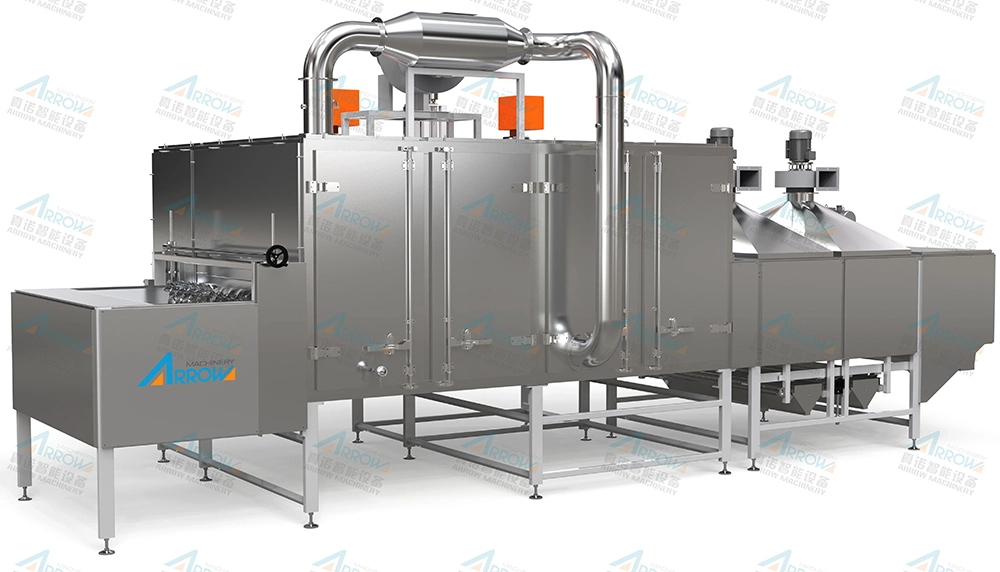
We set up High-Efficiency Circulating Dryers that use a cross-flow air pattern. This build pushes air through the product layer from many sides, making sure every cereal bit, no matter its spot on the belt, gets the same heat care. A main part of our dryers is the top-placed heating unit. By putting the heat spot above the product area, we stop dirt and bits from piling on the heat parts, greatly lowering fire risk and keeping a cleaner workspace.
After drying, the product needs fast cooling to stop any leftover heating and to fix the last feel. Our cooling setups are ready for packing, making them at the best heat to avoid water build-up in the pack. Whether the end pack is a bag-in-box or a big bag, the cereal goes into the packing step with its quality fully maintained.
Conclusion
Keeping the quality and strength of breakfast cereals comes not from one tool, but from a matched, science-based process. From the first weighing of mixed grain flours to the soft toasting of corn flakes, each part must be handled with care. At Arrow Machinery, we join our years of skill with leading twin-screw extrusion technology to offer setups that fit these strict needs. By picking our smart production lines, makers get not just gear, but a teammate focused on work speed, item strength, and green progress.
Elevate Your Cereal Production Today
Don’t let processing inconsistencies compromise your brand reputation. Whether you are looking to launch a new line of healthy multigrain cereals or optimize your classic corn flake output, we have the expertise and technology to help you succeed.
Ready to transform your production efficiency? Contact Our Experts for a Customized Solution and see how our smart extrusion systems can create value for your business.
FAQ
Q: Can the production line handle gluten-free grains like quinoa and buckwheat for cereal production?
A: Yes, our production lines are designed with high versatility to process a wide variety of raw materials, including gluten-free grains such as quinoa, buckwheat, sorghum, and millet. The twin-screw extruder’s modular design allows us to adjust the shear and temperature parameters to effectively gelatinize these specific grains, ensuring a high-quality texture and taste comparable to traditional wheat or corn-based cereals.
Q: How does the system ensure that fragile products like corn flakes do not break during processing?
A: We prioritize gentle handling throughout the entire cornflakes production process to minimize breakage. Specifically, our toasting equipment utilizes a fluidized bed technology that gently lifts and tumbles the flakes using air currents rather than mechanical agitators. Additionally, our conveying systems are optimized to reduce mechanical impact, and the roller flaking machine uses precise hydraulic controls to create uniform flakes that are structurally sound.
Q: What support is provided for installing and optimizing the cereal production line?
A: We provide comprehensive “turnkey” support that extends far beyond the delivery of machinery. Our services include factory layout planning, professional installation, and on-site commissioning by our experienced technical team. Furthermore, we offer training for your operators and assistance with recipe development at our Innovation Center, ensuring that your facility achieves smooth production and optimal efficiency from day one.


