



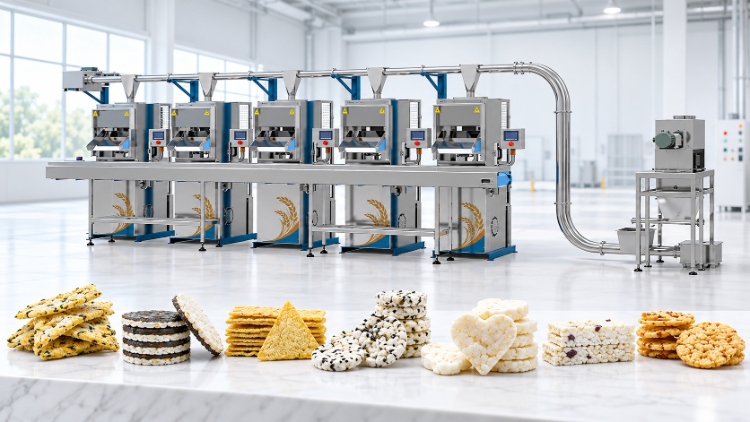
A popped rice cake can leave the forming machine with the right outline but still fail a buyer’s specification. One batch may contain thick, compact cakes; another may have thinner pieces that break during transfer. Crispness can also change after forming, even when the mold has not changed. The immediate temptation is to adjust the machine, yet the cause may begin with the grain mix or appear much later during drying and packing.
Consistent production depends on grain preparation, moisture, mold filling, the popping cycle, and downstream handling. Separate thickness at discharge from texture after finishing to locate the actual cause of variation.
Define the Finished Cake Before Adjusting the Machine
Thickness should be measured against an agreed product, not judged only by appearance. Record cake diameter or outline, target thickness range, weight per piece, visible expansion, edge integrity, and the amount of broken material. Crispness needs its own assessment, preferably under a defined product temperature and storage condition. A cake that feels crisp immediately after forming may behave differently once cooled and packed.
For a factory selling plain cakes alongside seasoned or chocolate-coated versions, establish separate specifications where finishing changes the product. Coating weight and finished moisture can affect eating texture without changing the thickness formed in the mold. The same distinction applies to products made with different grains or mold shapes.
Measure consecutive cakes at consistent points and record those outside the agreed tolerance. Set limits through customer requirements and trials rather than applying one universal thickness target.
How Grain Moisture and Mixing Affect Popping Results
The popping machine cannot make every incoming batch behave alike. Grain type, size, condition, and moisture distribution influence how the material responds during the forming cycle. A stable starting material makes later equipment adjustments more meaningful.
Keep Grain Preparation Repeatable
Rice, corn, quinoa, oats, black rice, Micropellets can be considered for suitable popped cake formulations. They should not be treated as interchangeable feedstocks. Grain dimensions, broken-kernel content, blend proportion, and incoming moisture may vary between lots. A mixed-grain recipe also needs consistent proportions from batch to batch.
Record lot, blend ratio, visible condition, and moisture where measurable. If expansion changes with a new lot, compare materials before adjusting several machine settings.
Check Water Addition and Mixing Uniformity
Moisture preparation is particularly important because grains are conditioned before entering the heated mold. Adding the correct total water does not mean every portion of a batch receives it evenly. Uneven mixing or insufficient equilibration can leave some material responding differently during popping.
Record water addition, mixing, batch size, and conditioning time. Compare samples across the prepared batch when texture varies. Use trials to establish a recipe-specific moisture range.
Keep Mold and Popping Conditions Repeatable
With a consistent grain feed established, the next check is the forming cycle. Thickness and shape depend on the selected mold and its operating conditions. A machine setting that works for one shape may need to be reviewed when the product changes.
Match Filling and Mold Condition to the Cake
The amount and distribution of material entering the mold affect the resulting piece. Inconsistent filling can create variation in weight and thickness even when the grain blend is unchanged. Inspect the feeding path for interrupted flow, buildup, or changes after refilling the hopper. Operators should also check that the selected mold is clean, correctly fitted, and appropriate for the intended cake size.
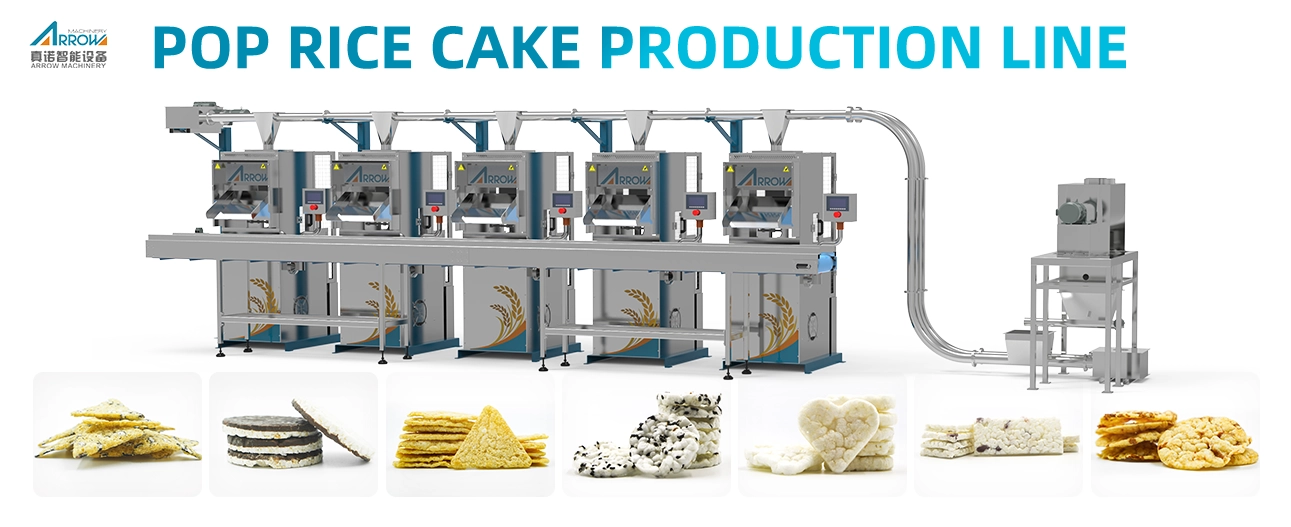
The automatic puffed rice cake production line supports standard and customizable mold sets for different shapes and thicknesses. The model and mold must be reviewed together with the formulation rather than assuming one setup covers every product. A change in shape can also affect collection, transfer, and downstream finishing.
Stabilize Temperature and the Operating Cycle
The mold needs to reach its selected operating temperature before the automatic cycle begins. During trials, record the approved machine settings, startup condition, and product results. Where cycle parameters are adjustable, change one relevant setting at a time and compare several consecutive samples before accepting the adjustment.
Label samples by operating condition. When weight stays stable but thickness changes, examine expansion and forming. If weight changes too, check feeding and filling first.
Separate Forming Problems From Downstream Texture Changes
Thickness problems can often be detected at machine discharge. Crispness problems may be less obvious because drying, seasoning, cooling, and packaging can change how the product feels and survives transport.
Measure Cakes Before and After Finishing
Compare samples at the forming-machine outlet and after each relevant downstream step. This prevents a cracked cake discovered at packing from being blamed automatically on the mold. Sifting may remove loose kernels and fragments. Drying can be required to bring the product to its specified condition, while coating adds material that may change the eating texture and cooling demand.
Chocolate enrobing, seasoning, and tunnel cooling are product-dependent options, not mandatory stages in every project.
Protect Crispness During Cooling and Packing
A correctly formed cake can lose its snap if moisture or packing conditions differ. Compare product moisture, packing temperature, and packaging barrier; validate shelf life separately.
To evaluate transfer damage, compare broken-piece counts before and after conveying. Check drop heights and impact points before increasing speed.
Diagnose Thickness and Crispness Variation Without Guesswork
When a line drifts, start with the first point where the result differs from the reference sample. A short fault map helps the production team avoid changing mold conditions when the problem actually began upstream or downstream.
|
Observed result |
Possible source |
First verification |
|
Uneven thickness and piece weight |
Filling or grain-feed variation |
Hopper flow, batch condition, piece weights |
|
Similar weight but different thickness |
Expansion or forming-cycle variation |
Mold condition, approved settings, incoming moisture |
|
Increased cracks after transfer |
Handling or fragile product structure |
Compare samples before and after conveying |
|
Correct dimensions but reduced crispness |
Final moisture, cooling, or packing condition |
Moisture tests and packed-product checks |
|
Variation after changing grain blend |
Raw-material response |
Lot records, blend ratios, repeat trial |
For each check, record lot, mold, settings, sampling point, thickness, weight, defects, and moisture where available. Retain the approved sample for comparison.
A recent BMP500 multi-formula rice cake trial involved micropellet materials and different mixing proportions. Its product result was specific to those tested materials and settings, not a universal thickness claim for every grain. That distinction should also guide the acceptance language in a new project.
Prove Consistency During a Representative Production Trial
A short demonstration with several good cakes does not establish commercial consistency. The trial should show that the chosen grain, mold, and operating cycle can produce an acceptable distribution throughout an agreed stable-running period, including a realistic rate of product collection and finishing.
Agree on Measurements Before the Trial
Prepare representative raw materials and agree on cake dimensions, permitted thickness variation, piece weight, crispness assessment, allowable defects, and sampling intervals. Test any planned alternative grain blend or mold separately. The trial record should distinguish plain cakes leaving the popping machine from finished cakes after additional processing.
Compare startup, stable-run, and later samples. Record changes before any deviation and measure acceptable finished output rather than a temporary machine peak. If more than one operator or shift is involved, use the same measurement points and sample labels throughout. Differences between shifts can otherwise be mistaken for a machine problem when the actual change is in preparation, sampling, or handling.
Include Changeovers and Operator Handover
For multiple products, validate mold and recipe changeovers, restart checks, and acceptance of the first good batch. Include startup, cleaning, and fault response in operator training.
Equipment commissioning and operator preparation can be scoped through technical design and operating training. The buyer and supplier should still agree which trials, training records, and acceptance results are included in the project.
Prepare a Production Brief That Defines the Quality Target
The inquiry should include grain samples, cake outline, thickness tolerance, breakage limit, finish type, operating schedule, packaging, and utilities. Distinguish a standalone machine from a connected line.
For this review, ARROW MACHINERY can discuss the proposed machine, mold options, supporting process stages, and trial requirements against the specified finished product. A useful proposal identifies which conditions have been tested and which still require verification with the buyer’s ingredients.
Conclusion: Control the Cake, Not Just the Machine Setting
Thickness consistency starts with defined product limits and repeatable grain preparation. The mold and popping cycle then need a stable feed, while finishing and packing must preserve the intended crispness. Compare samples at successive process points and measure acceptable finished output before declaring the line ready for routine production.
Review Your Popped Rice Cake Quality Targets
Share the planned grain blend, cake dimensions, thickness range, desired crispness, finishing method, and production target through review your rice cake production brief. This gives the project team a concrete basis for selecting trials and confirming how the forming machine and supporting equipment should work together.
FAQs
Q: Why do popped rice cakes vary in thickness when the same mold is used?
A: The mold is only one variable. Grain moisture, blend consistency, filling quantity, startup condition, and the popping cycle can also influence the result. Compare piece weights and thickness measurements, then check the prepared material and machine records before changing the mold setup.
Q: Can one rice cake machine handle several grains without changing settings?
A: Different grains and blends may be suitable for the same machine category, but that does not establish one common operating window. Each intended formula should be tested with its moisture preparation, selected mold, cycle, and finished-product specification before commercial production is approved.
Q: How can a factory check rice cake crispness during a production trial?
A: Agree on a repeatable sensory or instrumental test and compare samples at the same product temperature and storage condition. Include finished moisture, visible breakage, samples after packing, and results across the stable run. A single fresh cake cannot establish performance after storage.


