



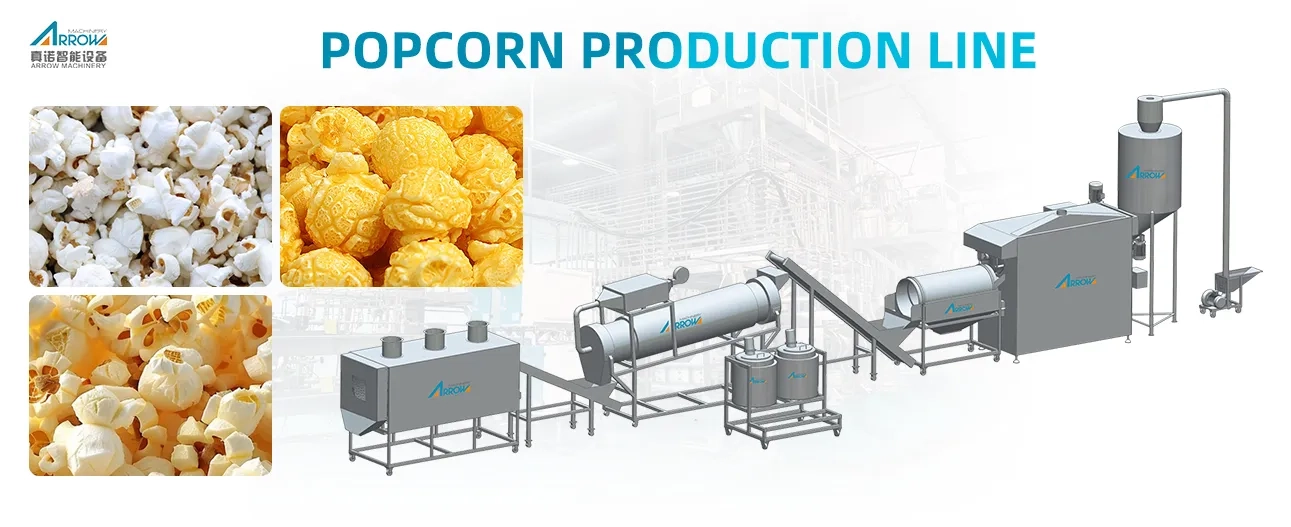
Popcorn ranks as a top snack around the world, yet moving from a basic stove treat to a big factory output demands a solid understanding of food science and machine accuracy. We aim to close that divide. As food machine specialists at Arrow Machinery, we have worked for more than 30 years to offer full plans—from plant design to special mixes—for over 5,000 buyers everywhere. Our crew stresses clean, lasting tech to create strong lines that change plain seeds into fine goods.
In this piece, we will check the facts behind the burst and how current factory tools turn raw seeds into a money-making, large-batch item.
The Science of the Kernel: Anatomy of an Explosion
To grasp the details in factory making, you need to first study the special plant build of the corn seed, since it acts basically as a natural, high-heat container built for quick growth. Unlike sweet corn or farm corn types, which lack the needed strength and water spread to make a good burst, popcorn has a clear setup that lets it hold and then use huge heat power in its closed space.
The Pericarp: The Pressure Vessel
The outside layer, or pericarp, stands as the key part. It proves very tough and shut tight, able to take a big inside push. In good popping corn, this shell must stay firm enough to trap steam yet break fully once the right heat hits. If the shell has holes or breaks, steam slips out, and the seed turns into a “dud” or “old maid.”
The Endosperm: The Starch Reserve
Under the shell sits the endosperm, made of hard and soft starch bits set in a protein web. This forms the stuff that turns into the white, soft puff we munch.
Moisture: The Trigger
The main spark for this big change in form comes from the inside water level, which should stay in a tight range from 13.5% to 14% to hit the right mix of steam build and build strength. When the seed heats to about 180°C (355°F), this inside water does not boil like usual but shifts to super-hot steam that raises inside pressure above 135 PSI, finally making the inside starch turn to a hot, thick gel. When the shell gives way to this huge inside force at last, the steam grows to 1500 times its start size in a flash, letting the gel starch burst out and harden into the known crisp puff form as the steam flows into the cooler air around.
From Farm to Factory: The Industrial Manufacturing Process
Copying this tiny burst millions of times each hour needs sturdy gear. A business popcorn-making flow forms a straight path set for steady work, clean ways, and a quick pace.
Step 1: Cleaning and Grading
Before the introduction of thermal energy, raw corn must pass through rigorous cleaning systems where vibrating screens work in tandem to remove debris and sort kernels by density. This initial stage is vital because any significant variance in kernel size or quality would inevitably lead to uneven popping rates, resulting in burned product or unpopped waste that would negatively impact overall factory profit margins.
Step 2: The Popping Stage
As the heart of the manufacturing operation, the popping stage has seen a significant shift toward oil-free hot air technology, a trend driven by the increasing global consumer demand for healthier, low-fat snack options that do not compromise on texture.
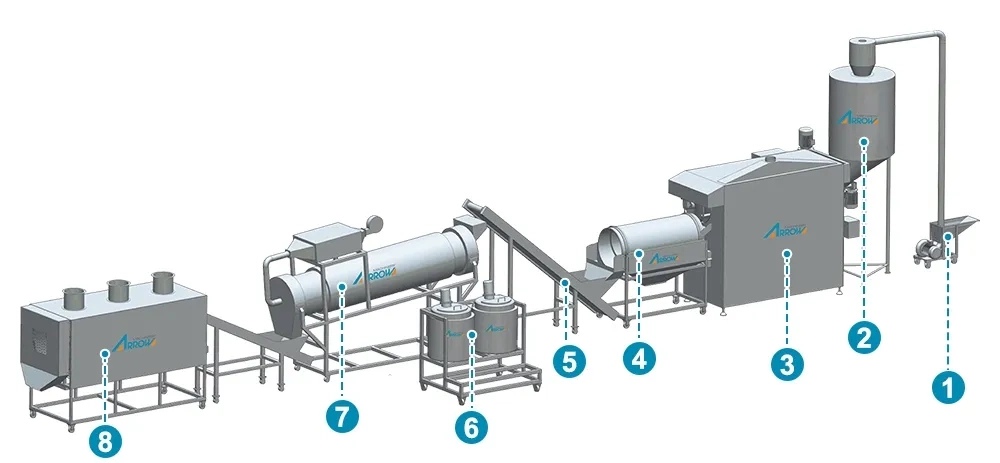
Our Popcorn Production Line is specifically engineered to address these requirements by utilizing a high-velocity fluidized bed of hot air that gently lifts and tumbles the kernels to ensure uniform heat distribution. This scientific approach provides several distinct advantages:
- Healthier Profiles:An oil-free popping environment enables manufacturers to meet the strict criteria for “low fat” or “air-popped” labeling.
- Superior Expansion:Precise control over airflow maximizes starch expansion, resulting in a fluffier texture and improved mouthfeel.
- Scalability:The continuous flow design supports massive throughput, essential for large-scale industrial facilities aiming for market dominance.
Step 3: Sifting and Cooling
Right after the burst, the popcorn stays hot and breakable. It shifts to a sifting belt. There, weight and shake team up to split the full-burst bits from unburst seeds and cracked shells. This part makes sure the end user never crunches a hard bit. Fast cooling starts here, too, to fix the starch form and stop the popcorn from turning gummy from leftover steam.
Step 4: Flavoring and Coating
Once the plain popcorn cools and sorts, it heads to the taste step. This spot gives the item its shop look. If the mix asks for salty cheese, plain sea salt, or a tricky caramel cover, accuracy counts most.
The tough spot here lies in the spread. Popcorn shows an uneven face area. We use smart cover drums with many-point spray setups. These tips make a thin spray of oil or a mix that covers the rolling popcorn. By adding highly accurate weight checks, our setup watches the flow of grain and taste stuff right then. This keeps the mix steady, stopping taste jumps or dull spots, which helps hold brand strength and watch raw cost.
The Arrow Advantage: Revolutionizing Popcorn Production
Hygienic Design for Global Standards
Food safety remains a must. We build our machines with top stainless steel and block designs. The burst room, belts, and taste drums get made to cut dead spots where dust or germs might build. This build idea fits GMP standards, making daily cleaning steps quicker and better.
High-Efficiency Heating
Power use forms a main run cost. Our warm air tech gets set to reuse heat in the flow room, cutting the power needed per kilo of end item a lot. If using gas or power, the heat strength of the setup makes sure warmth goes to the seed, not the plant’s air. This push for clean making aids our buyers to cut their waste mark while gaining an edge.
Why Manufacturers Partner With Us
Picking a gear seller marks a plan choice. We think tech forms the base of growth, but help ensures long win. Our way roots in a share-win team model, giving making smarts to each buyer.
Our new idea spot works for next food uses, always testing fresh grains and add-ons. When you team with us, you get this research skill. We help with plant build tips, space plan, and setup. Our tech crew gives full run training to make your staff handle the line at top work from day one. We don’t just give a machine; we give a smooth making guide for our buyers.
With gear sent to 118 lands, we know varied power rules and area food likes. We stick to clean making and lasting growth, aiding you to make a snack that pays for your shop and cares for the earth.
Conclusion
The path of popcorn from a firm seed to a soft snack shows a wonder of science and building. By guiding water, heat, and pressure with factory care, makers can turn a plain grain into a high-value item. As buyer call rises for better, fine snacks, the strength of your making line turns into your strong point. We ask you to check how our tech can lift your making skills.
Contact us now to talk your plan needs. Let us build a custom fix that suits your exact wants.
FAQ
Q: What is the capacity range of the Popcorn Production Line?
A: Our production lines are modular and customizable to fit various business scales. We offer capacities ranging from small-scale startups producing a few hundred kilograms per hour to large industrial lines capable of processing tons of product continuously. We can tailor the output to match your specific factory footprint and market demand.
Q: Can the line handle different types of flavors, including caramel and savory powders?
A: Yes. The line is equipped with a versatile seasoning system. For powder seasonings (like cheese or salt), we use a dusting system. For liquid coatings (like caramel, chocolate, or butter), we utilize a syrup coating drum with temperature control to ensure even application. The system can be adjusted to handle multiple flavor profiles on the same equipment.
Q: Is the hot air popping method energy efficient?
A: Absolutely. Our hot air poppers utilize a recirculating air system that maximizes thermal transfer to the corn kernels while minimizing heat loss. This design is significantly more energy-efficient than traditional batch poppers, reducing utility costs per unit of production and aligning with sustainable manufacturing practices.


