



Breakfast routines worldwide include corn flakes as a fundamental food item because of their crunchy texture and light taste and easy consumption. The production of corn flakes depends on food engineering advancements which create a complex sequence of mechanical and thermal and chemical transformations. The production process of corn flakes requires precise control at every stage to achieve uniform results and maintain nutritional content and flavor quality. Shandong Arrow Machinery Co., Ltd. provides complete production systems and innovative machinery solutions for breakfast cereal manufacturers who want to establish their business or expand their operations. The Automatic Corn Flakes Production Line from this company provides all necessary solutions for your business needs.
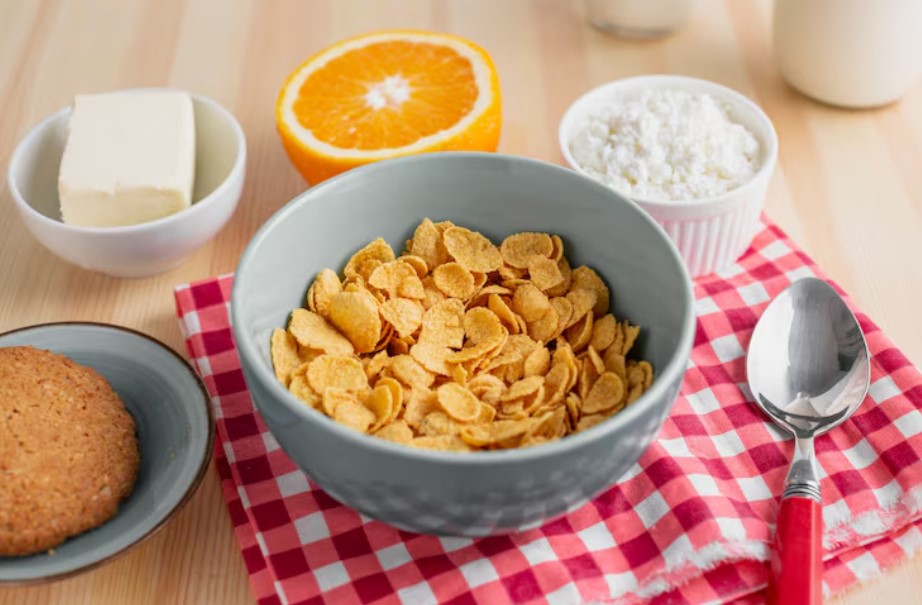
Overview of Corn Flakes Manufacturing Process
The process of corn flakes starts with the proper handling of corn kernels. The raw material undergoes a series of thermal and mechanical transformations which result in the final product of golden crunchy flakes that people enjoy during their breakfasts worldwide.
Raw Material Selection and Pre-Treatment
The selection of high-quality corn kernels depends on their size and moisture levels and their purity status. The cleaning process removes foreign substances from the kernels while conditioning them to achieve equal moisture distribution. The degeneration process separates endosperm from germ which results in better product stability and improved texture quality.
Shandong Arrow Machinery Co., Ltd. provides complete pre-processing systems which handle corn-based cereals from start to finish for producing flaking-ready grits.
Cooking and Gelatinization of Corn Grits
The pre-treated corn grits receive cooking treatment through controlled temperature and pressure systems. The starch gelatinization process during this step makes the starch accessible for digestion and prepares it for flaking.
The Automatic Corn Flakes Production Line depends on steam injection technology to achieve uniform cooking which maintains product quality and consistency. The system maintains product consistency through precise control of cooking parameters which also improves digestibility.

Flaking, Drying, and Toasting Operations
Once cooked, the moist grits are passed through precision-engineered rollers to form uniform flakes. These flakes are then dried to a specific moisture level before entering the toasting stage.
Arrow’s extrusion line integrates flaking rollers and high-efficiency dryers to optimize throughput and energy use. The final toasting imparts the golden color and signature crunch that consumers expect from premium corn flakes.
The Role of Extrusion in Corn Flakes Production
The process of extrusion functions as a fundamental operation in contemporary cereal production because it unites mixing with cooking and shaping into one unified production method.
Function of Twin-Screw Extruders in Material Transformation
The twin-screw extruder processes corn grits through high shear mixing and cooking and shaping operations. The process enables starch gelatinization and protein denaturation which leads to the development of structural elements that support flaking operations.
The extrusion systems from Shandong Arrow Machinery provide producers with flexible product options through their modular screw design. The system enables producers to test different grain combinations and texture variations.
Impact of Extrusion Parameters on Product Quality
The quality of extruded cereals depends on proper management of temperature and screw speed and pressure and feed rate parameters. The expansion ratio and flake structure of extruded cereals depend directly on temperature and pressure and screw speed and feed rate.
The production process benefits from Arrow’s advanced control systems because they enable real-time monitoring and automated production adjustments which result in batch-to-batch consistency.
Advantages of Using Arrow’s Extrusion Technology
The implementation of automation technology decreases workforce requirements while making operations more dependable. Arrow delivers twin-screw extruders together with their required ingredients and equipment for drying and faking and baking and spraying and frying operations. The systems from Arrow enable production of different cereal types which include high-fiber and whole grain and flavored flakes. The machines operate with extended durability because they need less maintenance to achieve longer operational periods.
The product center at Arrow Machinery provides additional information about their extrusion technology advancements.
Quality Control Measures in Corn Flakes Manufacturing
The company needs to maintain consistent quality standards because this approach leads to satisfied customers and follows all necessary regulatory requirements. The company reaches quality standards through its implementation of in-line monitoring tools and its strict laboratory testing procedures.
In-Line Monitoring Systems for Process Consistency
Sensors track critical variables such as moisture content, temperature, and density during production. These inputs feed into control systems that ensure processes remain within tolerance thresholds. Arrow’s production lines integrate intelligent monitoring tools for proactive quality assurance.
Testing Protocols for Finished Product Evaluation
The evaluation process for each batch includes multiple tests to check flake thickness and crunchiness and color uniformity and residual moisture levels. The laboratory tests verify that the products meet food safety requirements through HACCP and ISO 22000 certification.
The technical service team at Arrow Machinery provides expert assistance for your QA setup.
Traceability Systems for Supply Chain Transparency
The system enables raw material tracking through digital batch tracking which connects all production stages from beginning to end. The modules operate with standard ERP systems to create smooth connections between your supply chain operations.
Energy Efficiency in Modern Corn Flakes Lines
The implementation of energy optimization leads to sustainability improvements while creating long-term financial savings through reduced operational expenses.
Optimization of Thermal Energy Usage in Cooking and Drying Stages
The operation of heat exchangers leads to reduced steam usage when cooking occurs. The dryer system includes separate zones which control air flow and heat levels based on the amount of moisture present.
The Arrow Dryer system combines its features into a flexible design which supports different manufacturing levels.
Electrical Power Management Across Production Units
The operation of Variable Frequency Drives (VFDs) enables speed control of motors through real-time load requirement adjustments. The system decreases maximum power consumption while extending the operational life of equipment.
The facility infrastructure benefits from efficient load balancing through smart power distribution panels.
Environmental Benefits of High-Efficiency Production Lines
Arrow’s designs support sustainable practices through lower emissions and reduced water usage. Lower water consumption during cleaning cycles due to CIP-compatible equipment.For more environmentally responsible options tailored to your facility size, visit their solution center.
Customization Capabilities for Diverse Market Needs
Production lines need to adapt their output to match local consumer preferences and expand their customer base for achieving commercial success.
Adaptability to Regional Taste Preferences
The processing system allows users to adjust parameters which control flake dimensions and sweetness levels and texture characteristics. The system enables users to create specific recipes through the selection of different grains and fortification materials.
You can work with Arrow R&D experts through their contact platform to create custom formulations for your needs.
Scalability Options from Pilot Plants to Industrial Scale
The modular design system enables fast modifications during both product development stages and commercial production processes. The pilot-scale extruders help users test new cereal blends at high speed before they need to invest in full-scale production.
Integration with Downstream Packaging Solutions
The downstream integration of conveyors with automated boxing stations enables hygienic product handling and efficient operations. Arrow delivers complete turnkey solutions which incorporate packaging system integration according to customer requirements.
Maintenance Strategies for Long-Term Reliability
The combination of preventive maintenance with smart analytics enables organizations to minimize equipment downtime while achieving stable production results.
Preventive Maintenance Scheduling Based on Usage Data
Systems use runtime logs to predict service intervals. Arrow provides remote diagnostic tools through IoT platforms for its after-sales service operations.
Spare Parts Availability Through Global Support Network
The company provides standardized equipment designs which enables customers to access parts from any location across different markets. The equipment packages include complete spare parts lists for customer reference.
Operator Training Programs for Production Efficiency
Your team maintains proficiency through on-site training sessions which combine with digital operation manuals. The training programs provide operators with ongoing education about new system features and product updates.
Automation Trends in Cereal Processing Technologies
The industry needs automation to achieve Industry 4.0 standards because it enables businesses to stay competitive and agile.
Role of PLC Systems in Intelligent Line Control
Programmable Logic Controllers (PLCs) control sequencing operations and handle alarm systems and interlock functions and data storage capabilities. The system includes integrated HMIs which deliver instant feedback through user-friendly control interfaces for all line components.
Real-Time Data Analytics for Process Optimization
Cloud-based SCADA dashboards enable users to monitor KPIs throughout different shifts and production batches. The use of data-based choices enables organizations to achieve better waste reduction and higher yield performance.
Remote Monitoring Capabilities Through IoT Integration
The system sends immediate mobile alerts to operators whenever process deviations happen. The smart factory vision of Shandong Arrow Machinery includes remote access capabilities.
FAQ
Q1: What raw materials are suitable for corn flakes production?
A: Corn kernels are most common, but oats, wheat, sorghum, millet, barley, or high-fiber blends can also be used depending on the product formulation.
Q2: How does extrusion improve the quality of corn flakes?
A: Extrusion allows precise control over temperature and pressure to enhance starch gelatinization and texture uniformity while enabling diverse product shapes.
Q3: Can I scale up my production without replacing all existing equipment?
A: Yes. Modular design allows you to upgrade capacity incrementally without overhauling the entire system.
Q4: How are energy savings achieved during production?
A: Advanced thermal systems reduce steam usage while VFDs optimize electrical load balancing across processing units.
Q5: Are there customization options available for different markets?
A: Yes. Processing settings can be adjusted for different textures or sweetness levels; formulations can include alternative grains or added nutrients based on local preferences.


