


Product Description
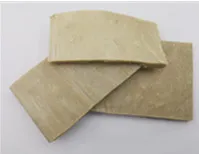
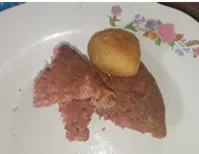
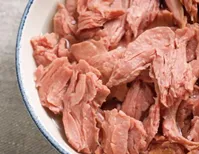
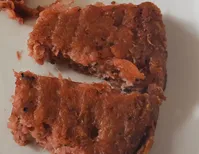
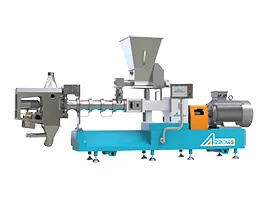
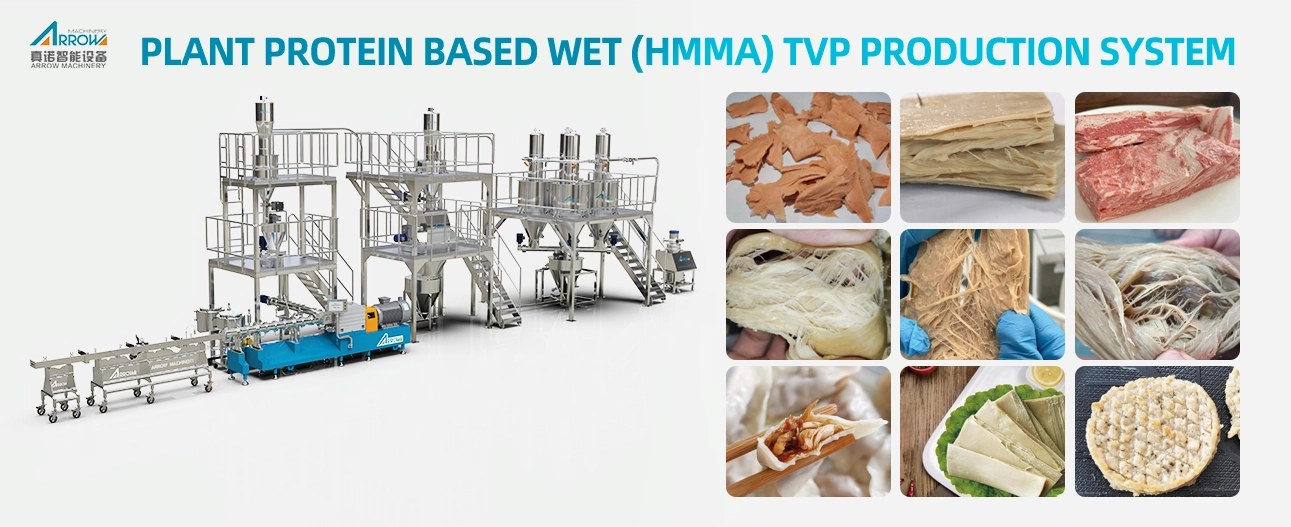
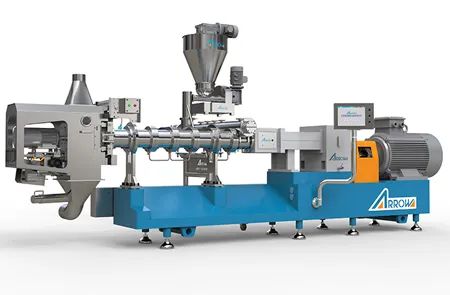
ARROW MACHINERY engineers state-of-the-art high moisture protein production lines engineered for the direct extrusion of plant-based whole-cut meat analogues. Utilizing high-shear twin-screw extruders integrated with continuous cooling die technology, our lines convert soy protein isolate, pea protein, and wheat gluten into wet, highly fibrous plant-based chicken, beef, pork, and seafood alternatives with 50%–70% moisture content.
Designed for modern plant-based food manufacturers, this advanced processing system eliminates the need for post-extrusion drying, delivering ready-to-use, juicy, and tearable meat-like fibrous structures directly from the molding section.
Process Flow
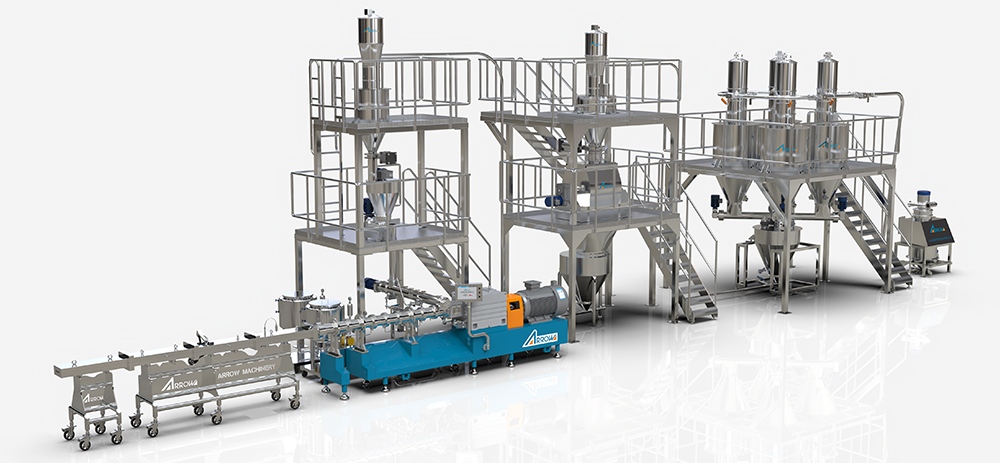
Ingredient mixing → Conditioning → Extrusion → Molding
1. Ingredient mixing: Accurately weigh and blend soy protein isolate, pea protein, wheat gluten, starch, and functional seasonings in a high-speed dry powder mixer to guarantee recipe uniformity.
2. Conditioning: Continuous pre-conditioners combine the dry powder mix with precise liquid dosing (water, oil, natural pigments), pre-heating and pre-hydrating the slurry for smooth barrel feeding.
3. Extrusion: The co-rotating twin-screw extruder applies high thermal and shear forces to cook, melt, and homogenize the wet protein mass, achieving complete protein denaturation and linear fiber alignment.
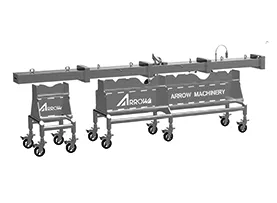
4. Molding: The pressurized hot protein melt passes into the continuous long cooling die. Through controlled thermal cooling, the melt solidifies and forms continuous slabs or strips of high-moisture meat analogue, ready for immediate slicing, marinating, or chilled packaging.
Specifications
| Model | Power | Capacity | Size |
| AHT36 | 18.5kW | 10-20kg/h | 3200×1000×1900mm |
| AHT50 | 55kW | 100-150kg/h | 4900×1100×2000mm |
| AHT62 | 90kW | 200-300kg/h | 6100×1200×2200mm |
| AHT72 | 110kW | 400-600kg/h | 6600×1500×2300mm |
Specifications Note:
The capacities listed above represent reference parameters based on standard soy/pea protein formulations with a 60% target moisture content. Actual hourly output varies depending on raw material protein purity, oil content, target fiber density, and cooling die dimensions. Contact ARROW MACHINERY engineers for tailored cooling unit capacities and extruder power configurations.
Customer Site

Turnkey Project & Field Support:
ARROW MACHINERY provides complete engineering solutions for next-generation plant-based meat facilities, including:
• Plant protein formulation consultation and fiber texture pilot testing.
• Custom cooling die length, width, and surface profile design (slab, strip, chunk, or shred shapes).
• Integrated chilling system, water circulation layout, and extruder barrel maintenance plans.
• On-site installation, commissioning, process parameter tuning, and lifetime operator training.
FAQ
Q: What is the main difference between High Moisture Meat Analogues (HMMA) and Dry Textured Vegetable Protein (TVP)?
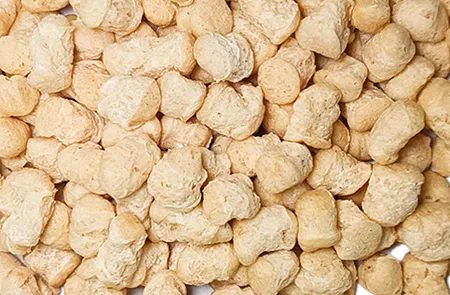
A: HMMA contains 50%–70% moisture and is extruded through a long cooling die to create a wet, juicy, whole-cut meat texture directly out of the machine. Dry TVP contains under 10% moisture and requires post-extrusion drying and rehydration before consumption.
Q: What plant proteins can be used on this production line?
A: Soy protein isolate (SPI), pea protein isolate (PPI), wheat gluten, rice protein, and mung bean protein can all be processed, individually or blended with starches, oils, and natural flavorings.
Q: How does the cooling die work in HMMA molding?
A: The cooling die cools the hot, pressurized protein melt gradually under laminar flow conditions. This prevents sudden moisture flashing (puffing) and allows the aligned protein strands to solidify into a continuous, fibrous meat-like structure.
Q: Does the line require a drying oven?
A: No. Because the product comes out at ready-to-eat moisture levels, no drying or roasting stage is needed. The extruded product can immediately go to marinating, IQF freezing, or vacuum packaging.
Q: What are the shelf life and storage requirements for high moisture protein products?
A: High moisture protein products behave similarly to fresh animal meat. They should be chilled (0–4°C) or frozen (-18°C) immediately after molding and packaging to maintain freshness and microbial safety.
Q: How do I request a technical proposal and quotation?
A: Please share your target hourly capacity (kg/h), preferred protein raw materials, target moisture percentage, and finished product shape (e.g., chicken breast slab, shredded beef, fish fillet). ARROW MACHINERY will engineer a customized machinery proposal and layout design for you.