


Product Description:
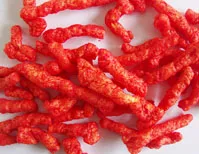
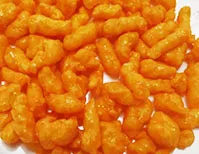
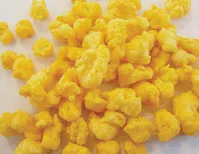
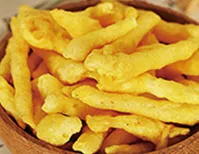
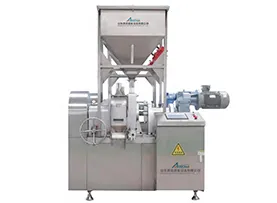
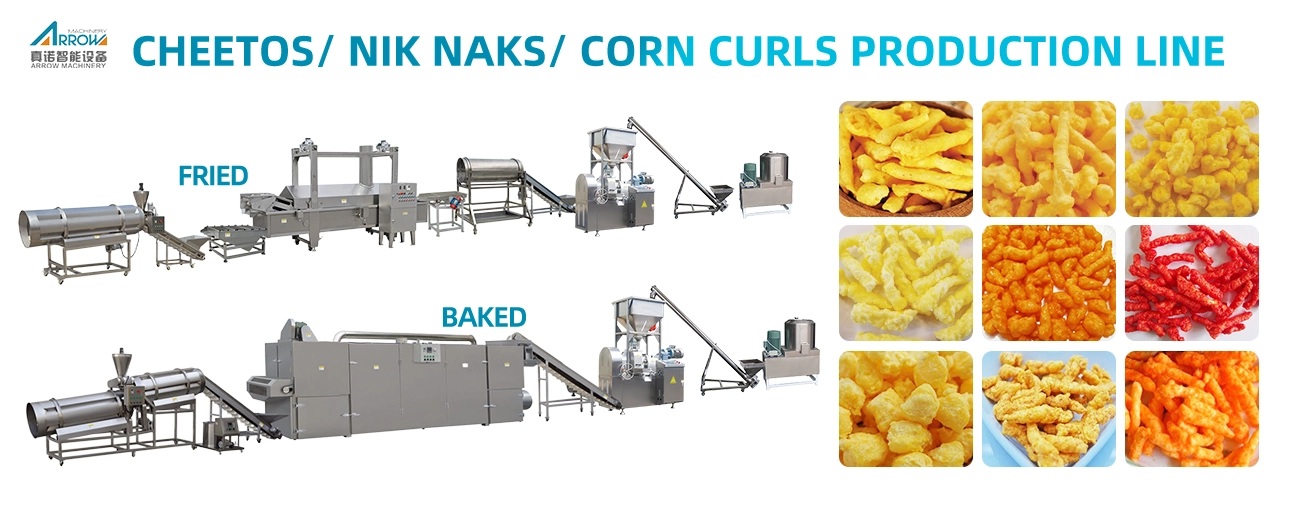
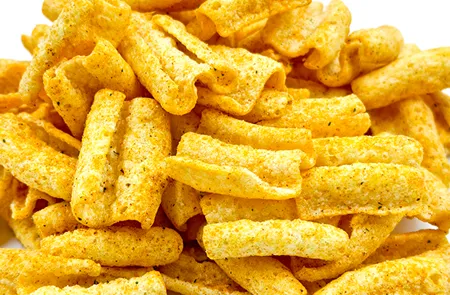
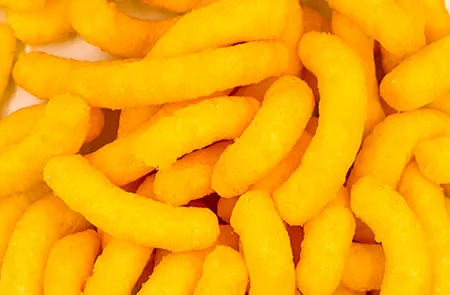
ARROW MACHINERY delivers automated Cheetos and Nik Naks production lines designed to process corn grits into crunchy, irregularly shaped corn curls, Kurkure snacks, and twisted corn curls. Powered by specialized rotary head extruders, the system subjects moistened corn grits to high friction and shear, forming signature twisted textures with natural crunchiness.
Designed for modern snack processing plants, this versatile line seamlessly connects raw material conditioning, friction extrusion, continuous mechanical separating, frying or baking processing, and rotary drum seasoning to maximize output and maintain uniform quality.
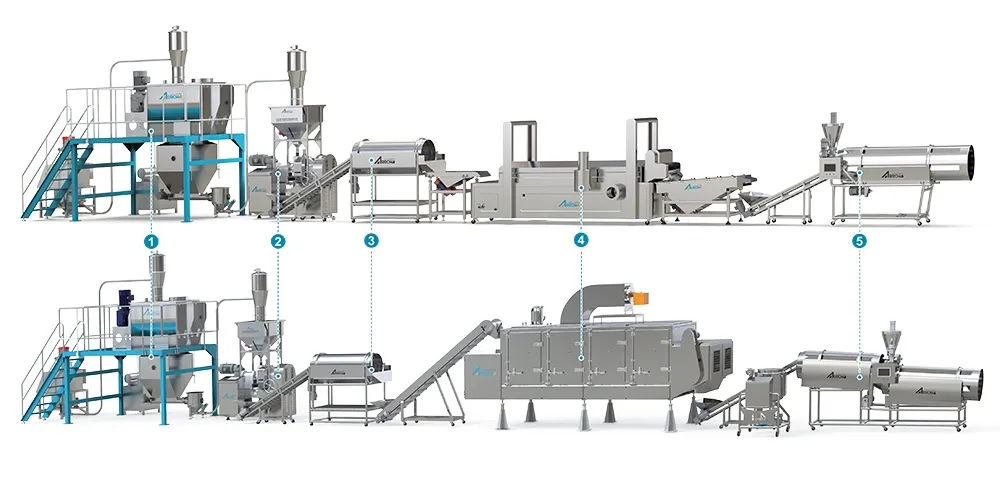
Mixing → Extruding → Seperating → Frying/Baking → Seasoning
Stage Details:
1. Mixing: Accurately moisten corn grits with water in a vertical flour mixer to reach the exact moisture content required for friction extrusion and crisp expansion.
2. Extruding: The conditioned corn grits enter the rotary head extruder, where high-speed rotating friction plates cook, twist, and extrude natural irregular Cheetos and Nik Naks shapes.
3. Seperating: Extruded corn curls drop onto a vibrating tumbler separator to singulate individual pieces, removing excess fine corn grit dust and preventing curls from sticking together.
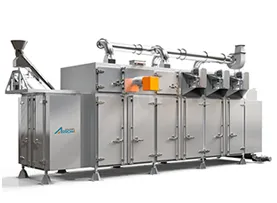
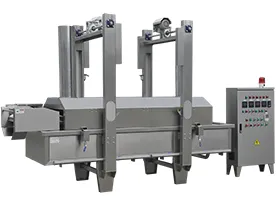
4. Frying/Baking: The separated corn curls enter either a continuous deep fryer for classic crunchy fried snacks or a multi-pass belt drying oven for light, low-fat baked corn curls.
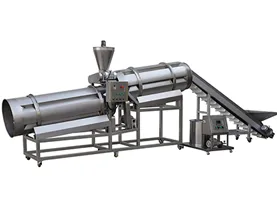
5. Seasoning: Hot fried or baked curls enter a continuous rotary seasoning drum, where liquid oil spray and seasoning powders (cheese, nacho, spicy, salt) are applied uniformly across all irregular surfaces.
Specifications
| Model | Power | Capacity |
| TS-Ⅱ | 94kW | 120-140kg/h |
| TS-Ⅲ | 95kW | 200-230kg/h |
Specifications Note:
The capacities listed in the parameter table represent standard reference outputs based on corn grit formulations. Total hourly line yield can be scaled by configuring multiple rotary head extruders operating in parallel. Contact ARROW MACHINERY engineers for custom heating choices (gas, electric, or thermal oil) and line layout proposals.
Customer Site
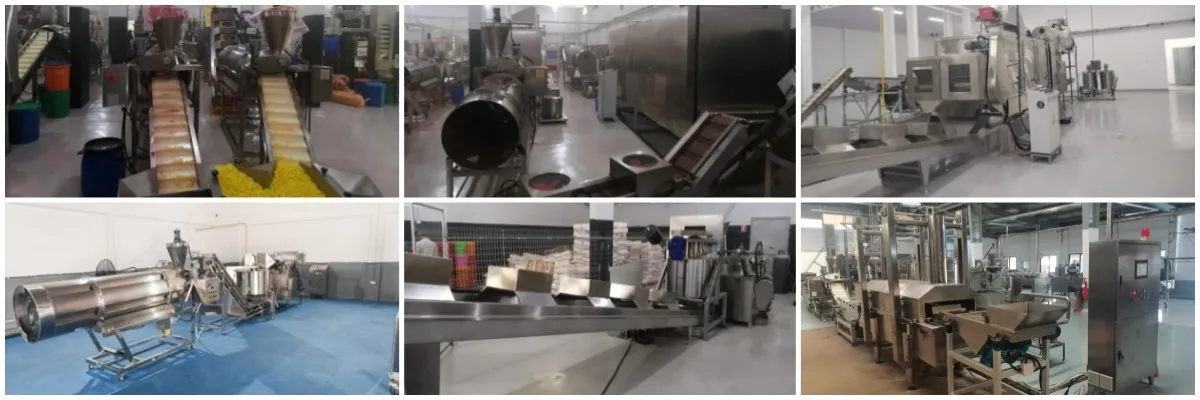
Turnkey Project & Field Support:
ARROW MACHINERY provides comprehensive support for Cheetos and Nik Naks snack food manufacturing facilities, including:
• Corn grit mesh size analysis and moisture conditioning testing.
• Custom rotary die brass plate tuning for unique curl textures and thicknesses.
• Complete factory layout planning, oil filtration/exhaust piping, and energy-saving designs.
• On-site machinery installation, commissioning, process parameter tuning, and lifetime operator training.
Advantages
1. We are a professional manufacturer of high-precision mechanical equipment, dedicated to meeting the unique needs of different customers and industries.
2. Professional Team: Our team consists of professional technicians, including professional engineers responsible for full-process project management from manufacturing to after-sales service.
3. High Cost-Effectiveness: Compared with trading companies, our factory can provide mechanical equipment of equivalent quality at a more competitive price. This allows us to better guarantee machine quality and provide continuous technical support and long-term spare parts supply.
4. Project Responsibility: We create production line drawings based on the factory dimensions provided by the customer. We are responsible for all aspects, including pre-sales, after-sales, installation, commissioning, and delivery.
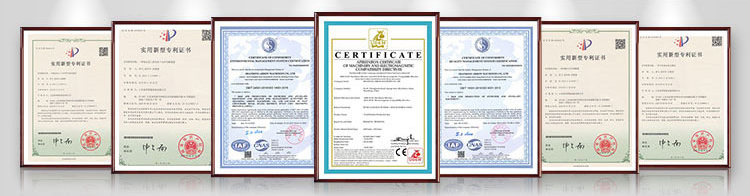
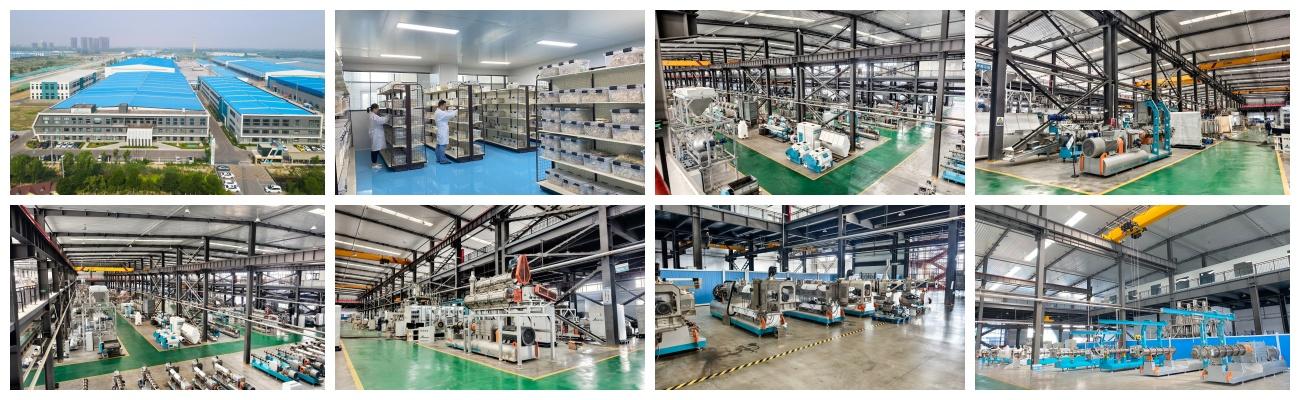
Our factory
FAQ
Q: What raw materials are required for making Cheetos and Nik Naks?
A: Hard corn grits (maize grits) with specific particle sizes (typically 30–50 mesh) and moisture levels are essential. Fine corn flour cannot be used directly on rotary head extruders.
Q: What is the difference between Fried Cheetos and Baked Cheetos lines?
A: Fried lines pass extruded corn curls through a deep-fat fryer, yielding extra crispy, rich-tasting snacks. Baked lines route curls through a hot-air drying oven, producing lower-fat, healthier snacks with a lighter crunch.
Q: How do you adjust the shape and length of the corn curls?
A: The shape and surface texture are governed by the gap between the rotating brass die plates. The length is controlled by adjusting the speed of the rotary cutter knife mounted in front of the die head.
Q: How is the wear and tear of the rotary extruder brass plates handled?
A: The rotary head brass die plates are high-friction wear parts. ARROW MACHINERY uses high-wear-resistant alloy brass materials, providing long service life and easy replacement during routine maintenance.
Q: Can multiple extruders be linked to one frying and seasoning line?
A: Yes. Because rotary head extruders have compact individual outputs (e.g., 150–200 kg/h per head), 2 to 4 extruders are commonly linked parallelly to feed one continuous frying/baking and seasoning line for high-capacity plant setups.
Q: How do I request a technical proposal and quotation?
A: Please share your target hourly capacity (kg/h), preference between fried or baked processing, local energy source (gas/electricity), and available factory floor dimensions. ARROW MACHINERY engineers will generate a customized technical proposal and quotation.